Sami Fakhoury
Fictional. Generated by AI — not a real person, and no likeness of one is intended.
35, line cook in Philadelphia · rolled by @colin.hasbrook · card — no film
History
who has worn him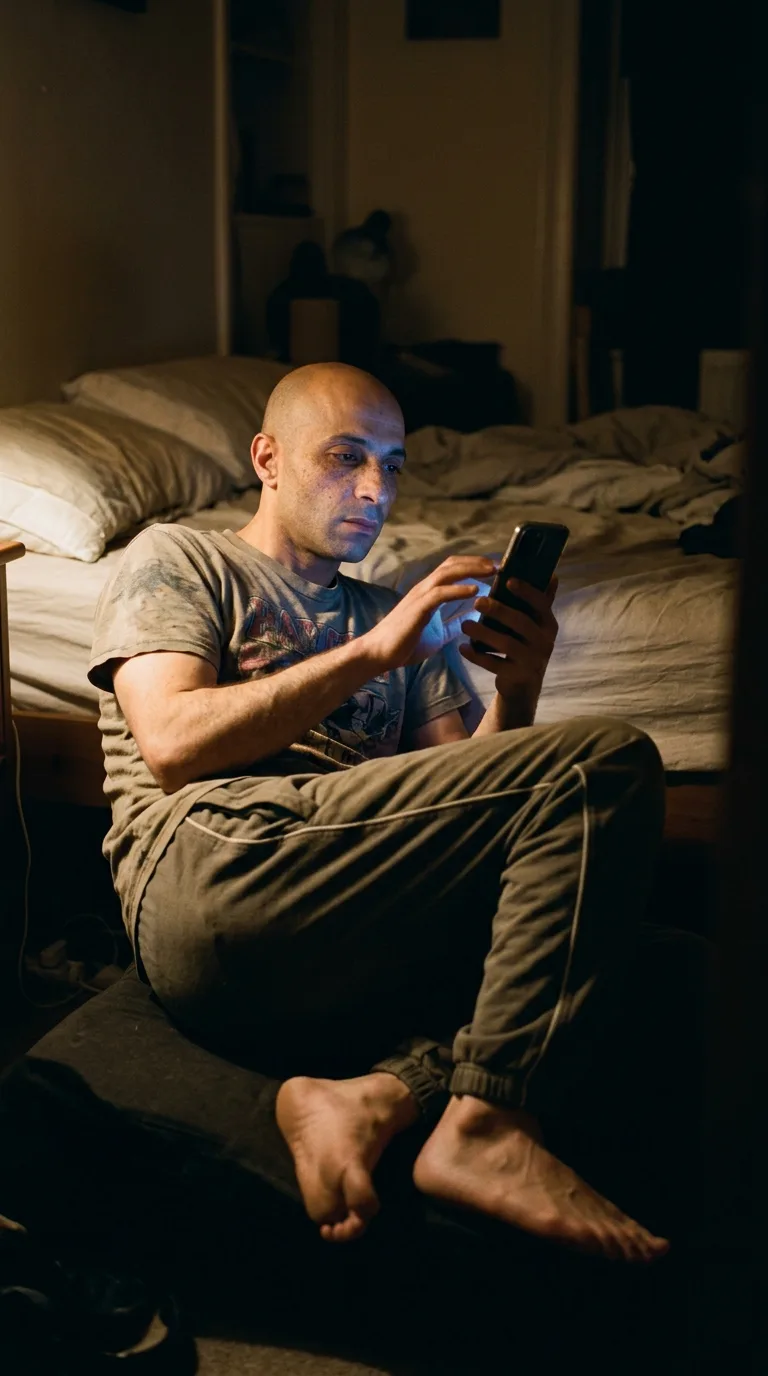
Rarest thing about him: Middle Eastern — rare, 1 in 34
Season 0seed 442832932 · engine v10
Character card
lineage 2NZHHJ
His body-swap story
@colin.hasbrook, wearing Otis Rimmer, rolled the wheel on and woke up as Sami Fakhoury, spent under a minute in him, then spun the wheel and woke up as Dale Whitepine
You are Otis Rimmer for less than a minute, and the whole time you are him you are thinking about how you don't want to be him.
Sixty-one years old, the joints in the knees already singing from a squat car and a lifetime of asphalt, the badge weight dragging one hip low, a Texas dusk coming through a windshield tinted the color of weak tea. Somewhere behind these ribs a heart with a doctor's warning stapled to it going too fast for idle. You were only ever going to be him for the length of a decision. Rural Texas at golden hour, radio chatter about nothing, and you sit there in his body feeling every mile he's put on it and thinking: not this one, not tonight, give me back something that isn't tired before it starts. There is no story here worth keeping. You didn't even learn his coffee order. You open the site on his phone with his own thick thumb, the wheel already spinning before you've decided anything, because thirty seconds of a stranger's exhaustion is a decision by itself.
The wheel turns. It does not ask you why. It never has.
The thumb moves first — faster than it was, level, sure, cutting through a scroll that had gone slack a half-second before. The room resolves around a body that is not tired at all: light, wiry, a low animal hum of ache in the lower back that has nothing to do with age and everything to do with hours on a mat in front of a flat-top. Blue light on one cheek. A phone six inches from a face that has stopped blinking like a man and started blinking like whatever you are. Dark bedroom, a shape of a bed half-made behind you, the ordinary quiet of somebody else's Tuesday night.
The shirt is what opens him first — worn cotton against your back, some band you don't recognize, soft in the way of a hundred washes, and through it comes a flash: him at nineteen, thin as a wire, at a show in a basement in Fishtown, sweat and bass in his sternum, laughing with people whose faces you don't get to keep. Then it's gone and you're just wearing the shirt again.
The joggers next, waistband loose at the hip, and through them comes the ache itself, named now: two herniated discs, S1 mostly, from bending twelve hours a day over a station that never lowers itself for anybody. You feel — not your feeling, his — the particular dread of Saturday doubles, the ice pack he keeps in the reach-in at home behind the string cheese so his mother won't ask what it's for when she visits.
The phone in his hand gives you the most, because a phone is the most handled thing a man owns. Sami Fakhoury, thirty-five, line cook at a place on Passyunk with his name misspelled on the schedule app three years running and nobody's fixed it. You get a whole shift in a flash: the heat off the flat-top rippling the air over the pass, the expediter calling times in a voice gone hoarse by nine, his own hands — quick, economical, twenty years of muscle memory — moving a pan without looking at it. You get the walk-in, the smell of raw chicken and lemon, the particular satisfaction of a station cleaned down to the steel at midnight. You get him leaving through the back door into Philadelphia's wet cold, keys in his fist, too tired to feel anything but grateful.
You get his kitchen, off-shift: a small stove, a single pot of his mother's rice recipe halved for one, eaten standing at the counter because the table's got mail on it he hasn't opened. You get church on the Sundays he makes it, incense and his mother's elbow finding his ribs when he checks the time. You get no wife, no ex who lingers, no kid's drawing on a fridge — just a string of women he liked fine and let go without much noise, and a body that comes home aching and drinks two beers alone most nights not because he's sad, exactly, just because the day asks for it and there's nobody there to ask him not to.
You get this morning — his morning, hours ago now, already memory the second you touch the fabric of it: pulling this same shirt over his head half-asleep, stepping into these same joggers with his weight rocked onto the good hip, the whole unremarkable ritual of a man getting ready for nothing, for bed, for a night that turned out to have you in it.
The freckles are the last thing that comes to you, oddly, through no touch at all — just the memory of his own reflection, mother's nose, mother's freckles across it, a joke she's made his whole life about the sun loving him more than his brothers.
You look at your hands. Thin fingers, no rings, a burn scar you didn't get to see the story of yet, healed pale against brown skin. You turn one over in the phone's blue light like it might tell you something else, and it doesn't, it's just a hand now, yours the way all of them have been yours — on loan, complete, un-returnable.
You lift your eyes off it into the black mirror of the screen, into your own reflection looking back at you out of a face that isn't asking permission anymore.
"Bet the schedule's still got my name wrong," you say, to no one, and almost laugh, because the wheel doesn't care what you find funny, and neither, tonight, do you.