Warren Iseda
Fictional. Generated by AI — not a real person, and no likeness of one is intended.
58, plumber in Houston · rolled by @colin.hasbrook · card — no film
History
who has worn him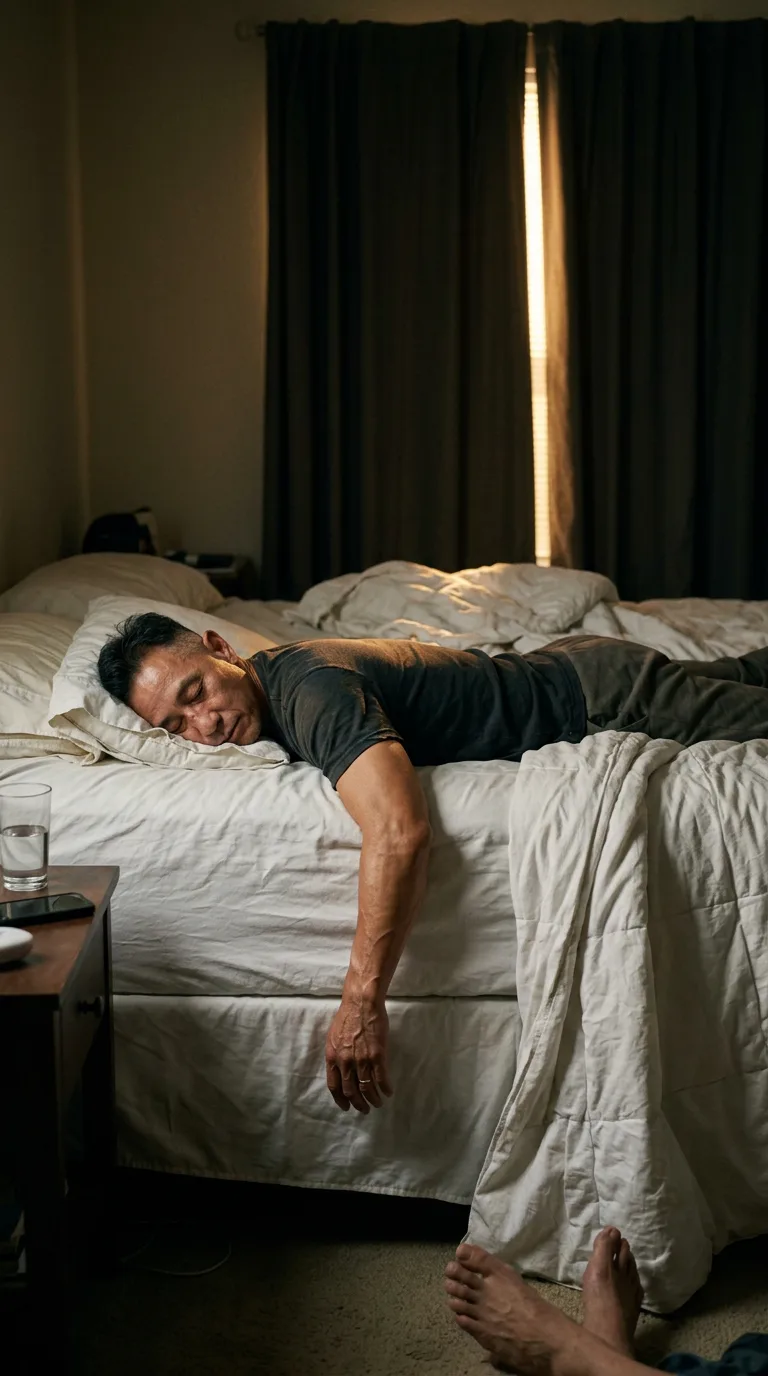
Rarest thing about him: A once-broken nose — uncommon, 1 in 13
Season 0seed 1336668100 · engine v10
Character card
lineage 2NZHHJ
His body-swap story
@colin.hasbrook, wearing Peter Wozniak, rolled the wheel on and woke up as Warren Iseda, spent under a minute in him, then spun the wheel and woke up as Aaron Pressler
The trowel is what does it. Peter Wozniak's hand, your hand — for less than a minute now — closes around the worn wooden handle of a trowel he has used maybe four hundred times, and something in the grip is wrong. Too practiced. Too much history in a tool you picked up an hour ago. You are crouched in a pit in Queens over a nineteenth-century privy shaft, dust in the creases of knuckles that aren't yours yet either, not really, and a graduate student is asking you something about stratigraphy, and you realize you don't want to answer it. You have been Peter for less than a minute and already the shape of the rest of the day is visible: the drive back, the report, the bland satisfaction of a man who found what he expected to find. There was a woman two spins ago who cried when you left her body slumped at a bus stop, mouth still open on a word you never let her finish. There is nothing here like that. That's the whole problem. You stand, knees protesting in a way that isn't dramatic, just middle-aged and average, and you walk to where you left the phone in the tool bag, and you open the site the way you always do, sideways, like it's an accident.
The wheel doesn't care that it's Monday afternoon here. It also doesn't care what time it is anywhere else. You spin.
The room that arrives is dark at the edges and gold down one seam where curtains don't quite meet, and the body draws its hanging arm up off the mattress without your asking it to, folds both hands over its chest like something laid out for a viewing, and the breath that was ragged a half-second ago goes even, deliberate, yours. Streetlight, not daylight, though somewhere behind your eyes a piece of you that used to be Peter's afternoon insists it should be daylight. It is daylight, four hundred miles north and one hour ahead. Here it is not. Here a man sleeps at an hour that would be strange for anyone who didn't drive out before dawn to be under somebody's sink by seven, and is home again, wrung out, by early afternoon, curtains shut against a Houston sun he has no more use for.
The mattress holds you. The sheets are cheap cotton gone soft with washing, and that softness is the second key — a whole decade of Sunday mornings comes up out of it, his wife's foot finding his under the blanket before either of them are awake enough to call it affection, just want warm and the two kids, small once, thumping down the hall toward cartoons. The memory has no name attached yet. It just has weight, the specific weight of a marriage that has outlasted its own beginning and is not sorry about it.
Then the wedding band. Plain, gold gone thin with age, on the hand now folded at your chest, and touching it — you don't move it, you just notice it there against your sternum — opens a whole afternoon: a courthouse, cheap suits, her laughing at something the clerk said, twenty-six years old and certain in a way he has never managed to feel about anything since except this. Linda. The name comes with the ring, not before. Two kids after that, a boy who plays trumpet badly and beautifully and a girl in nursing school in Galveston who calls on Sundays, and somewhere in the folded space between the ring and the sheet you feel the whole unglamorous architecture of a life that worked, that he built with his hands the same way he builds everything, patient, one joint at a time.
His body under you is compact and used. Fifty-eight years old and still strong through the shoulders in the specific way of a man who has spent four decades hauling pipe wrenches and crouching in cabinets under strangers' sinks — the knees ache, quietly, always, a low static he has stopped registering as pain. There is a tightness behind the eyes that isn't a memory but a fact of him, blood pressure medication he takes with his coffee and sometimes forgets, and something in the wiring of him that is calm anyway, unbothered, a settledness that isn't resignation. Buddhist not by performance but by habit — a small shrine on a shelf somewhere in this house, incense he lights without ceremony, the way another man might check the weather.
The shirt he fell asleep in — gray, thin from washing — gives you the morning before this one, hours before dawn, him pulling denim overalls on in the dark so as not to wake her, the shoulder straps clicking into their buckles by feel alone, the belt with the wrench holster settling onto a hip that knows exactly where it goes without him looking. Boots by the door, already broken to the shape of his feet. He'd stood a second in the hallway light, listening to the house breathe around his sleeping family, and felt, for no reason he could name, lucky. That feeling is still in the room. It is stronger than the ache in the knees.
Nobody hurt him to get you here. Nobody will know he was ever gone.
Your — his — hands come up off his chest into the gap of light between the curtains, and you turn them over, palm up, palm down, looking for calluses that are already there, a nose you can feel is crooked without needing a mirror, a life sitting fully dressed and waiting behind every object in this room you haven't touched yet.
"Linda," you say, out loud, to no one, testing the shape of a name that isn't yours yet either — and somewhere under that word is the small flat certainty, already familiar after a hundred and seventy-one other bodies, that you will wear this one exactly as long as you want to, and not one hour longer.