Aaron Pressler
Fictional. Generated by AI — not a real person, and no likeness of one is intended.
23, nurse in Western Kansas · rolled by @colin.hasbrook · card — no film
History
who has worn him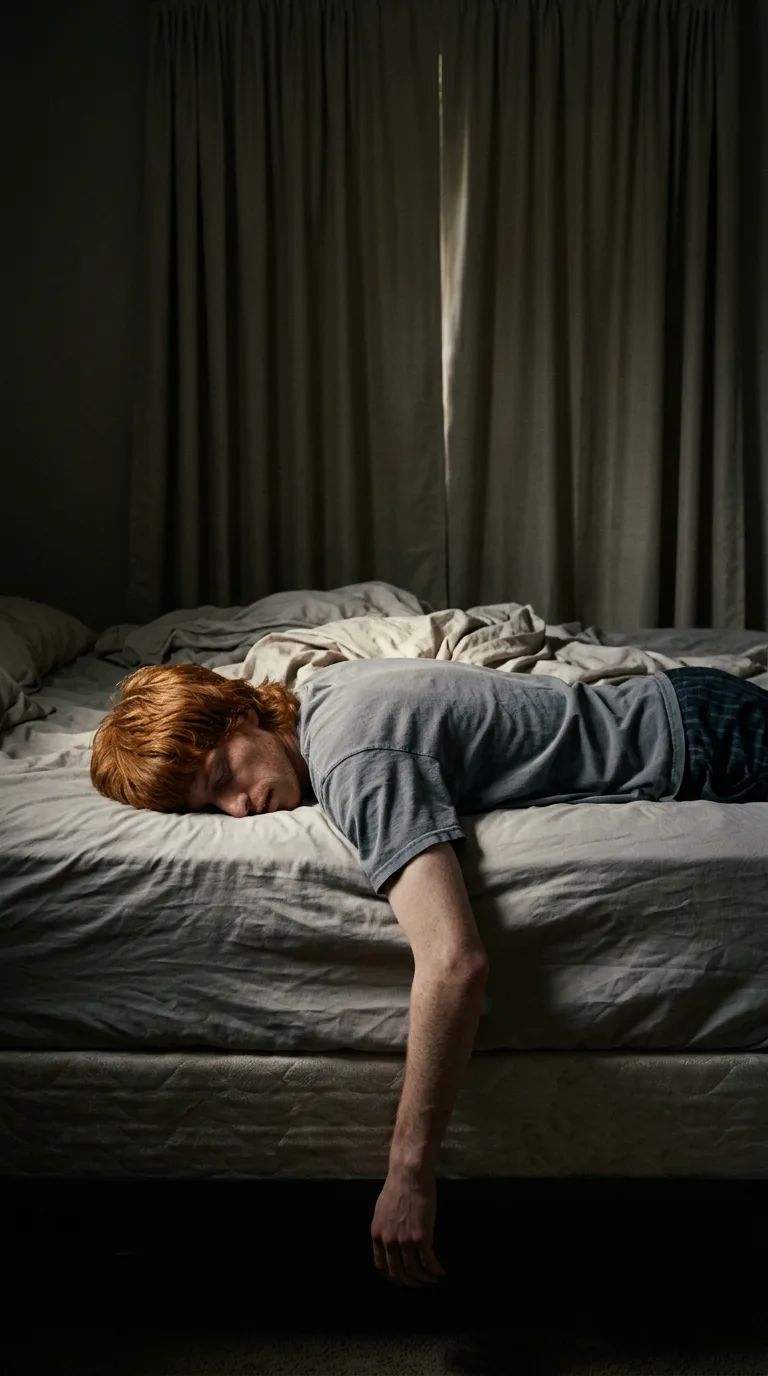
Rarest thing about him: Jewish — rare, 1 in 37
Season 0seed 1536416552 · engine v10
Character card
lineage 2NZHHJ
His body-swap story
@colin.hasbrook, wearing Warren Iseda, rolled the wheel on and woke up as Aaron Pressler, spent 1 minute in him, then spun the wheel and woke up as Karan Bhatti
Warren Iseda's knees ache on the kneeler under a customer's sink in Houston, and that's the whole problem right there — fifty-eight years of cartilage grinding down to nothing, a pipe wrench that's gotten heavier every year, a nose that whistles faintly when he breathes through it from the last time it broke. You've had him a month. Long enough to know his knees will never not hurt, and that the ache is the kind of thing that follows you into every body you don't leave soon enough. You wipe your hands — his hands — on a rag, tell the homeowner you'll be right back, and sit in the truck with the AC roaring and pull out the phone. The site loads the same as always: the wheel, the soft chime, the button that says SPIN like it's nothing.
It isn't boredom, exactly. It's the knees. It's Monday afternoon and forty more years of Mondays like it if you stay, and there is a version of this where you never have to feel a body get old again, not really, not past the point where you'd get bored of it and cash out into someone new. You spin. The wheel does what it does.
And then you are lying face down in unmade sheets, thin gray light coming through a gap in heavy curtains, one arm hanging off a mattress into cooler air, and the breath that was ragged a half-second ago goes even in your chest like a held note finally let out. The arm draws itself up. The body rolls onto its back without you quite deciding it should, hands folding at the sternum, a posture this man has never once slept in, you understand immediately, the way you understand a room by its silence.
It is bright behind the curtain gap. Too bright for eleven in the morning, except it isn't eleven in the morning here — you don't know that yet, not in words, but the light knows, thunderhead-yellow and close, a storm light, and somewhere under it wheat stubble is lying cut and pale in rows. You are twenty-three and skinny and there's a fringe of red hair lying damp against your brow. Your teeth click together on an exhale and there's a gap in the front of them your tongue finds without being told to look.
The T-shirt against your back is the first key. Thin, worn soft, and it opens into a whole night: a twelve-hour shift that ran to thirteen, the drive home with the windows down because the AC in the car died in June and nobody's fixed it, three vape pulls in the driveway before he could make himself go inside, and then the shirt coming off inside the door and this one going on because it was the closest thing on the floor that smelled like fabric softener and not antiseptic. Aaron. The name arrives with the shirt, plain as a stitched tag. Aaron Pressler, and under his palm now, remembered rather than felt, is the particular give of a call bell button, a clipboard's cool aluminum edge, the rubbery drag of a glove going on. Nights. He works nights, has for two years, ever since the hospital in Hays needed bodies and he needed the money more than he needed to sleep on a normal person's schedule. That's why sleep is happening now, at an hour the sun says is wrong — his night is anyone else's noon, and the room agrees, curtains drawn against a day he's trying to make into dark.
The sheets under you are the second key, and they open slower, a whole year instead of an afternoon: this apartment, one bedroom, month to month, chosen because it was fifteen minutes from the hospital and because nobody else needed to approve of it. His mother's voice on the phone Friday, asking again when he's coming to shul, and the small flare of guilt he swallows every time because he hasn't been since spring and he can't say why except that after a night shift the drive feels impossible and by the time he's awake enough it's already dark again. A relationship that ended eight months ago, quietly, no one's fault anyone could name — she said he was somewhere else even when he was in the room, and she wasn't wrong, and there's a rawness there that isn't grief anymore so much as an old callus. The little orange pill bottle on the nightstand, refilled on schedule, that makes the mornings survivable, that he's stopped being ashamed of taking, mostly. A leg that bounces under a nurses' station counter at three in the morning while he charts, has always bounced, since he was a kid getting yelled at in Hebrew school for not sitting still — his mother's hand flat on his knee, quiet, quiet.
The pillow under your cheek gives you the station itself: fluorescent light flattening every color, the smell of the break room's bad coffee, a coworker's laugh two doors down, the particular tired satisfaction of a med pass that went right, an IV he got on the first try in a vein that was hiding from everyone else. His hands know that — steady in a way the rest of him isn't, a leg bouncing under a desk while the fingers above it are perfectly still, threading a line, capping a syringe. He's good at this. He didn't expect to be, and some nights that's the only thing that gets him back in the car for the next shift.
You lie there another second in the borrowed dark, feeling how light this frame is, how little of it there seems to be — ribs close under the skin, wrist thin enough that his own scrub cuffs used to slide down over his knuckles, a body that runs on nicotine and coffee and not quite enough food between shifts. Nothing hurts. That's the strangest part after Warren's knees. Twenty-three and nothing hurts.
You bring your right hand up in front of your face, into the thin blade of streetlight-turned-storm-light coming through the curtain gap, and turn it over once, fingers spreading, a stranger's palm, a stranger's bitten-down thumbnail.
"Not yet," you say, out loud, to the empty room, and you don't know yet if you mean the storm outside or the wheel, and neither does he, because he isn't in there to ask.