Otis Rimmer
Fictional. Generated by AI — not a real person, and no likeness of one is intended.
61, cop in Rural Texas · rolled by @colin.hasbrook · card — no film
History
who has worn him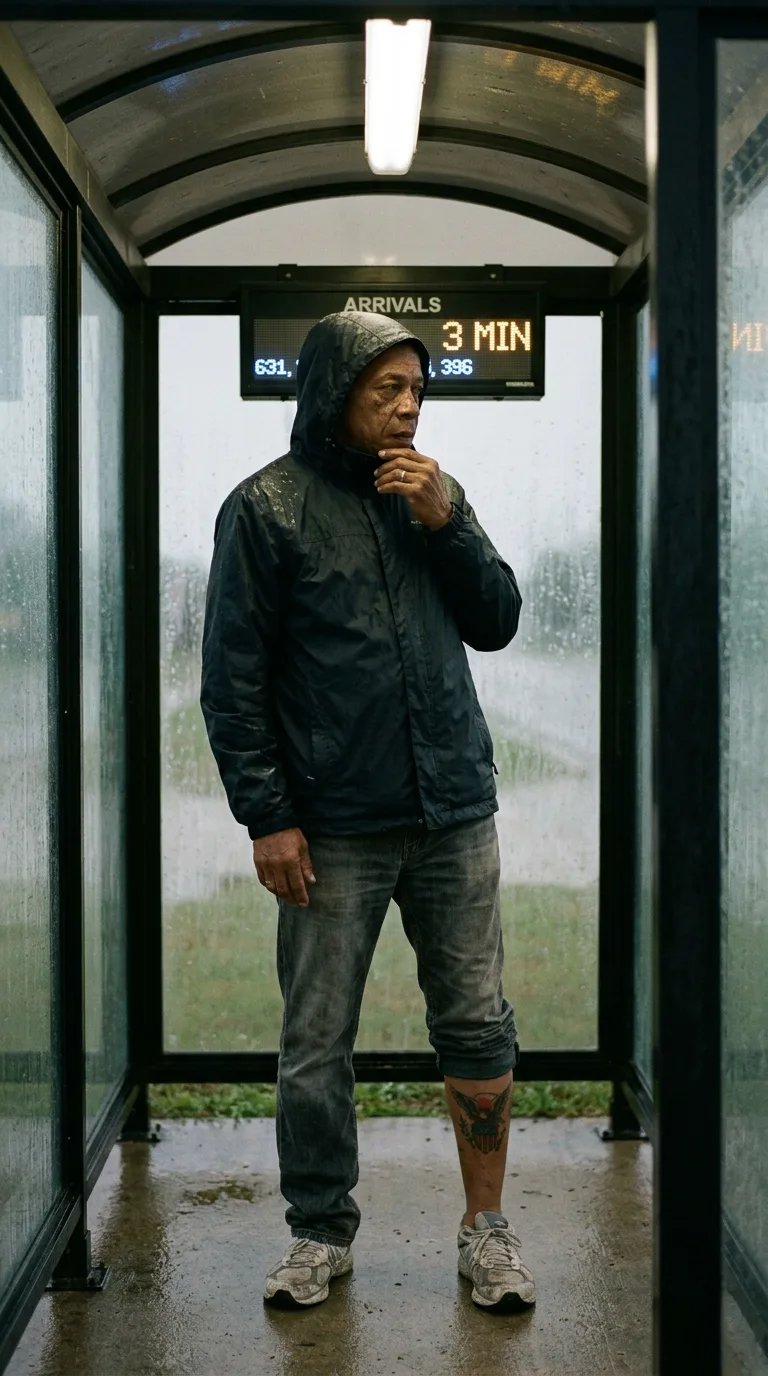
Rarest thing about him: Other Christian — epic, 1 in 150
Season 0seed 1954760766 · engine v10
Character card
lineage 2NZHHJ
His body-swap story
@colin.hasbrook, wearing Wesley Nakamoto, rolled the wheel on and woke up as Otis Rimmer, spent under a minute in him, then spun the wheel and woke up as Sami Fakhoury
The delivery van is idling behind you and the app on Wesley Nakamoto's phone says four more stops before six, and you are thinking, not for the first time this hour, about how his knee already aches in a way that a thirty-six-year-old's knee should not, how the gap in his teeth catches his tongue every time he talks himself through an address, how the smallness of him — 5'5", quick, athletic in the way of someone who has to be because nobody else will carry the boxes for him — has stopped feeling like anything at all, like a coat worn so long you forget you put it on. That's the thing that sends you back. Not hate for him. Just the flatness of a Monday afternoon in a body that has already given you everything it has to give, thirty-some minutes into being him and already counting down the stops, already reaching for the next name before this one's cold in your hands. You open the site on his phone in the front seat, because the wheel doesn't care whose thumb spins it.
The rain finds you first — not sound, not sight, just cold water landing on an upturned face that isn't flinching from it, and weight arranged wrong from any body you've stood in recently: broader through the gut than the shoulders account for, shorter reach than you expect, a hood fallen back onto a wet neck. Your — his — mouth is open a little into the rain. The arrivals board behind you still reads 3 MIN, though you are three feet past the shelter's dry line now, standing in the runoff like it's something you've been waiting for.
The jacket is the first thing that talks. Nylon, cold-slicked, zipper pull worn smooth — and it gives you a morning: him standing in a mudroom in the dark, pulling this same jacket off a hook by the back door because his wife Renata already had coffee going and the radio on low, farm report before weather, and he'd said something to her about the bus schedule changing again and she'd said something back he can't quite catch, only the shape of her voice, warm, unbothered, twenty-six years of mornings just like it. His hands know this zipper's stubborn tooth two inches up without being told.
The jeans, cuffed wet against his shins, give you less — just the tug of pulling them on sitting on the edge of a bed that creaks on his side and not on hers — but the tattoo on his calf, the eagle and shield gone soft-edged with forty years of fading, gives you a barracks, gives you nineteen years old and proud of a body that could still take anything, gives you a name he doesn't use anymore for a version of himself that doesn't exist anymore either.
The shoes — canvas, gone dark with water at the toe — give you the walk from the cruiser to the shelter that never happened this way before, because he doesn't usually take the bus, he drives, except the truck's transmission is at Denny's shop until Thursday and Renata needed the Buick for her sister's chemo appointment and so here he is, a cop with a badge that says he's someone in this county, standing at a bus shelter like a man with nothing, and something in him had liked that, actually — the anonymity of it, the rain, nobody needing anything from him for three more minutes.
The ring is the deepest thing. Plain gold, warm despite the cold rain, and it opens up decades at once, not a single memory but a weather system of them: two kids raised out past the water tower, a boy who went into the Guard and a girl who teaches third grade in Lubbock now and calls every Sunday; Renata's hand in his in a hospital waiting room the year the blood pressure numbers started scaring the doctor; the bottle he keeps telling himself he's cutting back on, the one in the garage fridge that Renata pretends not to count; twenty-two years on this department, dusk shifts leaning on the hood of a cruiser watching the light go copper over the flat land, the leg that won't stop bouncing even now, even in the rain, some motor in him that never got the message to power down. He is tired in a specific way — not his heart, not yet, though the doctor keeps saying watch it — tired the way a man gets when he has spent sixty-one years being solid for other people and has never once let himself be the thing that breaks.
He is not thinking anything as the water hits his face. That's the strange gift of it — you've arrived in a man mid-surrender to something small and total, rain on skin, no thought behind the eyes at all, and for a second that absence is the most peace you've felt in a hundred and seventy-six other men.
You lift your face out of it. You look down at the hand with the ring on it, turn it over, freckles across the back of it going dark and pearled with rain, and you hold it there a moment before you look up into whatever is watching.
"Renata's gonna kill me for missing this bus," you say, and you almost laugh, because it's the last thing he would have said and the first thing you found in him.