Roy Dietrich
Fictional. Generated by AI — not a real person, and no likeness of one is intended.
64, retired in Western Kansas · rolled by @colin.hasbrook · card — no film
History
who has worn him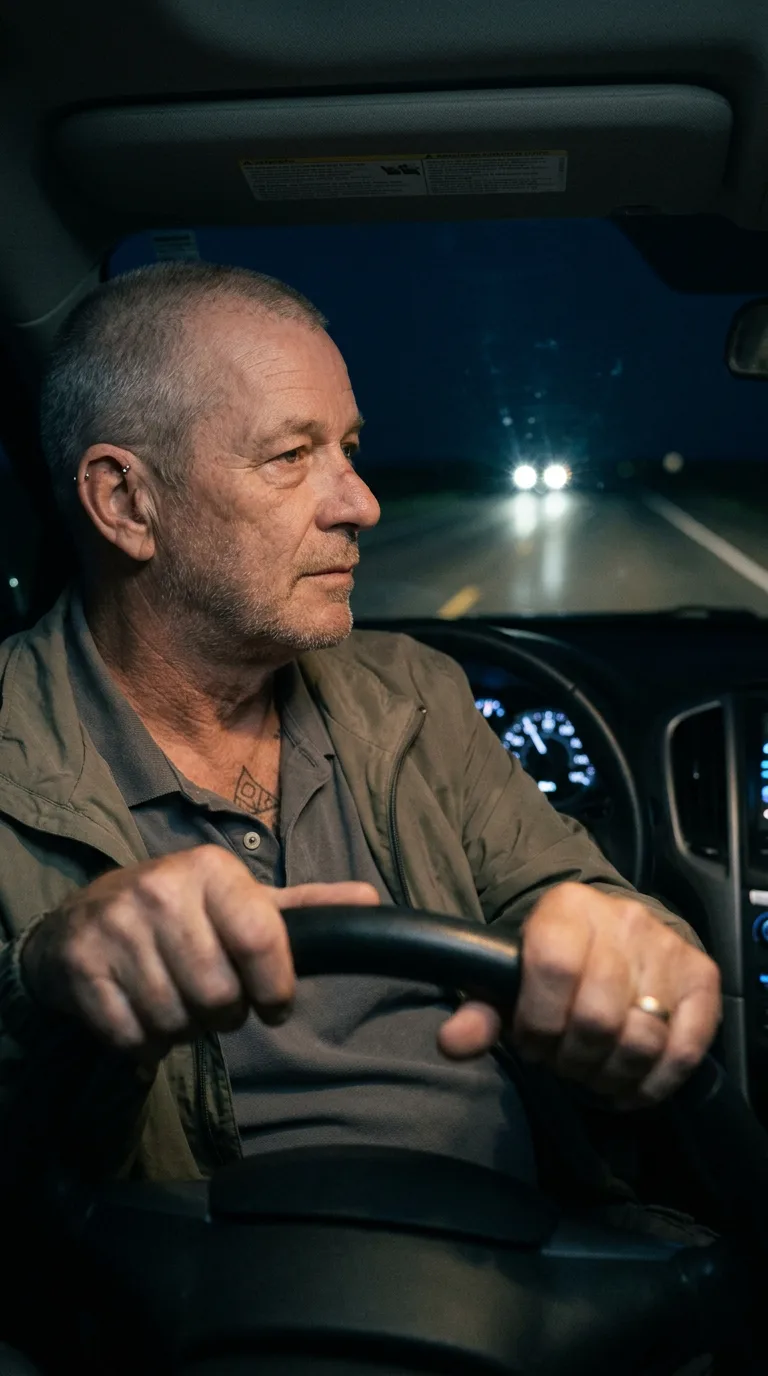
Rarest thing about him: Ear cartilage — legendary, 1 in 167
Season 0seed 912342278 · engine v10
Character card
lineage 2NZHHJ
His body-swap story
@colin.hasbrook, wearing Douglas Farrenkopf, rolled the wheel on and woke up as Roy Dietrich, spent under a minute in him, then spun the wheel and woke up as Suresh Bhandari
The porch swing behind you creaks and you don't sit on it. You're standing in Bobby Krasinski's kitchen — his kitchen now, was his three minutes ago — and the fluorescent light over the sink is buzzing the way it does at eleven in the morning when a man who works nights hasn't slept right in years. Your hands are twenty-two-year-old hands. Mechanic's hands, a scar across one knuckle you didn't earn and don't want. You flex them and they feel like borrowed gloves, too quick, too sure, and underneath them your own want is old and tired in a body that isn't old or tired at all, and that's the whole problem — you can feel every year you've spun through sitting wrong in this frame, like a suit two sizes down. Three minutes ago you were Douglas Farrenkopf, a firefighter, six-foot-one, easy in his own weight. Now you're wearing a kid who still owes on his truck, and something in you — six hundred and eighteen bodies deep — just wants to be back in something that fits like it's been lived in a while. Something with a little rust on it. You think of the coworker Bobby complains about, the older guy on the crew, divorced, bad knee, always flipping that lighter he doesn't smoke with anymore. You don't decide so much as remember deciding, already reaching for the phone that isn't yours, already at vessel.cards, already paying, already spinning the wheel a 619th time before Bobby's coffee's gone cold in a mug you'll never drink from.
The wheel doesn't ask twice.
You are behind the wheel — the other wheel, the real one, black plastic under both hands, ten and two — and the dash glow is on knuckles that are not the knuckles you just had. Thicker. Spotted. A pale groove where a ring used to sit. Outside the windshield the wheat stubble runs flat and gold-gray to a horizon stacked black with a thunderhead, and the light has gone that strange yellow that comes before weather. Three miles from home, though you don't know that yet, not really, not until it comes. The car drifts a foot toward the centerline. Both hands come off the wheel at once and resettle, lower, wider, like a man adjusting to a coat he's had for years, and the turn signal clicks on for an exit that isn't his. It ticks in the quiet like something counting down.
The shirt is what gets you first — a blue polo, worn soft at the collar, and touching the collar you feel the tattoo underneath it, fine-line geometric, and with it comes a chair in a shop in Salina, twenty years gone, a woman with a steady hand asking if he was sure, and he was sure, because it was the year the divorce went through and he'd wanted one thing on his body that was only his. The steering wheel gives you more: two kids in a booster seat, gone now to grown lives in Wichita and Denver, a Christmas call that ran four minutes too short and neither of them said why. The wedding band is gone from the finger but the tan line isn't, and running a thumb over it — his thumb, doing it without him telling it to — you get a whole marriage in a flash, good years first, the way it always comes, a woman laughing at something at a county fair, and then the long quiet after that, and then just silence, the specific model of loneliness a man builds a whole retirement around. The cartilage piercing itches faintly at the ear, and that's a dare from a nephew, one beer in, the year he quit drinking for good, quit smoking not long after, the lighter kept anyway out of habit, out of something to do with the hands. It's in his jacket pocket now, on the passenger seat where the jacket's folded — you can feel it there without looking, the shape of it, and you know without being told that his thumb wants to find it, flip it, catch it, a hundred times a day, muscle where a habit used to be.
The dash light finds the crook of his broken nose and you get that too — nineteen years old, a fistfight nobody remembers the cause of, set by a doctor who didn't set it quite straight, and he never fixed it because by the time he could afford to he'd stopped minding. Diabetes sits in him low and constant, a testing kit in the glovebox, a candy bar he isn't supposed to have in the console, guilt about the candy bar older than some marriages. Church on Sunday, folding chairs, a man two rows back who always says his name too loud in prayer requests. Coffee on the porch this morning — no, not this morning, some other morning, they blur — cut stubble catching low light, a mug that says WORLD'S OKAYEST GRANDPA that his daughter sent as a joke and he uses every day on purpose.
You feel all of it land the way weather lands, and under it, steady as an engine idling, his body: sixty-four years in it, softness at the middle where muscle used to sit, a knee that complains on the clutch, hands that know a torque wrench and a lug nut and forty years of small engines without having to be asked, blood sugar low enough right now to make the horizon shimmer at the edges. Three miles from home. A porch. A dog, maybe, waiting. You don't get to keep going into it — the memories are already thinning, a tide pulling back out — but you have enough. You have him.
The exit that isn't his slides past unused. You bring both hands up off the wheel just to look at them, turning the right one over in the dash glow, and it is an old man's hand now, spotted, thick-knuckled, a tan line where a promise used to sit, and it is not the hand you had three minutes ago and it is not any hand you were born with, because you were never born at all, not really, not anymore.
You lift your eyes to the rearview instead of the road, find your own gaze in it, and say, out loud, to no one:
"Well — hell. Here we go again."