Suresh Bhandari
Fictional. Generated by AI — not a real person, and no likeness of one is intended.
61, retired in Denver · rolled by @colin.hasbrook · card — no film
History
who has worn him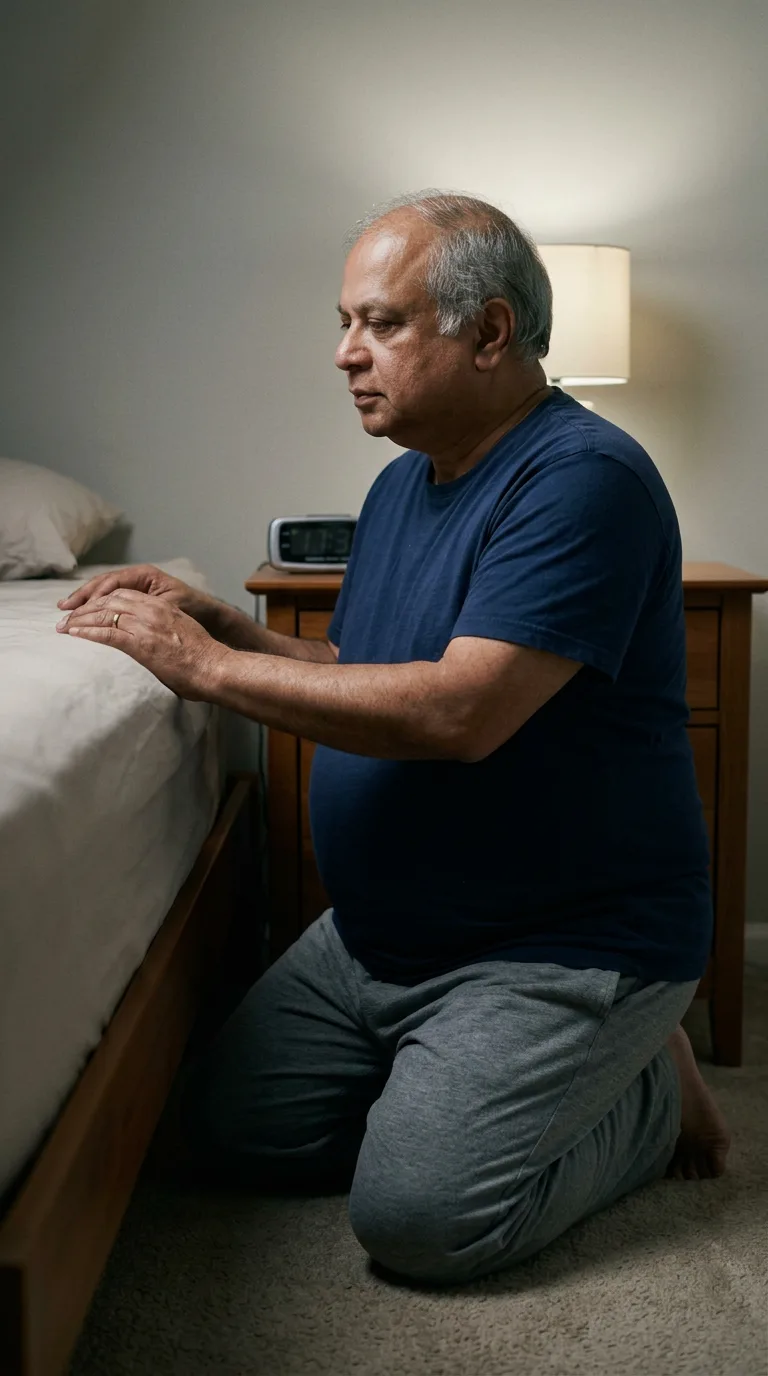
Rarest thing about him: South Asian — rare, 1 in 26
Season 0seed 248693798 · engine v10
Character card
lineage 2NZHHJ
His body-swap story
@colin.hasbrook, wearing Roy Dietrich, rolled the wheel on and woke up as Suresh Bhandari, spent under a minute in him, then spun the wheel and woke up as Randall Dietz
Roy Dietrich's kitchen smells like burnt coffee and the inside of a wallet, and that is the whole problem with him. Three days you've worn this heavy soft body, this face with the nose that healed crooked in 1987 from a fight nobody remembers the reason for, and it has been fine, it has been comfortable, and comfortable is the thing that always turns on you around the third day. Roy has a daughter in Salina who calls on Sundays and does not call today. Roy has a garage with a mower that won't start. Roy, sitting here at his own table at eleven in the morning on a Monday with nowhere to be, is the six hundred and nineteenth proof that a body is not a life, it is just a coat, and you have worn this coat long enough to feel its seams. The phone is already open on the counter. The wheel is already spinning before you've finished deciding, which is how you like it — decide after, never before.
It lands the way it always lands: total, immediate, no seam at all.
You are on your knees. Someone else's knees, doughy and aching faintly at the caps, weight pressing carpet-fiber patterns into skin you didn't have a second ago. Your hands are together in front of your chest, loosely, the way hands go when the praying was never really the point of the prayer. A clock on a nightstand says something your eyes catch and slide off without reading, red numbers, morning-bright. You were saying amen. You are still sort of saying it, the shape of the word gone soft in a throat that is not yours yet either, and the body — his body, not gearing to it, being it — starts to rise on its own faithful momentum before you've caught the reins, halfway up on one bent knee, and then you feel yourself, feel him, stop.
You come back down. Both knees. Forehead to the bedspread, cool cotton against skin, and for one full breath you don't move because you don't know yet which one of you decided that.
The bedspread is a wedding gift. That's the first thing, coming up through your — his — forehead where it presses the fabric: a hotel banquet room in Aurora, 1994, a buffet line, his mother's voice telling the caterer something in Gujarati too fast for the caterer to follow, and a cream-colored bedspread with a subtle paisley someone's aunt gave them still in its plastic, and Meera laughing at how ugly it was and keeping it anyway because it was hers now, theirs now, and twenty-nine years later it is still on this bed and she still hasn't admitted she likes it.
The nightstand clock is next, just from being looked at: not this one, the twin of it, a red digital face in a different bedroom, 2:47 a.m., and Priya eleven years old wheezing in the next room and him standing over this exact model of clock deciding whether the number was bad enough yet to wake her mother. It was. He carries something in his chest to this day from that number.
His knees on the carpet give you an ache that has been there since a herniated disc in his forties turned into knees compensating for a back that never fully forgave him, and his hands together give you the particular loose clasp of a man who was taught to fold them like this at age six by a grandmother in Ahmedabad and never once as an adult believed the folding itself did anything, only that it was rude to skip.
The t-shirt against your back — his back — is where the morning comes in whole. He put this shirt on forty minutes ago in a dark bedroom so as not to wake Meera, who sleeps in past him now that neither of them has anywhere to be, and his hands — thick fingers, a plain gold band worn smooth and thin at one edge — found the sleeve holes without looking, the same practiced blind reach he's used ten thousand mornings, elbow first, head through, the collar catching a second on his ear the way it always does because he buys these shirts one size wrong on purpose, more room for the belly he's stopped fighting. Coffee was already in his head before he was fully awake: he'd go down after this, sit on the porch, the mountains would be doing their gray-blue thing behind Mrs. Alcott's roofline, and he'd call it a good morning if his knees let him kneel without the sciatica lighting up, and mostly they had.
Somewhere in there is the ex who still matters — not scandal, just a name, Deborah, a girl from a summer job at a warehouse outside Chicago in 1983 who he thinks about maybe four times a year, always without guilt, always with a small ache like a tooth he's stopped noticing except when it's cold out. He never told Meera about the intensity of it, only the fact, and that gap between fact and intensity is the only lie in thirty years of marriage and it has never once felt like one.
The pills are in the bathroom cabinet, out of reach now but present anyway, the way a fact can be present without being touched — years of a low hum under everything that a small blue tablet each morning turns down to bearable, that and a therapist named Wendy he sees on a screen every third Tuesday and has never mentioned to his brother.
And Priya — one child, thirty-one now, an ache and a pride both — texted last night, a photo of nothing important, a dog she saw on a walk, and he'd meant to answer this morning and instead knelt down first because it was Monday and Monday felt like it needed asking-for.
He got to the amen faster than usual. Half a laugh in his chest at how fast, at how thin the prayer had been this time, mostly a list, mostly logistics handed upward like a grocery order — and he was already rising to go make the coffee when something in him, some old unfinished weight, pulled him back down. Called it not-enough. Decided to sit in it another minute.
That's where you are. Forehead on cheap ugly wonderful cotton, in a stranger's kneeling, in a stranger's unfinished prayer.
You lift your head. You look at the hand nearest your face — thick fingers, brown skin, the ring worn to a soft groove — and you turn it over slowly, like you're checking it's real, because for one man it always is and for you it never has been.
"Okay," you say, out loud, to the empty room, to nobody, in a voice that isn't the one you had an hour ago. "Okay, Suresh. Long enough."
You don't stand yet.