Randall Dietz
Fictional. Generated by AI — not a real person, and no likeness of one is intended.
47, furniture mover in Western Kansas · rolled by @colin.hasbrook · card — no film
History
who has worn him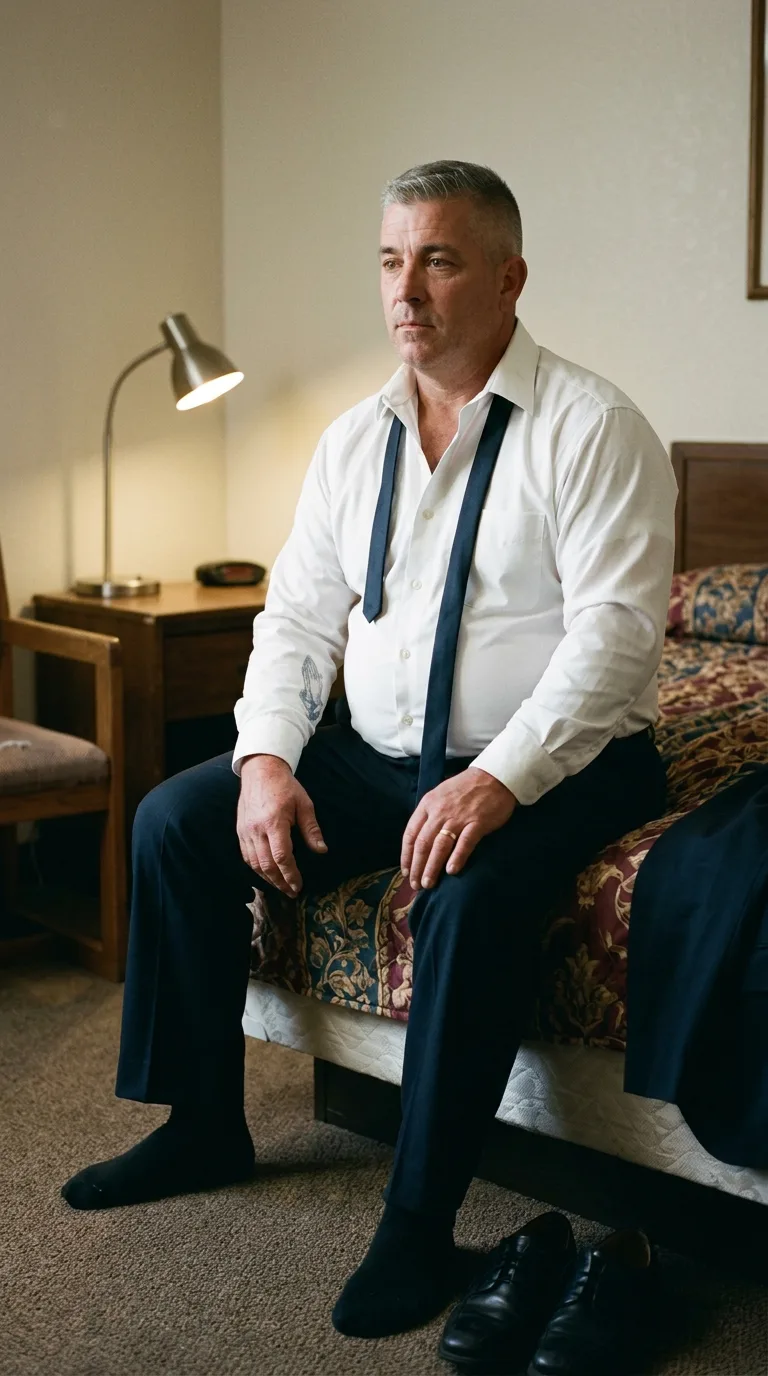
Rarest thing about him: 5'3" or under — rare, 1 in 69
Season 0seed 1774087708 · engine v10
Character card
lineage 2NZHHJ
His body-swap story
@colin.hasbrook, wearing Suresh Bhandari, rolled the wheel on and woke up as Randall Dietz, spent under a minute in him, then spun the wheel and woke up as Manny Cardosa
Suresh Bhandari's knees ache going down the hallway of his own condo, which is not really a complaint, just a fact you've had for less than a minute now, inherited like the rest of him — the loose skin at the throat, the smell of the cardamom tea going cold on the counter, the ring on a finger that isn't yours and never will be no matter how long you wear it. Sixty-one years old. Retired. Denver light through the blinds in stripes across a carpet somebody chose before you existed in him. It is a fine body. It is also already boring you, the particular boredom of comfort, the flat Monday hum of a life with nothing left to want inside it, and that itch — you know that itch by now, six hundred and twenty times over — is the only reason you need. You go to the laptop on the kitchen island, the page already bookmarked, the wheel already spinning before you've admitted to yourself why.
It stops.
And you are short. That's the first thing, the drop of it, your eyeline suddenly a foot lower than it was a half-second and eleven hundred miles ago, and there's a shirt against your back, half its buttons wrong, and a tie hangs open around a collar that smells like a motel laundry service, and a hand — this hand, thick-fingered, a wedding band worn thin at the underside — is flat on a chest that is not the chest you had, feeling ribs that ache faintly, a low ambient soreness that isn't pain so much as forty-seven years of freight. Outside the window it is early afternoon and a wall of black is stacking up over cut wheat the color of an old dog, the light gone that strange yellow that means the day is about to turn on itself. You didn't travel. You were just here, suddenly, as him, mid-motion, hand on the second button.
The buttons come undone. Go back up right. You didn't do that on purpose, not exactly — his hands did it, the way a man corrects a knot he's tied ten thousand times without looking, muscle older than thought. And that's the door in. The shirt is the key. It comes back through your shoulders, sleeve by sleeve: a Sears rack twenty years ago, his hands newly married then, thinner, still able to bend all the way to the floor without a sound coming out of him; a hundred other Mondays, motel rooms and his own bedroom both, the same half-asleep choreography, the tie always an afterthought because ties are for the one day a month somebody dies or gets married or a bank wants him in a suit to co-sign something. Randall Dietz. The name arrives with the tie, oddly, knotted now in a full Windsor his hands have never once tied before and don't question, because nothing in him is watching closely enough this morning to notice his own hands doing something new.
The room comes in through his feet next, cheap carpet, a chair that isn't his, and you understand without being told that this bed is not the bed with his wife in it — that she is four hours west of wherever this room is, asleep still probably, in the house with the leak in the north gutter he keeps saying he'll fix, and that he is here because the crew got sent early to bid a job on a big estate liquidation outside Salina and there wasn't time to drive home between. The wife's name comes up soft and whole when his thumb finds the ring: Carla. Fourteen years. A second marriage, hers and his both, the kind that got built slow and plain out of two people who already knew what the first one costs. There was a first wife — Denise — and there is still, underneath everything, a low permanent tenderness for her that never turned into hate, because the marriage just wore through in the ordinary place marriages wear through, and there's a daughter, seventeen now, who lives with Denise on weekdays and rides in the truck with him on Saturdays sometimes, complaining about the radio.
His back tells you things his mind wouldn't bother to. Fifty pounds of couch takes a special kind of hinge at the hip that this body has been doing since he was twenty-three and it costs him more every year, a permanent tightness low on the left side that a drink in the evening blunts but never touches all the way down. No cigarettes ever, never saw the appeal, but a beer or two most nights on the porch with Carla, the two of them not talking much, which is its own kind of good. No church. Hasn't been in decades, doesn't miss it, though the tattoos on his forearm — the cross, the praying hands, put there at twenty by a shop in Wichita for reasons that had more to do with his mother than with God — still mean something to him he's never tried to name.
Money is thin and always has been, and there's a particular flavor of tired that comes from that specifically, not despair, just arithmetic done every week of his life. But there is real love here, plain and unglamorous, in a man who gets up sore every day of the week to move other people's furniture and comes home to a woman who saves him the good chair, and somewhere in Salina a daughter who will, tonight, text him a joke about the couch he's about to load.
You look down. His hands — blunt, a little swollen at the knuckle, a wedding band worn shiny with fourteen years of exactly this — turn over in the lamp light like they belong to somebody you're about to become extremely familiar with. Outside, thunder starts to lean on the room.
"Okay," you say, to no one, in his flat Kansas voice, tying the tie one more turn tighter than it needs. "Let's go earn it."