Douglas Farrenkopf
Fictional. Generated by AI — not a real person, and no likeness of one is intended.
55, firefighter in Pittsburgh · rolled by @colin.hasbrook · card — no film
History
who has worn him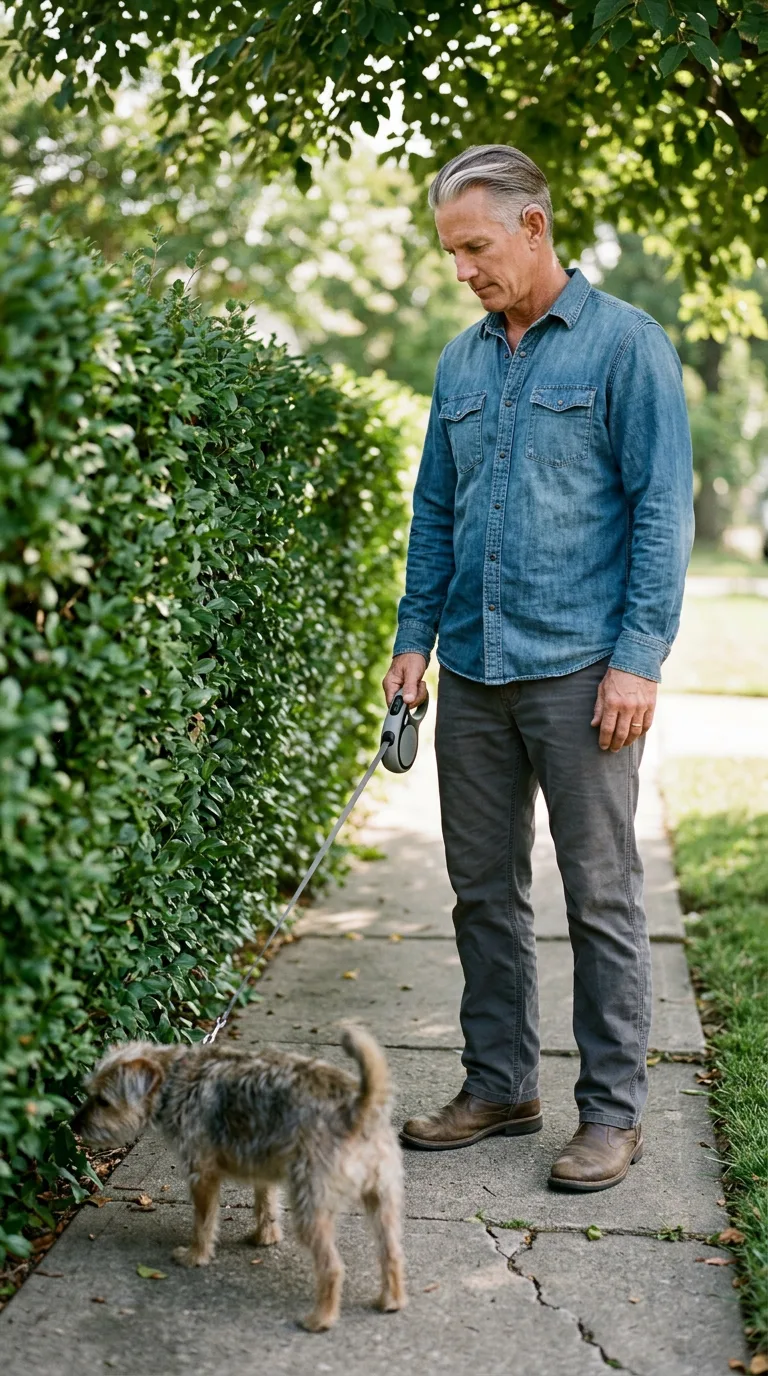
Rarest thing about him: A white streak in the hair — epic, 1 in 99
Season 0seed 8365902 · engine v10
Character card
lineage 2NZHHJ
His body-swap story
@colin.hasbrook, wearing Bobby Krasinski, rolled the wheel on and woke up as Douglas Farrenkopf, spent under a minute in him, then spun the wheel and woke up as Roy Dietrich
Bobby Krasinski's hands are shaking, and they've been shaking for most of the three minutes you've worn them, and you are so tired of that already that it feels like a decade. Twenty-two years old, forearms flecked with old burn scars from an exhaust manifold that isn't even your memory, just residue, just weather that blew in with the body. You are standing in a garage bay that smells like cut steel and old coffee, and somewhere under your borrowed sternum a heart that isn't yours is going too fast, because this kid runs hot, always has, and you didn't ask for that either. There's a wrench in this hand you're wearing. You don't want it. You spun for a firefighter once, years and lives ago, and you remember — dimly, the way you remember all of them, a country of ghosts — that a man who runs into houses feels different in the chest than a man who fixes transmissions for $19 an hour in a town with one stoplight. You want that feeling back. You don't examine why too hard. You never do. It isn't boredom, exactly, and it isn't the money, though the money helps you decide the direction. It's that four minutes ago you were somebody with a future stretching out flat and dull in front of him like a two-lane road at noon, and you would rather be anyone, anywhen, mid-stride into something else. You set the wrench down on the bench. Somewhere in Ohio it is the middle of a Monday. You reach for your phone, thumb the site open one-handed, and spin.
The hedge is the last thing that belongs to him alone.
Then the leash goes slack in your hand, and you are 6'1" and fifty-five years old and your knees know it immediately, a low honest ache behind both kneecaps that has nothing to do with fear and everything to do with two decades of stairs at 3 a.m. in full gear. The dog looks up at you — ears back, reading something in the air that it will never be able to say — and you wind the leash twice around your palm without deciding to, because this hand has done it ten thousand times and does not need you yet. You start walking. The dog has to trot to catch the new stride.
The denim shirt is warm from the sun and it comes first, small and immediate: a bathroom mirror in gray morning light, buttoning cuffs one-handed while the other hand holds a mug, humming — not a song, just a habit, a thing his throat does while his hands work. The shirt remembers a hundred mornings like that one and gives you the most recent, sleeve by sleeve. He picked it because Renee likes him in blue. He thought that exact sentence while buttoning it, and it arrives in you now with a small, undefended warmth that isn't yours and that you didn't ask for and can't put down.
The leash-hand gives you more, faster, the way things do when they've been held ten thousand times: a firehouse apron, the engine's chrome catching low sun, a photograph somebody's kid took for a calendar and everyone in the crew ragged him about the streak in his hair showing up white against the red truck like he'd planned it. His hands don't shake — not those hands, not on that apron, not with the crew watching — because the stutter only comes for him in rooms with tables and other men's questions, city budget meetings, his daughter's wedding toast he never gave because he handed the mic to his brother instead at the last second, throat locking. Firehouse hands are steady. Sidewalk hands, this hand right now, are steady too. It's only words that catch on him, only when it matters enough to notice it mattering.
The wedding band is small and plain and it opens wider than anything else has: Diane, thirty years, an argument this morning about nothing — recycling, a schedule, the small ordinary friction of two people who know each other's weather — and under the argument, solid as the concrete under your borrowed boots, the fact of her, unmovable, the marriage a thing he built and keeps building without noticing it's still under construction. And behind that, a year ago, a woman named Jess who is not his wife and who he still thinks of on Tuesdays for reasons he has never once said aloud to anyone, a softness that catches him at red lights, that he is faintly, privately ashamed of and would not trade away either. Two kids, grown enough now that walking the dog on a Monday is the whole of his afternoon, and he is glad of that in a way that also aches.
The hearing aids sit warm and small in ears that have heard forty years of engines and alarms and men shouting his name in smoke, and without them the world would be going soft and gray at the edges the way it already sometimes does at the end of a long shift. He's spiritual about that, in his own unchurched way — thinks something kept his hearing this long on purpose, thinks something is owed for it. He doesn't smoke anymore. Quit the week his first kid was born and has never once let himself forget he wanted one today, walking, thinking about nothing, the itch still alive after all these years like a pilot light.
The leather leash handle is worn smooth in a groove that matches this exact hand, and it gives you the dog itself — a rescue, four years now, terrible on walks, worth every minute of it — and under that, plain and unremarkable and entirely his, the fact that he is, right now, a man with over half a million dollars he never talks about, a house with public stairs down to the next street slick with wet leaves he'll navigate without thinking in an hour, a wife, a name on a firehouse roster, a body that still works.
You stop walking. The dog stops too, confused by the second stillness in one afternoon.
You look down at the hand holding the leash — his hand, tanned, the band catching the light — and turn it over slowly, like you're checking it's real, like you're checking it's yours.
"Good boy," you say, out loud, to the dog, and your voice comes out steadier than you expected, steadier than his stutter ever lets him manage with people — and you lift your eyes off your own hand, up, into whatever is watching, and you hold there.