Bobby Krasinski
Fictional. Generated by AI — not a real person, and no likeness of one is intended.
22, mechanic in Small-town Ohio · rolled by @colin.hasbrook · card — no film
History
who has worn him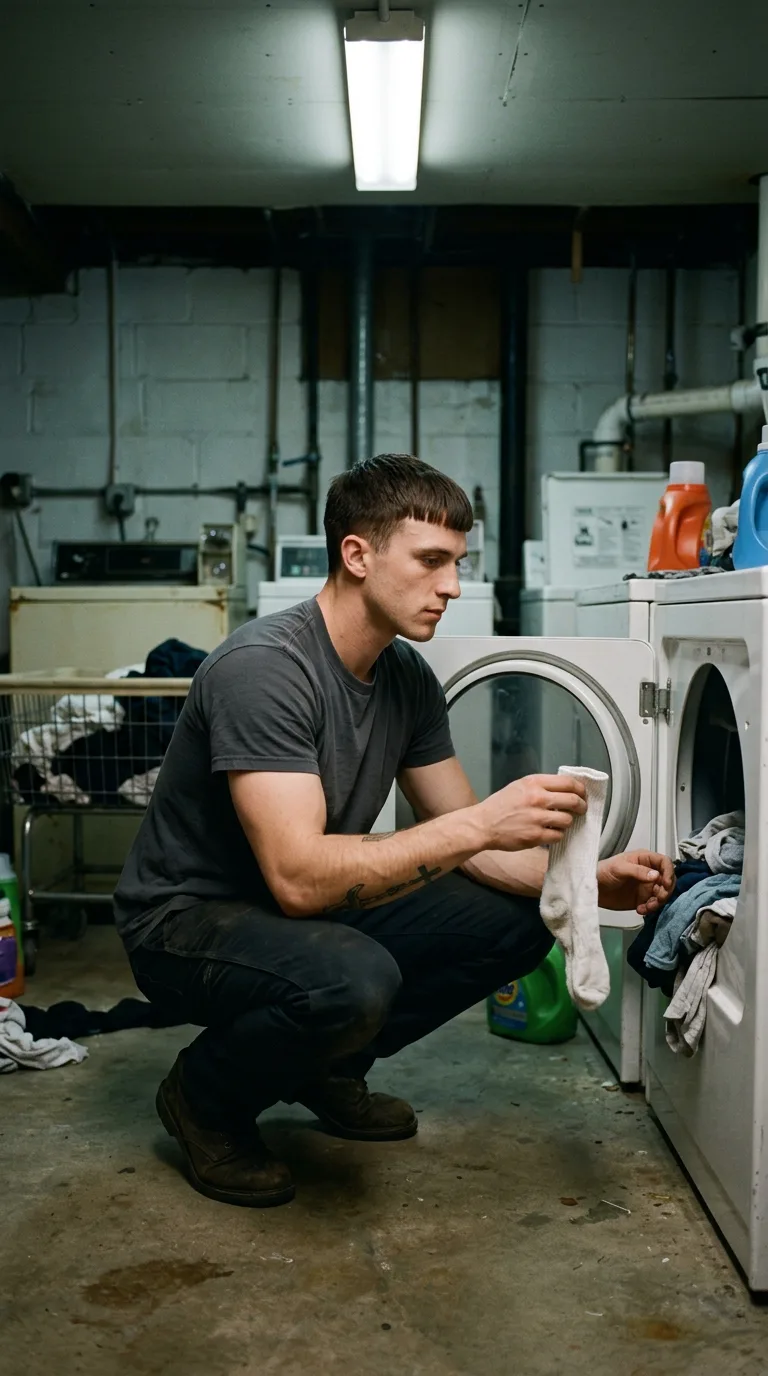
Rarest thing about him: A pack a day — rare, 1 in 16
Season 0seed 224301381 · engine v10
Character card
lineage 2NZHHJ
His body-swap story
@colin.hasbrook, wearing Daniel Lee, rolled the wheel on and woke up as Bobby Krasinski, spent 4 minutes in him, then spun the wheel and woke up as Douglas Farrenkopf
Daniel Katsuyama's fingers still smell like guitar strings and cigarette smoke that isn't his to have anymore, and that's the thing — none of it is yours, not really, you just borrowed the taste of it for less than a minute before you dropped him like a hot pan. Forty-one years old, freckled, skinny wrists, a rented house in Phoenix with a Fender leaning against a wall you never got to actually play. You left him standing in his own kitchen with a coffee cup halfway to his mouth, and you felt nothing about it, which is exactly the problem. Twenty-seven minutes wearing a man and you can't remember what his voice sounded like. That's the itch. Not boredom with Daniel Lee, who you're in now — the electrician, decent hands, a body that works — but the fact that you were just inside somebody who *knew* somebody, some skinny coworker back in Ohio he used to needle at the shop before Katsuyama's life took him west, and you never even asked what that was about. You want to go stand inside the answer. You want to know what Daniel Katsuyama looked like from across a workbench, through someone else's eyes, someone who maybe liked him, maybe didn't. Daniel Lee's lunch break is almost over. You open the site on his phone with his own thumb, feel the fingerprint sensor accept a print that isn't yours, and spin.
The dryer door is warm against your knuckles before you know you have knuckles again. A sock, damp-warm, terrycloth, held between two fingers that are not the fingers you had one thought ago. Fluorescent light buzzes white overhead. Concrete under your boots, cold through the soles. You are crouched, thighs burning pleasantly from the position, and the whole weight of a body that lifts things for a living settles onto you at once — broader in the shoulders than Daniel Lee ever was, shorter than you expected to feel, compact, coiled.
The shirt is what does it first — grey cotton, soft from a hundred washes, snug across the chest — and it comes with the ghost-feel of pulling it over his head that same morning, in a bedroom with the blinds still down because he'd worked late closing up the shop, an alternator that wouldn't quit fighting him. Bobby. The name arrives the way his own name always arrives to a man, without ceremony, just *there*. Bobby Krasinski, and he'd stood in front of the dresser mirror pulling that shirt down over his stomach, tired, not looking at himself too long because he never really does, and grabbed his jeans off the chair where he'd left them the night before, one leg and then the other, belt looped fast out of habit, boots already broken into the exact shape of his feet from three years of standing on a garage floor.
The sock in your hand opens onto laundry itself — how he does it on Mondays because Mondays are slow at the shop, how his mother taught him to fold with the seams matched because she used to fold his father's coveralls the same way at a kitchen table in a house two streets over from where he lives now. The basket beside you is a mess of the week: undershirts with grease at the collar, one navy work shirt with BOB stitched crooked over the pocket, jeans stiff enough to stand on their own. You feel his hands already knowing this — squaring a corner without thinking, snapping a shirt once in the air before it folds itself nearly on its own, faster than upstairs where eight shirts sit crumpled in a drawer because upstairs is where he stops caring.
The forearm tattoo brushes the dryer's edge and gives you church a boy never wanted to go to, his grandmother's rosary beads clicking against a pew, him at nineteen getting the cross and the praying hands done at a shop two towns over not because he believes any of it but because she died that spring and it felt like the only apology he had. He hasn't set foot in a church since. He doesn't pray. He just carries the shape of it on his skin like a debt he pays by never mentioning it.
There's a coworker in there too, faint, turning up sideways the way old office friction does — a guy from a shop he used to work at before this one, before Ohio, some East Asian guy, funny, played guitar, moved out west for a girl or a gig or both, they lost touch the way everyone loses touch. Bobby never thinks about him except sometimes at 2 a.m. with a cigarette on the back step, wondering if the guy ever made it as anything. Mild affection. No grudge. Nothing you were hoping to find, and it deflates something in you that you don't examine too closely.
Underneath all of it: a pack a day sitting low and rough in a chest that's otherwise strong, 22 and durable, the good kind of tired that comes from six cars in eight hours and nothing from staying up too late worrying, though the worry is in there too, quieter now, a prescription bottle upstairs in the medicine cabinet he takes without making it a thing. Single. No one waiting on him tonight. A stoplight up the street that's red for no one. A diner across from the shop that's been closed two years, and he still glances at it sometimes like it might open.
You pull the load out warm, drop it in the basket, and your — his — hands square the corners without being told to, fast, precise, the machine of him running under you like it never noticed you arrived.
You look at your hands. Rag-callused, nicked at one knuckle, a stranger's hands doing a stranger's competent thing, and you turn one over slow in the fluorescent light like you're checking it's real.
"Didn't know I could fold like that," you say, to no one, to the dryer, to the sock still sitting on top of the pile — and somewhere behind that voice, quiet, already loosening its grip on the last one, the wheel is still spinning in your head, waiting on nothing, waiting on whenever you decide it's time again.