Daniel Lee
Fictional. Generated by AI — not a real person, and no likeness of one is intended.
25, electrician in Pittsburgh · rolled by @colin.hasbrook · card — no film
History
who has worn him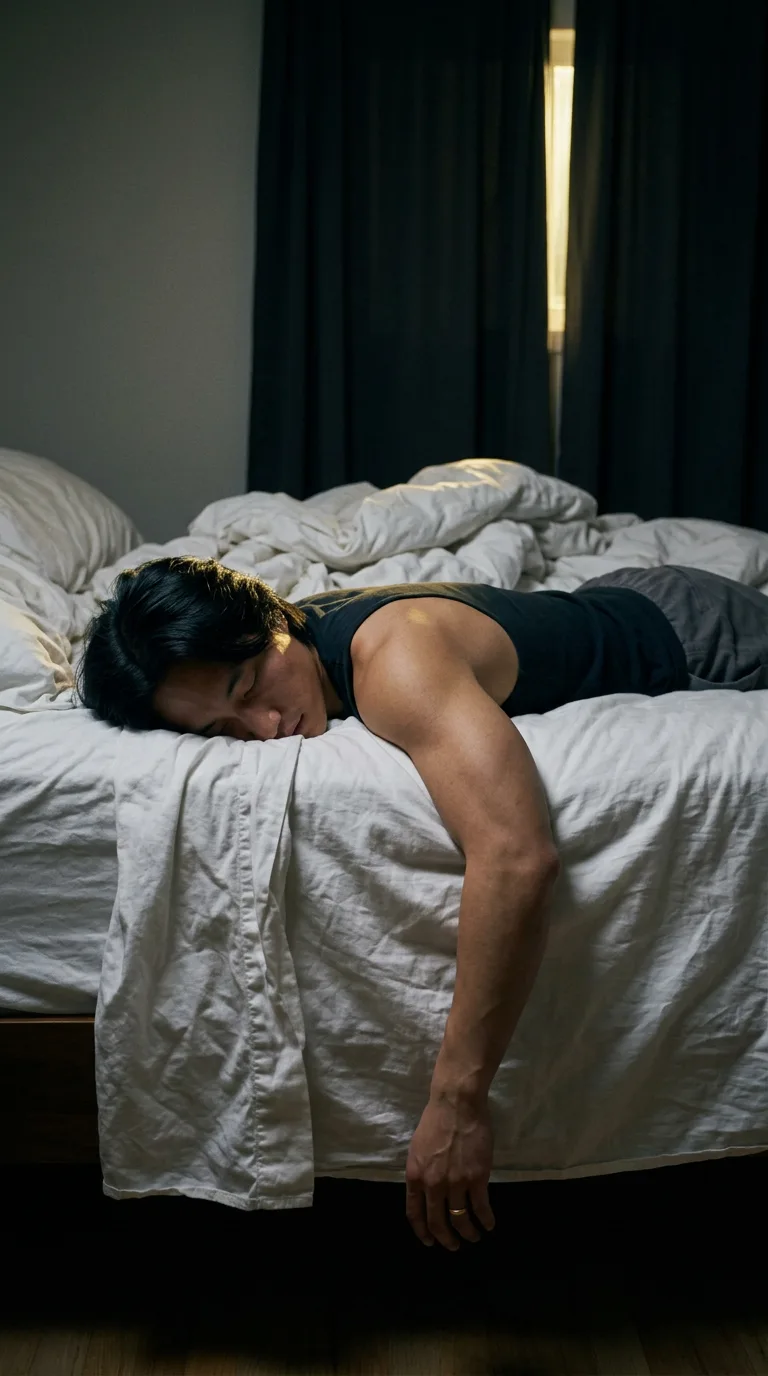
Rarest thing about him: Chronic back or joint pain — rare, 1 in 34
Season 0seed 2142296807 · engine v10
Character card
lineage 2NZHHJ
His body-swap story
@colin.hasbrook, wearing Aaron Feldstein, rolled the wheel on and woke up as Daniel Lee, spent 4 minutes in him, then spun the wheel and woke up as Bobby Krasinski
Aaron Feldstein's hands are too big for his phone. You have had them six minutes and already you hate them — thick knuckles, a burn scar from the coffee urn last winter that isn't even yours, twenty years old and soft in a way you didn't used to be. You are sitting in the driver's seat of a parked B44 at the end of the line, engine off, the break clock ticking. Somewhere behind you a woman is asking when the bus moves. You don't care. Six minutes in this one and already the itch is back, the specific itch, worse than boredom — it's the knowledge that somewhere out there is a body that isn't waiting for a light to change. You open the site on Aaron's cracked screen with Aaron's thumb. The wheel loads slow on the depot wifi. You do not think of it as leaving him. You never do. You spin.
The room is dark and smells like cedar and someone else's sleep. Air comes into lungs that are smaller than the ones you just had, tighter, and there's a pull low in the back like a rubber band wound one turn too many. The arm that was hanging off the mattress draws itself up without you asking it to; the whole body rolls onto its back, hands folding over the chest like a man laid out for a viewing, and you lie there being someone very still and very calm while a strip of streetlight lies across the ceiling like a shelf.
The pillow under his head still holds his shape from before you got here, and that's the first thing that comes through — not a memory exactly, just a comfort, the specific give of a mattress that's four years old and has learned him. Then the ring. Your own left hand, his hand, finds it against your sternum where the fingers folded, and it opens like a door: a courthouse in Squirrel Hill, her in green because she said white was for people with money for dry cleaning, his mother crying not from joy exactly, more relief, because a Korean boy who does electrical for a living and married a woman who teaches third grade is a plan she can finally stop worrying about out loud. Her name comes with the ring but soft, unforced — Mira. Not in the room. Working the early service today, which is why the sheets on her side are cool and made-up already, which is why he's alone at an hour that would look wrong to anyone who didn't know he'd pulled a double yesterday, a commercial rewire that ran until two in the morning, conduit overhead the whole shift, his neck screaming by hour nine.
The pain arrives next, uninvited, riding in on nothing but the fact of the spine itself: a low ache between two vertebrae that has been there since he was twenty-two and fell off a ladder that wasn't secured right, and never quite left. It flares faintly even lying still. His body has learned to carry it the way you carry a bag you've stopped noticing the weight of — until someone else picks it up for the first time and it's all you can feel.
The tank top against your back gives you the morning he put it on, except it wasn't this morning, it was yesterday, before the twelve hours, standing in front of the dresser mirror pulling it over his head one-armed because the other shoulder was already stiff, thinking about nothing, thinking about the breaker panel he still had to label, thinking, distantly, gratefully, that Mira's shift started later than his so she'd still be there when he got home even if home was one in the morning. She was not. She had a work thing. He ate cereal standing at the counter and went to bed alone and didn't mind, because minding takes energy he uses up wiring other people's houses.
The work shirt on its hook by the door — you can smell it from here, drywall dust and hot copper — gives you a whole year in flashes: the patch that says LEE ELECTRIC that he was proud of the first time and indifferent to the fiftieth; a foreman named Denny who calls him "the surgeon" because he's neat with a fish tape; a ceiling he's run conduit under so many times this month he could do it with his eyes shut, which some mornings, half-asleep on the drive over, he basically does. None of it is dramatic. It's just a life laid out flat, ordinary as the wet leaves he knows are on the back stairs right now without needing to look, the public steps between the yards that he salts in winter because the last tenant never did and somebody's grandmother lives two doors down.
He never asked for anything more than this. That's the thing that comes through last and heaviest, riding under all the rest of it like the ache in his back: contentment, plain and unglamorous, a man who wanted a marriage and a trade and Sundays off and got exactly that and was not looking past it.
You open his eyes. Streetlight, curtain gap, the cedar smell of a room he built a life inside without noticing he was doing it. You lift the left hand off your chest — his chest, yours now — and look at the ring, then past it to the knuckles, thinner than Aaron's, a thin white scar across one that isn't in any memory you were given, just there, like the back pain, like the marriage, already true before you arrived.
"Okay," you say, to the empty room, to nobody, your voice younger than you expected and a little rough with a sleep you didn't do. "Okay."
The bus is six hundred miles and one spin behind you. You don't know yet how long this one holds.