Rohan Deshpande
Fictional. Generated by AI — not a real person, and no likeness of one is intended.
28, barber in New Orleans · rolled by @colby.marchetti · card — no film
History
who has worn him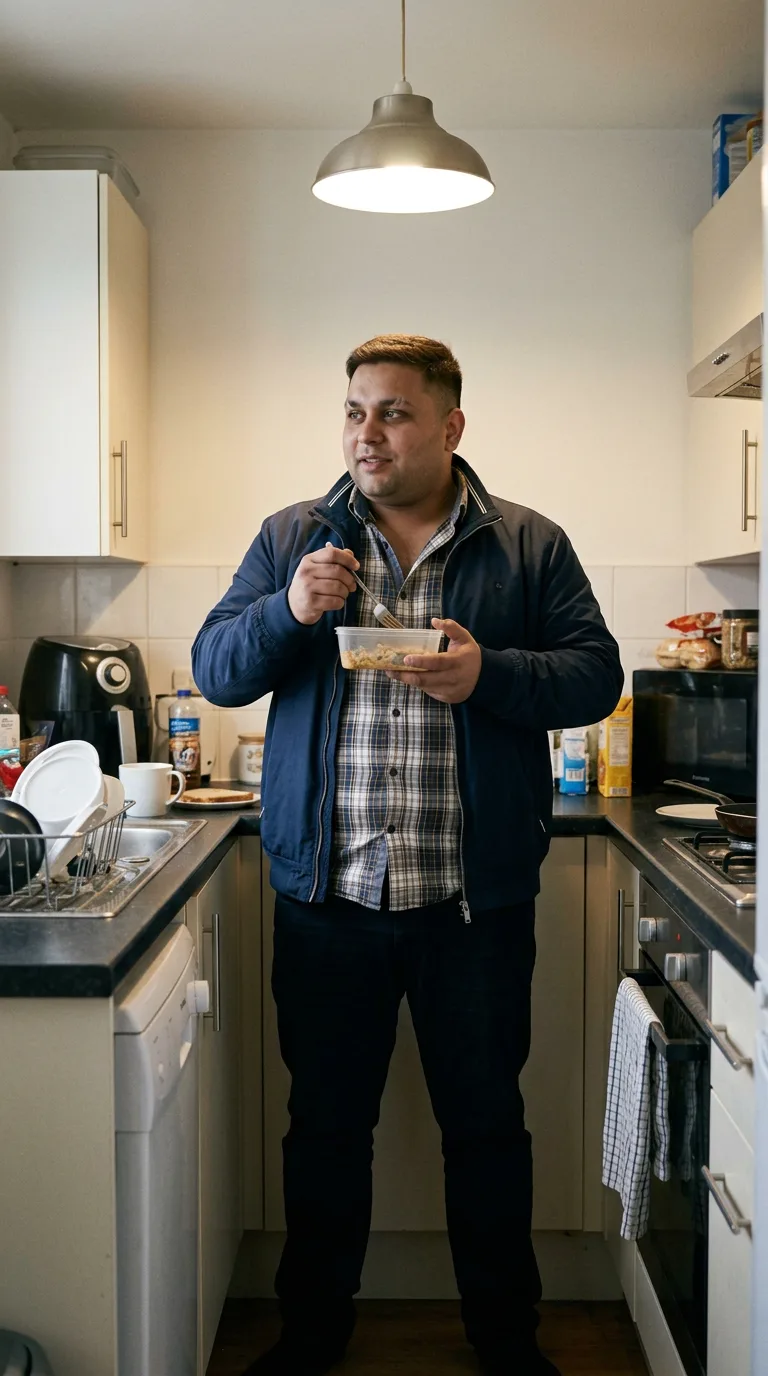
Rarest thing about him: South Asian — rare, 1 in 26
Season 0seed 400394925 · engine v10
Character card
lineage OZ80W3
His body-swap story
@colby.marchetti, wearing Marcus Whitfield, rolled the wheel on and woke up as Rohan Deshpande, spent 1 minute in him, then spun the wheel and woke up as Miguel Olveda
Marcus Whitfield's hands are not yours, but they're what you have, and they're shaking slightly, and that's the problem. You've been him for two minutes — a barber in Atlanta, black, heavy through the shoulders, standing in a stockroom you don't recognize with a broom you didn't pick up. It should feel like Christmas morning. Instead there's a tightness under the ribs that isn't Marcus's and isn't yours either — it's leftover, residue, off-gas from the man before him. Vincent. You wore Vincent Marucci for three minutes, sixty-one years old, a lazy eye that wouldn't track right, a contractor's bad knees, and a roommate whose face you can't stop half-remembering even now, secondhand, like a smell from another room. Something happened between those two men — you were on both sides of it, you know that much walking around in your chest — and you didn't finish learning what before you spun again. You've been greedy nine times already. This is the tenth, and it isn't boredom, not really — it's that you can still feel the shape of the debt Vincent's roommate carries, underwater, twenty-five thousand dollars of somebody's mistake, and some part of you, still rattling around from spin to spin, wants to go stand inside the man who owes it. Not to fix it. Just to feel what carrying it is like from the inside, once, before it stops being interesting.
The wheel doesn't ask why. You pay, you spin, and Marcus's hand — becoming not-Marcus's hand — reaches for the site again on a phone that isn't there anymore because you're already gone.
The fork stops halfway to a mouth that is now yours.
It comes back down. Sets on the counter with a small plastic click. You feel the coat first — the weight of it still on his shoulders, a canvas jacket gone soft at the elbows — and you shrug it off in one motion his body already knew how to make before you arrived. You sit. You are shorter than Marcus was, thicker through the middle in a different way, and the chair takes your weight with a familiar creak that isn't memory yet, just furniture. You finish the container in the dark window's light, even mouthfuls, chewing food you didn't choose, tasting garlic and something fried, looking at nothing, because there is nothing yet to look at with.
Then the shirt against your back gives you the first of it.
Black linen, buttons still faintly warm from an iron hours cold now. You — no, he — put this on this morning, sleeve first, rolling the cuffs twice because the fabric catches on his forearm hair otherwise, a small annoyance solved so many times it isn't a thought anymore. Rohan. The name arrives with the sleeve, the way his mother says it long on the first syllable, the way it sounds clipped and fast when Priya says it from the bedroom, hurry up, we're going to be late for Aarav's checkup. A wife's voice — no, not a wife, but the same weight as one, five years of it. A boy, two years old, who grabs fistfuls of his father's hair before Rohan can ever get to his own.
The clippers are not in his hand right now but you feel their absence like a phantom, the exact heft of them, the vibration that lives in his palm permanently now, nine years of Saturday mornings at the shop on Magazine Street, the smell of pomade and hot rinse water, old men's stories, young men's nerves before first dates, the particular tired satisfaction of a clean fade under bad fluorescent light. His jaw is already tight — it does this without him, has done it since before the shop, since before Priya, since the year his father died and nobody in the family said the word depression out loud, just took him to the doctor quietly and called the pills "vitamins" for a while. He clenches. He doesn't notice he's doing it. You notice for him now, the muscle jumping under your ear.
The eyebrow scar comes last, faint under your touch when your hand drifts up without asking — a bicycle, eleven years old, Mumbai monsoon season, gravel and his mother's scream from the balcony. It healed white and clean and he forgot about it until customers ask, and he always says something different depending on his mood.
You feel the floor under his feet, cool tile, a kitchen one room wide in a shotgun house, steam starting to lift off Magazine Street outside the window though he can't see the street from here, only the dark glass throwing his own reflection back at him, except it isn't his own anymore.
He drank, once, in his twenties, and stopped without a story about it, just stopped. He never smoked. He goes to temple with his mother twice a year and feels vaguely guilty both times for not going more. None of this is dramatic. It sits in the body like sediment, and you are standing in the sediment now, feeling how ordinary a whole life can be from the inside, how it doesn't ask to be forgiven for its smallness.
You look down. The hand holding the empty fork is thick-fingered, callused along the first knuckle where the clipper guard rests thousands of times a week, a burn scar you don't have a memory for yet, a wedding ring that isn't a wedding ring, just a promise ring Priya gave him that he never took off.
You turn the hand over once, like checking it's real.
Then you look up into the black window, where his own reflection is waiting for you, and you say, quiet, to no one in the empty kitchen:
"Okay. Not yet."