Marcus Whitfield
Fictional. Generated by AI — not a real person, and no likeness of one is intended.
27, barber in Atlanta · rolled by @colby.marchetti · card — no film
History
who has worn him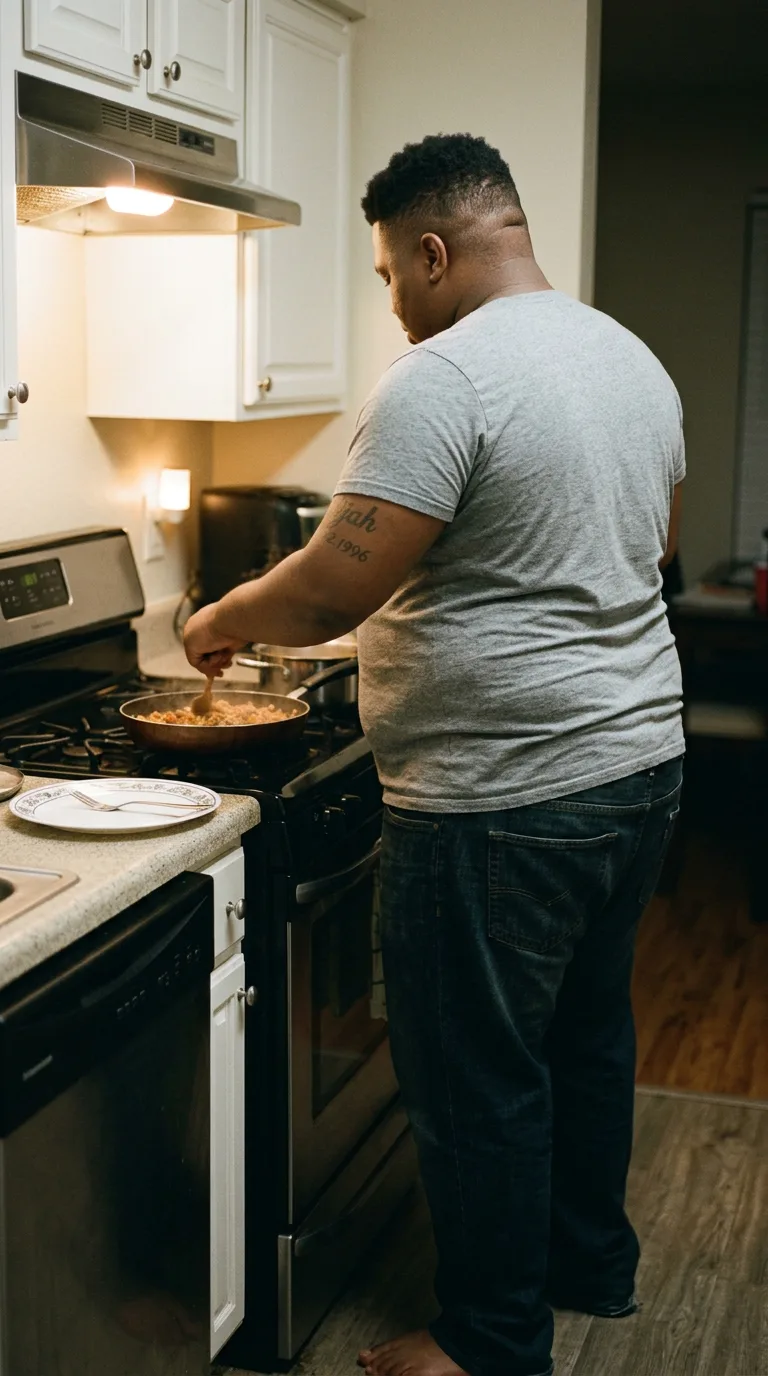
Rarest thing about him: HIV, undetectable on treatment — epic, 1 in 168
Season 0seed 1943068183 · engine v10
Character card
lineage OZ80W3
His body-swap story
@colby.marchetti, wearing Vincent Marucci, rolled the wheel on and woke up as Marcus Whitfield, spent 3 minutes in him, then spun the wheel and woke up as Rohan Deshpande
Vincent Marucci's knees are the reason. Eleven in the morning on a Saturday and they already ache like it's midnight, like the job site already happened, like thirty years of ladders already happened, though today there's no job, just this rented room, this lazy eye that won't track right when you're tired, this gut that sits heavy no matter whose choice it was to put it there. You spun into him eight names ago and he was fine, he was fine for a while, but a body that hurts before noon on its day off is not a body you keep out of loyalty. You have his laptop open on a bed that isn't yours, in an apartment that isn't yours, and the site loads the way it always loads, patient, the wheel just sitting there breathing light. You don't examine the wanting too closely. You never do. You put in the card that is also not yours, not anymore — it's just money now, it goes wherever you send it — and you spin.
Your back is to a room you don't own yet. There's a pan under your hand — no, under his hand, except there's no difference now, the wooden spoon is warm from the heat coming up off it and it's already moving in a circle you didn't start. It stutters. Reverses. Your hand, going the other way, and you feel the shift arrive in the wrist first, small, stupid, the kind of glitch a exhausted person's body makes to correct itself. You shake salt into the pan without deciding to. You don't taste it. Something in you — his hand, his kitchen instinct — knows already it doesn't need tasting. Then that same hand is reaching up into a cabinet, unasked, and setting a second plate down next to the first one on the counter.
The stove is still going. The smell hits before the memory does, garlic gone soft in oil, and it isn't yours, it's his, it arrives folded into the smell itself — this is the dish his mother taught him standing at a stove not much bigger than this one, and some cold clean part of you registers: he doesn't cook for someone else. There's no one else in this apartment, no one else in this life right now, and yet the hand set out two plates anyway, and that isn't a mistake either, it's a habit older than any reason for it. You are standing in a heavy Georgia moisture, cul-de-sac quiet outside the window, and the shirt against your back — his shirt, gray, soft with washing — gives you your first real flash: him pulling it over his head this morning, the fabric catching for a second on the fade at the sides of his hair because he'd just gotten it cut, always cut himself first before he'd touch another man's head, a barber who never once let his own look wrong. Sleeve sliding down over the tattoo without him looking at it, the way you stop looking at your own name after enough years.
Elijah. 04.12.1994. The ink is warm under your own borrowed forearm and it comes with weight, not words at first, just a held breath in the chest, the particular ache of a name you say out loud maybe twice a year now. A little brother. Not living. The date isn't a birthday, though it takes a second inside his memory to be sure of that, the way grief scrambles the difference between the day someone arrives and the day they don't get to stay. You feel him — feel Marcus — standing in a chapel with the AC broken, sweating through a black shirt too tight in the shoulders, twenty years old and holding his mother up by the elbow because his father couldn't stand straight. You feel the shop, too, later — chairs, clippers, the particular music of Saturday mornings full of men and boys and a television always on ESPN too low to hear, Marcus's hands doing what they know how to do without him watching them, taper fades and lineups and old men who only trust him with a straight razor. Steady hands. Hands that don't shake even now, even carrying what his blood carries, quiet, managed, a pill every night at nine like brushing his teeth, a secret that isn't really a secret from God because he told God first, on his knees, the year after the diagnosis, in a church with bad carpet and a pastor who never once looked at him different once he knew.
He is not seeing anyone. Hasn't in a long while, not since the last one who couldn't hold the diagnosis in her hands without her face changing. He isn't angry about it anymore, just careful. Cooks for one because it's Saturday and cooking is the only prayer he's got that doesn't require kneeling. His hand finds the lighter in his pocket without him — without you — asking it to, an old unconscious flip-and-catch, flip-and-catch, though there's never been a cigarette at the end of it, never a match to strike; it's just weight in the palm, something to turn over while his mind's elsewhere, a tell from a habit he inherited from someone and never named who.
The second plate sits there, gleaming, empty, entirely unnecessary, and you understand it before you let yourself think the sentence: some habits are how a man keeps somebody at the table a few years past the point where they can eat.
You look down at the hand holding the spoon. Heavy knuckles, a burn scar pink along one side from years of clippers running hot, blunt clean nails cut close the way barbers keep them. Not your hands. Not Vincent's hands either, not anymore — Vincent is already a coat hung up somewhere behind you, already thinning into the pile of names that don't answer when you think them. You set the spoon down against the pan and lift both hands up in front of your face, turning them like you're checking them for damage that isn't there, and something in his chest — heavy, tired in a different way than knees, tired in the way of a man who has spent a long time making sure nobody worries about him — comes up through you into your throat.
"Didn't even taste it," you say, out loud, in his voice, low, a little surprised at the sound of it, "and I already know it's good."
You don't know yet how long you get to keep knowing that.