Vincent Marucci
Fictional. Generated by AI — not a real person, and no likeness of one is intended.
61, contractor in Philadelphia · rolled by @colby.marchetti · card — no film
History
who has worn him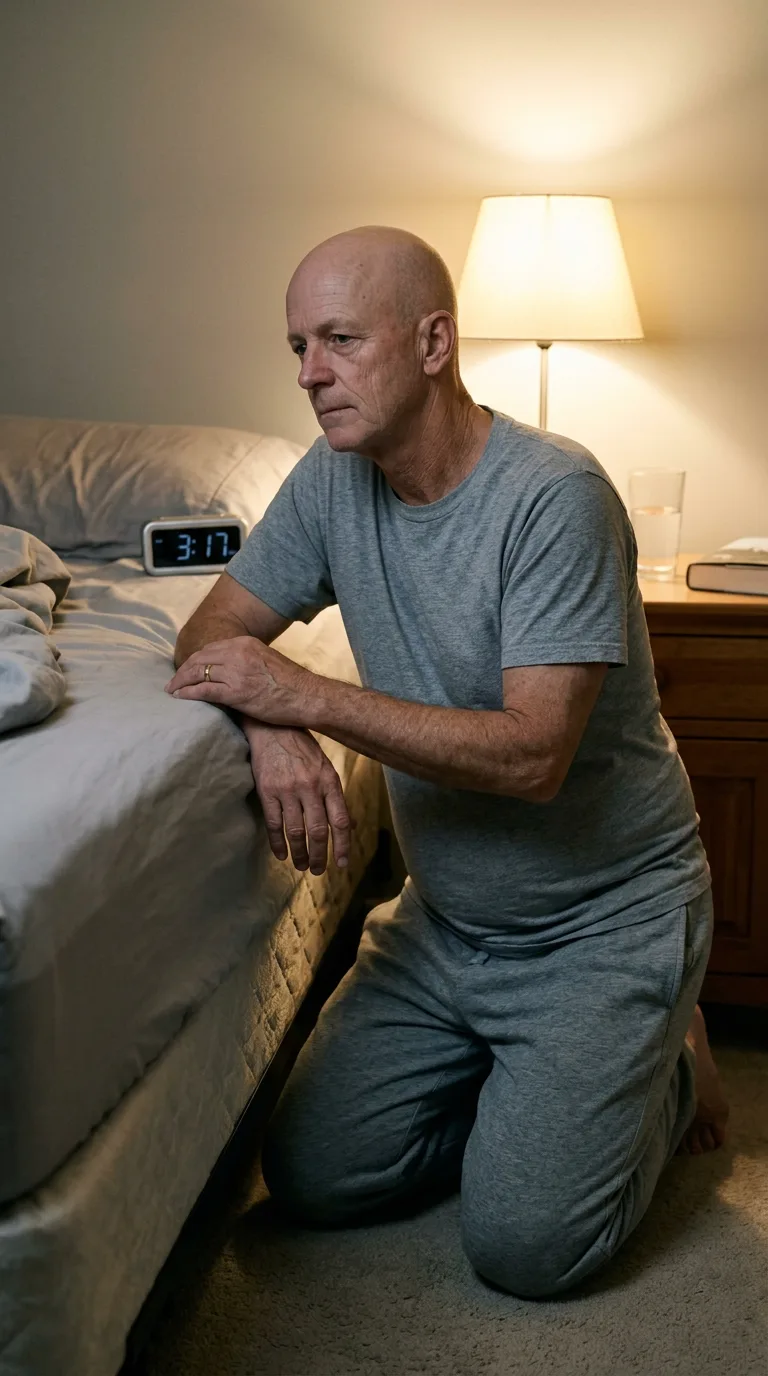
Rarest thing about him: A lazy eye — rare, 1 in 67
Season 0seed 1455131747 · engine v10
Character card
lineage OZ80W3
His body-swap story
@colby.marchetti, wearing Walter Sedlak, rolled the wheel on and woke up as Vincent Marucci, spent under a minute in him, then spun the wheel and woke up as Marcus Whitfield
Walter Sedlak's hands smell like sawdust and cold coffee, and it has been forty seconds since you put them on and already you hate the tremor in the left one. That's the trouble with a stagehand's body — some old scaffolding fall did something to a nerve, and Walter never mentions it because Walter is a patient man and you are not Walter, you are only wearing him between spins, standing in his kitchen at eleven in the morning on a Saturday with his coffee going cold and a rerun of a rerun murmuring from the next room. Small-town Ohio does not need you today. Nobody needs you today. That is the whole reason. Boredom is not a good enough word for what this is, but it will do: the itch that starts under a face that isn't yours, the certainty that somewhere on the wheel there is a better ten seconds than this one. You set the mug down without finishing it. You go to the site. You spin.
—
You get to the amen early. It surprises you — him — whoever's forehead this is — a small huff of breath, almost a laugh, because the prayer wasn't finished and the mouth said it anyway, the way a habit finishes a sentence the mind hasn't caught up to yet. You start to rise off your knees. Halfway up, the rising stops. Something else arrives in the space where the rest of the standing was supposed to happen, and it isn't you — it's someone new wearing the going-up like a coat that doesn't fit yet — and you go back down onto both knees, hard, and the smile switches off mid-breath, and your forehead finds the bedspread, and for one long second there is nothing at all.
—
The bedspread is cool cotton, a little worn, washed too many times, and it is the first thing that gives you anything: a woman's hands smoothing this same spread flat, years of Saturdays, a voice saying *Vin, you're going to wear a groove in that carpet* — and then she is gone from the flash the way she is gone from the room, and the ache that comes with the memory is not yours but you feel it anyway, low and old and used-to. Your knees know this carpet. Your knees are sixty-one years old and they know exactly how far down they have to go and exactly how much it will cost tomorrow.
You get both hands up off the bedspread and look at the ring first — plain gold, a little loose now, worn thin on one side from a tool belt buckle it's rubbed against for decades — and it gives you her face all at once, quick as a struck match: Marie at the stove, Marie in a hospital gown holding your hand harder than a woman that small should be able to, Marie's coffin, white marble steps out front with a black ribbon on the door that nobody thought to take down for a week. Fourteen years a widower. The ring stayed on. Nobody asked him to take it off and he never would have listened anyway.
The t-shirt against your back is thin, soft in that specific way of a shirt that has been through the wash two hundred times, and it remembers itself onto you — this morning, this exact garment, pulled over a bald head that used to have hair he was vain about at twenty-five and shaved off himself at fifty when the chemo did it first and it never fully came back the way it should have and one day he just kept shaving it, easier that way, less to think about. The oncologist's office smell comes with that, faint, chemical, years-old now, filed under *remission* and *five-year mark* and *thank God* — and under all of it your left knee is bouncing, has been bouncing since you arrived, a leg that does this without asking permission, has done it through funerals and diagnoses and a kid's graduation and every mass he's sat through half-believing.
The floor under your knees is the same floor his daughter learned to crawl on in this rowhouse thirty years ago, and that comes through too, thin and fast — a girl's laugh, a Phillies game on low, a life built plank by plank the way he builds everything, competent and unglamorous and his. He never drank, not once, not even the year Marie died, and the not-drinking sits in him like something he's proud of and never says out loud. He smoked for twenty years and quit for his daughter and still, some mornings, wants one with a want that surprises him.
The praying itself — not very serious, he'd tell you, an old habit more than a conviction, a thing his mother did and so he does, mumbled and quick and mostly about the job going well and his daughter's knee surgery and nothing large — comes back through the position of his own hands, loosely laced, a shape they've made ten thousand mornings, on a job site before the first cut, in this bedroom before the first light. The nightstand clock is there in the memory too, always is, some version of dark-outside, early-outside, up-before-he-should-be, because sleep left him around the time chemo did and never fully came back either.
—
You lift your forehead off the bedspread and look at your hands — his hands, spotted, a fresh nick healed pink across one knuckle, the ring loose and turning slightly when you flex the fingers — and you turn them over once, like you're checking they're real, like Walter's tremor might be hiding in them somewhere and isn't.
"Okay," you say, out loud, to the empty room, in a voice that isn't Walter's and isn't yours either, just his, older than either of you meant to sound. "Okay."
The knee starts bouncing again before you've even finished standing up.