Miguel Olveda
Fictional. Generated by AI — not a real person, and no likeness of one is intended.
37, nurse in Seattle · rolled by @colby.marchetti · card — no film
History
who has worn him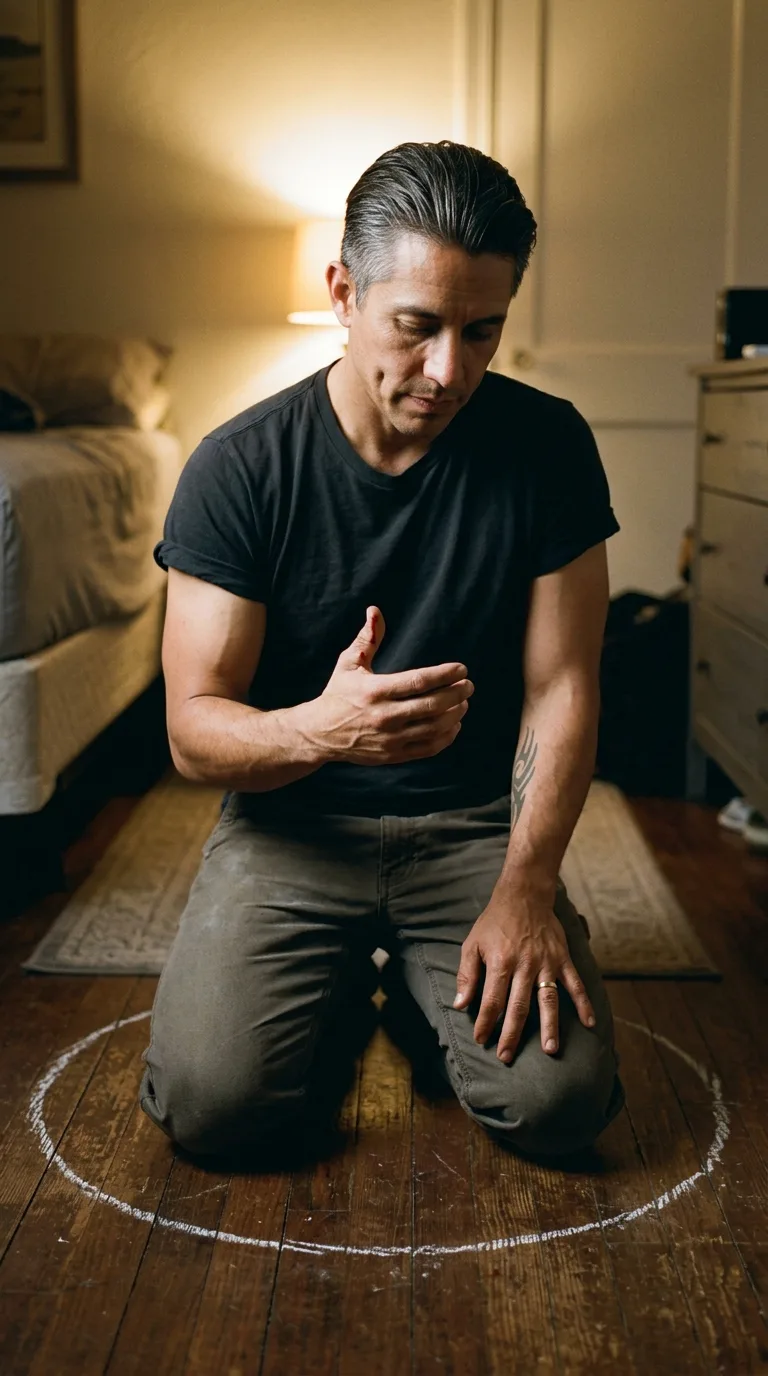
Rarest thing about him: Reading something he was not meant to — rare, 1 in 161
Season 0seed 1590746483 · engine v10
Character card
lineage OZ80W3
His body-swap story
@colby.marchetti, wearing Rohan Deshpande, rolled the wheel on and woke up as Miguel Olveda, spent 17 minutes in him, then spun the wheel and woke up as Colton Ashworth
The barbershop is closed, lights off, the smell of talc and clipper oil settling into the walls the way it always does on a slow Saturday. You are in Rohan's hands, in Rohan's chair, in Rohan's phone, and it has been less than a minute since you decided this body, this life, this shop is not enough to hold you today. The scar through his eyebrow itches when you're bored, and you've learned already that boredom is what killed him — the barber, not you, never you — this restlessness that comes an hour after you've settled anywhere. Twenty-eight years old and heavy and short, a good honest trade in his fingers, a mother who calls too much, and none of it yours to keep. You open the site on his phone with his thumbprint, which should not work and does anyway, because the wheel does not care whose hand asks it to spin.
The wheel turns and there is no in-between.
You are kneeling. Floorboards under your knees, old wood, a rug's edge an inch from your fingers. There is chalk dust on your jeans and a thumb in front of your face with one bead of blood standing up on it like it doesn't know gravity applies today. It holds. It holds a beat too long. Something that is not a laugh starts in your chest and comes out of Miguel Olveda's mouth anyway, and it keeps going after the face has already stopped deciding to laugh, two extra seconds of sound with nothing behind it, and then you are standing, up off your knees without your hands touching the floor, like the body already knew how before you did.
The shirt is what opens first — black cotton, worn soft, and putting it on this morning comes back in his shoulders before it comes back in your mind: the ache low in his lower back from a double shift Thursday, the way he always feeds the left arm through first because the tattoo side is stiffer in the mornings. Twelve years old, that ink, done in somebody's kitchen in Wallingford, tribal lines he doesn't love anymore but has stopped hating too, the way you stop hating most decisions you made at twenty-five.
The ring is next. Left hand, plain band, and it brings her before it brings her name — Teresa, seven years married, the smell of her shampoo in a bathroom with a broken exhaust fan they keep saying they'll fix. A wedding in June, his mother crying too hard, dimples so deep in the photographs that the priest joked about them at the reception. A daughter, six now, who draws on his charting clipboard when he brings it home by accident. The good kind of tired that comes from a home you built and didn't just fall into.
The floorboards under your knees give you the room itself — his bedroom, not hers-and-his tonight, because Teresa's on days this week and he's on nights, and that's the wrongness sitting underneath everything: it is not morning where his body is standing, not really, it is the dead hour after a night shift, chart notes still fresh in his hands from a mid-shift under fluorescent light six hours ago, exhaustion sitting on him like a coat he can't take off. He came home keyed up instead of tired, the way night shift sometimes does that to you, and found this — a book, a circle, chalk from his daughter's sidewalk set, a dare from an old ex-girlfriend's half-joking text three weeks back that he never should have taken seriously: *you don't believe in anything, try this, see what happens.* He didn't believe in it. He believed in it enough to kneel.
The chalk under his palm when he pressed the circle closed. The knife he nicked his thumb on, small enough to call an accident, sitting somewhere off to the side now, already forgotten by the body that held it. The whole last year comes in scraps carried on the smell of the room: a promotion offer to charge nurse he hasn't answered yet. A fight with Teresa about his mother that they made up from within the hour. His knuckles, cracking without him telling them to, an old tic that has outlived three New Year's resolutions to stop it.
His hands know things yours never will — how to find a vein in the dark by feel, how to hold a screaming toddler's arm still and gentle at once, how to write fast and legibly at two in the morning on no sleep. Thirty-seven years old in his knees, in the low ache of his back, in a body kept tight and worked despite it, dimples pressing into his cheeks at rest for no reason at all, just built that way.
You crack the knuckles yourself, on purpose this time, feeling for the first time how easy it is in these hands, then turn the right one over under the bedside lamp, studying the tattoo like it belongs to someone you're about to meet.
You look up, into whatever was watching, and say, "Thumb's still bleeding," and almost laugh again, on purpose this time, dimples deep, no idea yet how long you get to keep them.