Rigo Estévez
Fictional. Generated by AI — not a real person, and no likeness of one is intended.
41, miner in Chicago · rolled by @malik.overton · card — no film
History
who has worn him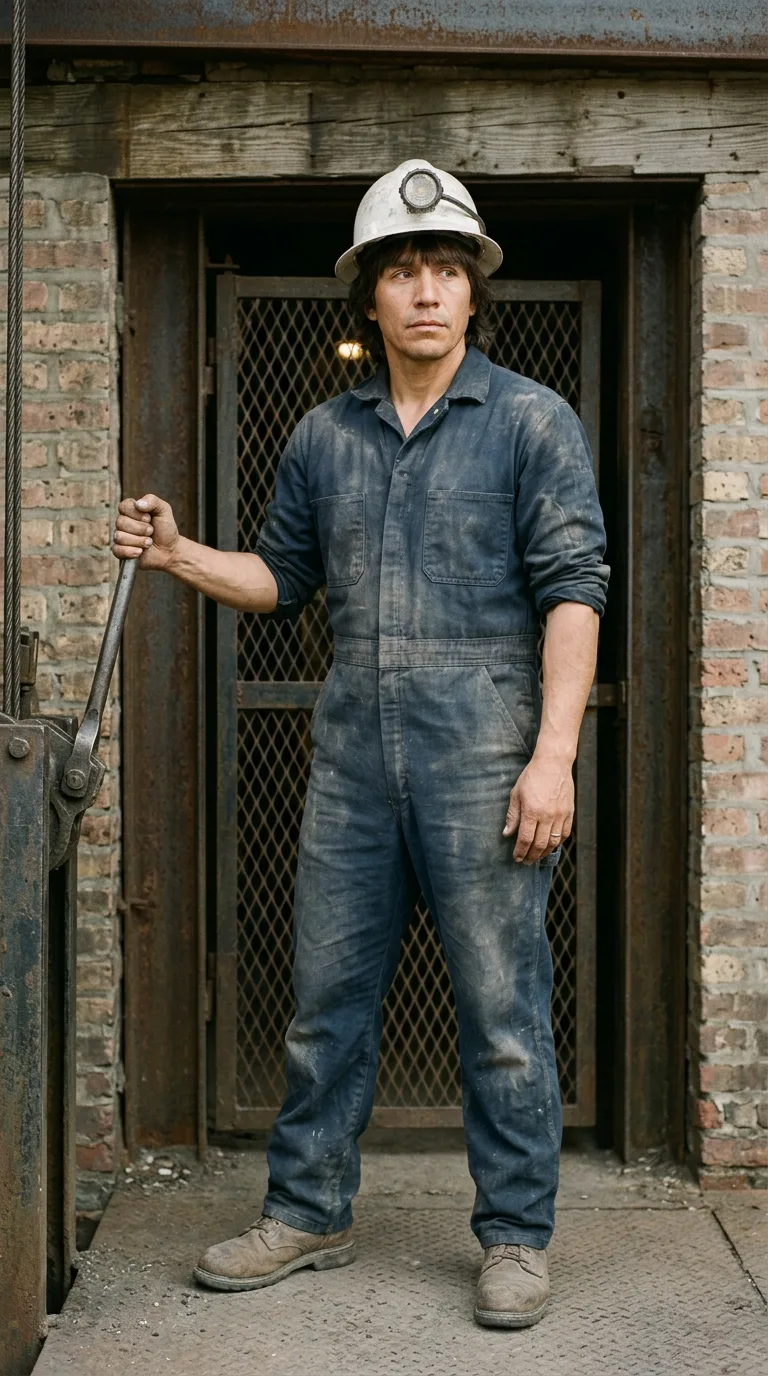
Rarest thing about him: A shag — rare, 1 in 82
Season 0seed 1569420555 · engine v10
Character card
lineage WV6PBZ
His body-swap story
@malik.overton, wearing Casey Vantrease, rolled the wheel on and woke up as Rigo Estévez, spent under a minute in him, then spun the wheel and woke up as Owen Delcastillo
---
You are eighteen years old for six minutes, and it is enough to know it's a mistake.
The body is thin in a way that makes you feel every drop of cold on the base, blond hair, a scar splitting one eyebrow like a hyphen. Casey's hands are jittery on a rifle strap, and somewhere under that nervous-boy energy there's a name you keep almost hearing — a mother, a girl who stopped writing back — but you don't have time to let it surface, because that isn't why you're here. You spun into a body that isn't built yet. All coltish reflex and no weight behind it. You were, four minutes ago, a fifty-something man named Owen Hallstrom, dad-bodied, silver-haired, dimpled, standing in a garrison office in Los Angeles signing something with an ache in his lower back that never quite left, and before that a boss was standing over Owen's shoulder — a man with an eye that didn't track quite right, watching him sign it, waiting.
That's the itch. You were Owen for less than a minute and in that minute you looked up at his boss's face — the drifting eye, the shag of dark hair under a hardhat in a photo on the wall behind the desk, a mining company insignia — and you thought: him. Not this skinny kid soldier. Him.
You open the site again with Casey's hands, shaking slightly, the scar itching over the eyebrow the way scars do when someone else is thinking about them. You pay. You spin.
—
The wheel stops on weight. On heat. On the smell of rock dust and machine oil and a body that has done this so many mornings it no longer asks permission.
Your hand is closed around a steel bar, cold and grooved, and you are pulling it — no, you were pulling it, mid-motion, and now the motion is wrong. It jerks. You feel the wrongness travel up through a forearm that is not the forearm you had four seconds ago, thick through the wrist, a wedding band biting slightly at the knuckle where the swelling of a decade's work has never quite let it move freely again.
You do the motion again. Slow. Correct. The cage rattles somewhere behind you, chain-link and diamond mesh, brick going up gray and cold on either side of a doorway that isn't a doorway you know yet. Boots on grating. A weight on your head you didn't put there — a hardhat, lamp cold against your brow.
Ten more pulls. You check every one.
—
The coveralls come first, because they are what's touching you everywhere, and touch is the only door.
Denim, worn soft in exactly the places a body wears things soft — inside the elbows, across the shoulders where a strap sits, the give at the knees. And with the feel of it, sleeve first, comes a whole morning: a bedroom with the blinds still down against a gray Chicago dawn, a wife's shape still asleep under the blankets, the particular quiet of getting dressed without waking her because she works nights at the hospital and sleep is a currency in this house you don't spend carelessly. Sleeve, sleeve, the collar, the zip that always sticks a third of the way and needs a jiggle — his fingers know the jiggle without thinking, and your hand does it too, now, correctly, because his memory is in the motion and not in you.
Rigo. The name arrives with the boots, laced twice around because once always slips by noon. Rigo Estévez, forty-one, and the ache comes up through both knees the second the name does, old and constant, the specific complaint of a body that has spent twenty years bent under low ceilings of rock, back reminding him every time he straightens that straightening is a privilege it grants grudgingly now.
The wedding band gives you her — Marisol — not her face all at once but her voice first, sharp and warm both, telling him last week to see a doctor about the knees before he winds up like his father, and him waving it off with the same hand now curled around the cage bar. Two kids upstairs when he left — no, not upstairs, this is a different house than the one his memory keeps defaulting to, there was a smaller apartment once above a laundromat and now there's a two-flat with a yard the size of a rug, and the kids are older than the version of them that keeps surfacing, nine and thirteen now, not five and eight — memory doesn't sort itself politely, it comes in whichever order the hands ask for it.
The old girlfriend comes through the ring too, obliquely, the way an ex arrives in a married man's hands: Denise, before Marisol, a name with no weight left on it except the shape of a decision made a long time ago and never regretted, filed somewhere behind the wedding band like a receipt he doesn't need but never threw out.
His shoulders know this cage door, the particular give of the mesh, the smell of grease and cold stone breathing up out of the shaft behind him that never fully leaves the coveralls even after washing, Marisol complaining lightly about it every laundry day for eleven years. Catholic on Sundays when the shift allows it, less than he'd like, more than he lets on to the guys underground who'd rib him for it. No drink in his hand ever, not for six years now, an old habit let go quiet instead of loud, no cigarette, never had the taste for it. A hand rising without him summoning it, palm dragging back over the crown of his head where the hardhat sits, an old tell, older than the mine, older than Marisol — something his own father used to do, worrying at a scalp that thinned early on that side of the family though his hasn't yet.
And the eye. He knows about the eye the way you know about your own crooked tooth — a fact worn thin with familiarity, foremen who used to squint trying to figure out where he was looking, kids at the site who mimic it behind his back and think he doesn't catch it in the reflection off the cage. He does. He's stopped minding.
The savings account arrives almost as an afterthought, tucked behind bigger things — not much, but real, something set aside the hard way, the kind of number a man checks twice a year and says nothing about at dinner.
Twenty years of this exact motion. The bar in your hand — his hand — has a name for every notch worn into its grip.
—
You look down.
The hand is broad, brown, scarred faintly across two knuckles in a way that has no story attached yet, nail beds packed with coal dust that will not fully wash out until Saturday. The ring catches gray light from the shaft mouth. You turn the hand over slowly, feeling the ache travel from wrist to elbow to the low, permanent complaint in both knees, and it is a good hand, a used hand, a hand that has held a bar exactly like this one ten thousand mornings before this one and never once, until now, needed checking.
You lift your eyes to nothing in particular — the cage, the brick, the cold flat light under the L a mile off — and you say, quiet, mostly to no one:
"Twenty years and I still count 'em."
Behind the wanting is the next wheel, already spinning somewhere you're not looking at yet.