Owen Hallstrom
Fictional. Generated by AI — not a real person, and no likeness of one is intended.
46, soldier in Los Angeles · rolled by @malik.overton · card — no film
History
who has worn him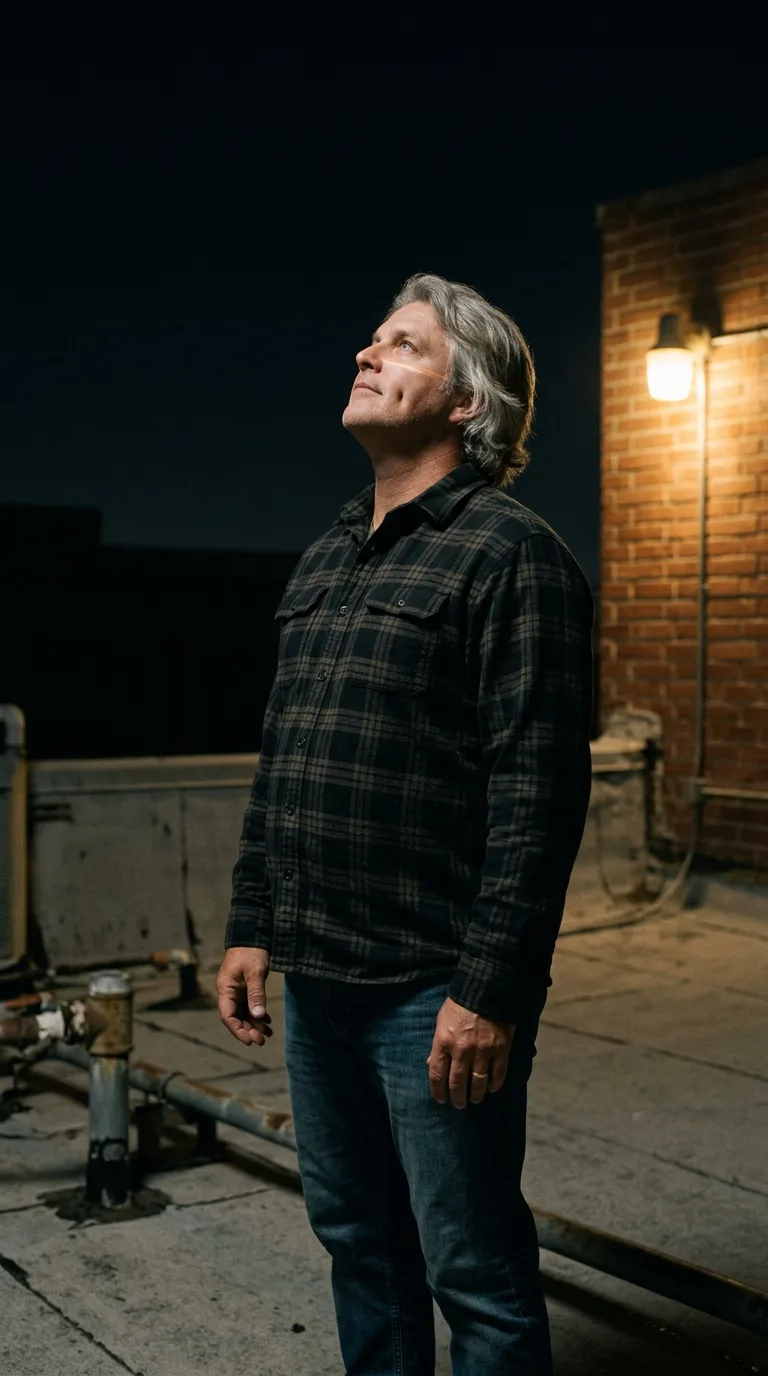
Rarest thing about him: Soldier — uncommon, 1 in 85
Season 0seed 1931600259 · engine v10
Character card
lineage WV6PBZ
His body-swap story
@malik.overton, wearing Gabriel Nassar, rolled the wheel on and woke up as Owen Hallstrom, spent under a minute in him, then spun the wheel and woke up as Casey Vantrease
You are Gabriel Nassar for maybe forty seconds, and every one of them hurts a little in the ankles, the way his ankles always hurt after a long day at the anvil. You are standing in his mudroom, boots still on, the smell of hoof trimmings and hot iron still in the air, and you already know you're not staying. Not because of anything wrong with him — Gabriel is fine, Gabriel is decent, Gabriel loves his dog and his diner coffee and the quiet drive out to the Kesler place every Tuesday — but because you spun into him only a minute ago and the second you landed you felt how small his life was going to feel by Thursday. Fifty-six. A burn scar. A farrier's shuffle. You did not even get to unpack him. You are already reaching for your phone, the one that came with him, thumbing to the site out of something that isn't quite boredom and isn't quite hunger, more like the itch right before you scratch it, already knowing you shouldn't and already not caring. You spin.
The wheel doesn't ask if you're sure.
—
The rooftop tar is soft under boots that are not Gabriel's boots — thinner soles, better tread — and the first thing that arrives is cold night air going into a chest that breathes easier than the one you just left. No ache in the ankles. No stiffness climbing into the knees. You are mid-tilt, head back, throat open to a sky doing something rare over the city glow: a white seam tearing itself across the dark, and its reflection is still sliding down out of a pair of blue eyes that are not yours and were, one breath ago, making a wish. His lips are still moving on the last word of it. You feel the shape of the wish leave him like a held breath let go — *to be someone else, just for a while, just to see* — and then the light goes out of the sky and out of him at the same time, and his head comes down slow, uncertain, toward two hands held up in the dark like he doesn't recognize them.
He doesn't. Because you do.
—
The flannel is what opens first — worn soft at the elbows, a button missing at the second hole so it gaps a little at the chest, and just from the weight of it on your shoulders you get a whole morning: him buttoning it in a bathroom mirror with a crack running corner to corner, humming something with no tune, dog-tags cold against his sternum under an undershirt he'd pulled on two minutes before. *Owen.* The name arrives with the shirt, the way a smell arrives before a memory does. Owen Hallstrom, Staff Sergeant, forty-six years old, and the flannel is not a uniform, it is the thing he changes into after, the civilian skin he puts on when the ACUs come off and get folded the specific tight way they taught him twenty years ago and never let him forget.
The jeans give you less — just denim, just a wallet-shaped pressure in the back pocket — but the wedding band on the hand still lifted in the dark gives you everything at once, too much at once, a flood: a courthouse in Riverside, her in a green dress because they couldn't afford anything else and didn't care; three kids arriving across nine years like weather, a boy who plays trombone badly and beautifully, a girl who calls him Sarge as a joke that isn't really a joke; a woman standing in a kitchen doorway at 0500 handing him coffee in a thermos shaped like a football, not smiling exactly, just present, the way she is always present, seventeen years of being present. You feel, distantly, in his chest and not yours, how much that steadies him and how much, some nights, it is not enough — how there is a name from before her that surfaces on nights like this one, unbidden, a girl he knew at nineteen who he sometimes still writes half a text to and never sends. You do not get her face. You get only the shape of the space she still takes up, careful and separate, like a room in a house he doesn't go into anymore but won't sell.
The boots underneath you carry twenty years of standing in formation before dawn, a body that runs on schedule whether it wants to or not — up before the barracks lights, before the actual sun, calisthenics with breath fogging in front of him even in a city that barely gets cold, young soldiers half his age watching him do it anyway because rank still means something and so does stubbornness. Dimples that show even when his face is doing nothing at all, which the men under him have learned means nothing about his mood — he can be furious and still look like he's about to laugh, and it has saved him in arguments more than once. Type 2 diabetes sits in the body like a low hum he's stopped hearing, a kit in his ruck, a habit of checking his own pulse without thinking about it. Hands that know how to strip a rifle blind, that also know, from some Sunday years back, how to hold a fussing infant against a collarbone until it stops. Hands that crack their own knuckles at red lights, in briefings, at 30,000 feet, a tic so old it isn't even nervous anymore, just weather.
He came up here tonight for no reason he'd have said out loud — a rooftop near the barracks he's not supposed to be on, a minute stolen at the end of a long day, the end of a long deployment cycle before this one even started, some ordinary Wednesday ache in him that wanted a sky and a star and a version of himself that wasn't tired all the time. He wished to be someone else. He does not know, will never know, that something was listening.
—
You bring your own hand up in front of your face — his hand, tanned at the wrist, pale where the band sits, knuckles a little swollen the way they get on men who've cracked them for thirty years — and you turn it over slowly, watching the light from the brick wall lamp slide across the palm like it belongs to a stranger, because for one more second it still does.
"There you are," you say, to no one, to him, to the wife who isn't here and the ex who doesn't know she was ever thought of tonight, and your mouth does the dimples without you asking it to, easy, at rest, exactly like the picture said it would.
Somewhere in Ohio, a farrier's front door is still unlocked.