Gabriel Nassar
Fictional. Generated by AI — not a real person, and no likeness of one is intended.
56, farrier in Small-town Ohio · rolled by @malik.overton · card — no film
History
who has worn him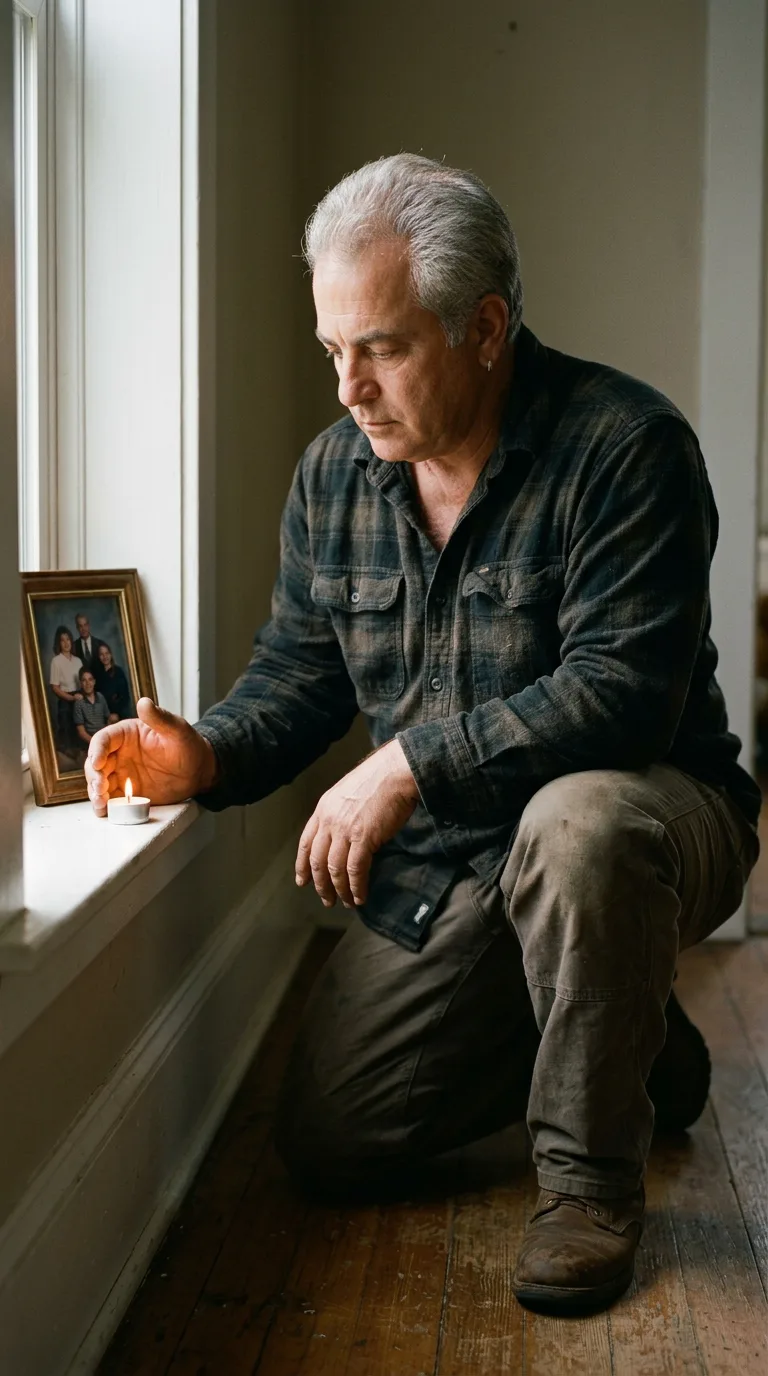
Rarest thing about him: A burn scar — epic, 1 in 132
Season 0seed 1934240698 · engine v10
Character card
lineage WV6PBZ
His body-swap story
@malik.overton, wearing Colton Prewitt, rolled the wheel on and woke up as Gabriel Nassar, spent under a minute in him, then spun the wheel and woke up as Owen Hallstrom
---
Three minutes in Colton Prewitt's skin was enough to know it was the wrong body.
You feel it in the kitchen light, in the particular ache of standing in a stranger's tall skinny-fat frame with its soft middle and long unused arms, freckles like a spray of static across forearms that have never done a real day's work. You made this man run stairs for a living and it still didn't take. The wanting starts almost as soon as the wheel gives him to you — small, undramatic, correct: this is not it, whatever it is. Coastal Maine evening light through a rental window. A protein shake going warm on the counter. You are thirty-two years old in a body that isn't even yours and already bored of it, the way you get bored of anything that fits you exactly as advertised and no more. Something in you wants weight. Wants hands that have done something. You open the laptop already knowing you'll spin again, the way you always know, three times now, the decision arriving after the fact to explain itself to nobody. The wheel spins. It lands.
—
The window is the first thing. Old glass, a little wavy, evening light coming through it thin and gold and dying, and your hand — his hand, broad-knuckled, burn-shined at the wrist where a cuff has ridden up — is cupped around a tea light in a plastic shell, warming it against a draft that isn't there. The flame leans toward you across the sill. It should lean away, toward the open window, toward the air moving in off the street, but it leans in, toward the hand, toward the face above the hand, and stays leaning, and you hear a voice that is not decided yet whether it is yours say a name — *Layla* — warmer than the room, warmer than grief usually allows a voice to be. Then breath, long, too long, longer than these particular lungs should hold, and the flame goes out on it.
You are kneeling. Your knees — his knees — report it first, a workingman's ache gone permanent in the joints, and a low animal weight settles into you all at once: heavy through the shoulders, heavy through the gut, a body built for standing over other bodies and being useful to them. A photograph on the sill, glass smudged where a thumb has gone to it too many times. A window open on a street with one stoplight, and past it a diner sign, unlit, has been unlit long enough that the dark of it feels permanent.
—
The shirt gives it up first, because the shirt is closest. Flannel, soft from washing, a size too generous through the belly and tight across shoulders wider than the tag accounts for — and with it, sleeve by sleeve, the morning: standing in front of a mirror with steam still on it, working the buttons one-handed out of habit because the other hand was holding a coffee mug with a chip on the rim, deciding against the good shirt, the one with a collar, because good shirts don't belong at a forge and today there'd be a forge before there'd be anything else. Marnie Colvin's mare needed front shoes reset and Marnie doesn't care what a man's collar looks like, only whether the shoe seats flat and stays.
The apron comes next, though it isn't on you now — it's on a hook by a door thirty feet and a whole afternoon away, and touching the memory of its weight is like touching the leather itself: cracked and blackened and pocked with old hoof clippings, heavier than a young man expects an apron to be the first time he puts one on, at nineteen, in another man's yard, being laughed at gently for wearing his good boots to a forge job. Gabriel Nassar has broken four pairs of boots since. He remembers the burn — not the getting of it, that part stays mercifully behind a door his own mind built and locked, just the after: cold water running too long over a jaw that wouldn't stop being wrong, a nurse asking if there was somebody to call, and there wasn't, not yet, not that early — Deb came later, married him two years after with the scar already old and shiny and not something she flinched from, which is most of why he married her.
Deb is gone now, not dead, just gone the ordinary way people go, fourteen years back, and it didn't take everything with her: three kids between them, a fourth from before her that he raised anyway and never once called anything but his. Grown now, all of them, scattered — one two towns over, one in Columbus, one further than that. He talks to them Sundays. Some Sundays.
The ring is what his hands do without him — not a wedding ring, Deb's been off his finger a decade, but his mother's, a thin gold band he's worn on his pinky since her funeral and turns and turns without noticing, an idle animal comfort, worn smooth on the inside from all that turning. It's on his hand right now. You feel it turn once between two fingers before you've told the hand to do anything at all.
The photograph on the sill is the one he wasn't supposed to look at again tonight. Layla. Not his wife, not his daughter — the old ex, the one who still matters more than the word *ex* should allow, twenty years gone from his life and dead six weeks from something that moved too fast for anyone to argue with, and he'd found, going through a box he had no business opening, a letter she wrote and never sent, thirty years old, meant for him, saying things a younger version of both of them needed to hear and didn't get to. He wasn't supposed to read it tonight. He read it tonight. That's the whole crime of it — a man alone in small-town Ohio on a Wednesday evening, lighting a two-dollar candle for a woman he loved before he knew what the word cost, reading what he wasn't meant to, and being, for one unwatched minute, entirely undefended.
The neck aches where the burn scar pulls tight when he tips his chin down — it always has, forty years now, a weather-vane of an ache that tells him more about cold fronts than the radio does. Fifty-six years in a heavy-built frame that carries its weight low and solid, hands rope-strong and thick-knuckled from forty years of holding a horse's leg between his own two knees, a body that knows how to be useful without being asked and doesn't know how to be anything else nearly as well.
—
You look at your hands. Both of them — the one still curled where the candle was, smoke-thread gone now, and the other, resting on a denimed knee, the pinky ring catching the last of the window light. They are not the hands you had three minutes ago, soft and freckled and unused. These have done things. These have held a stranger's grief and a stranger's animal both, all afternoon, every day, for four decades.
You lift your eyes off them into the last of that light through the wavy glass, past the frame, past the dark diner sign, out toward wherever the camera of your own attention actually is.
"There you are," you say, in his voice, not sure yet — not sure at all — whether you mean him or her or the woman in the photograph or nobody, and how long you'll be standing here to find out.