Colton Prewitt
Fictional. Generated by AI — not a real person, and no likeness of one is intended.
32, personal trainer in Coastal Maine · rolled by @malik.overton · card — no film
History
who has worn him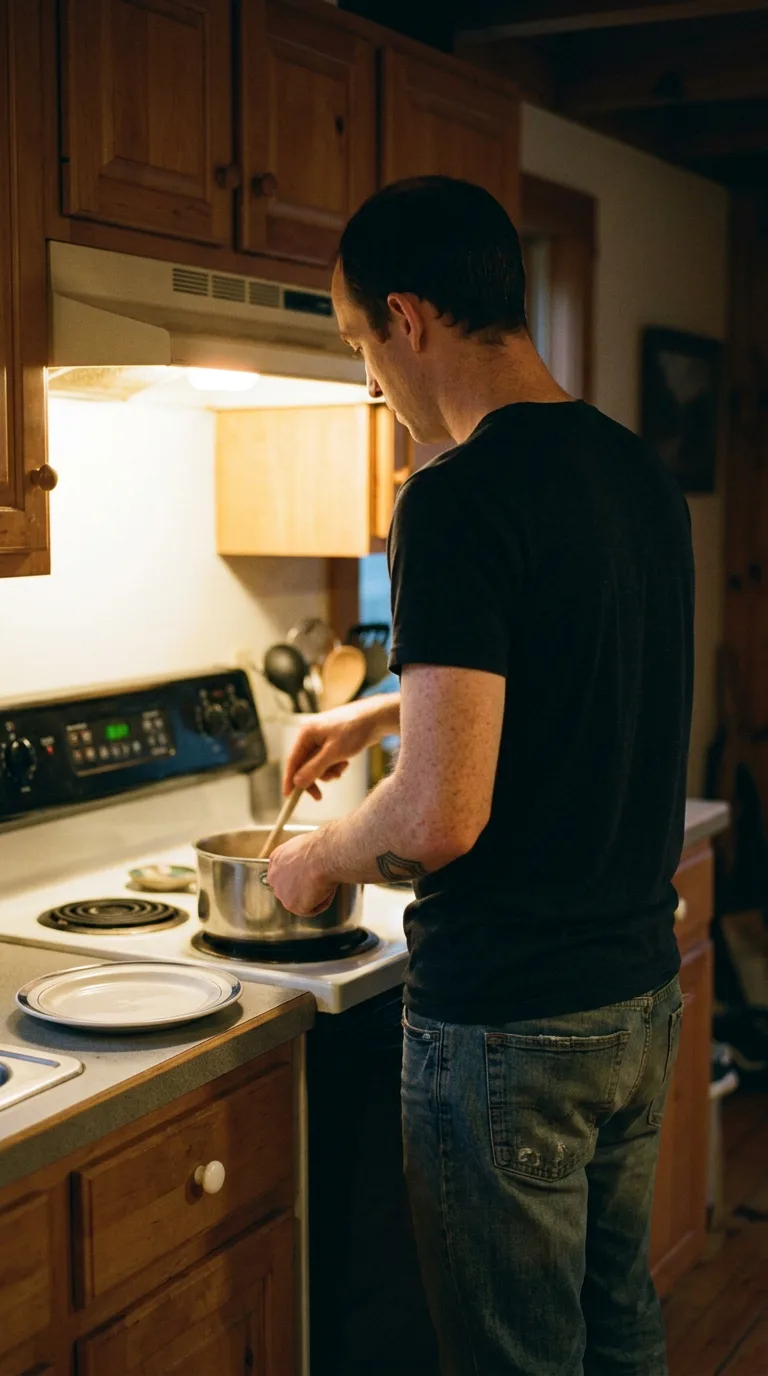
Rarest thing about him: High blood pressure — rare, 1 in 20
Season 0seed 1948584978 · engine v10
Character card
lineage WV6PBZ
His body-swap story
@malik.overton, wearing Darius Kellerman, rolled the wheel on and woke up as Colton Prewitt, spent 4 minutes in him, then spun the wheel and woke up as Gabriel Nassar
You are standing in Darius Kellerman's front hall in Atlanta, and it has been three minutes, and already you know this body is a lie you don't want to keep telling. The gray hair, the scar through the eyebrow, the legs that could still, at forty-one, close on a man twenty pounds lighter — all of it is wasted on you because the second you settled into him you felt what he carries in his knees, the surgical ache, the discipline it takes just to jog to the mailbox. You want none of that tonight. You feel his phone buzz in the kitchen with a name you now know without being told — Colton — and something in you, greedy and small and not proud of itself, thinks: him. The one who left the leftovers. The one whose voice comes up through the floorboards some nights doing kitchen sounds, hums, a life going on next to this one, ordinary and unbothered. You didn't come back to the wheel for a better body. You came back because this one already has history in it and you'd rather start clean in the roommate than live inside somebody's grudge. You take out your own phone — Darius's phone, you correct, not yours, never yours for longer than a spin — and you go to vessel.cards, and you don't even dress it up as a decision. You just pay, and spin.
The stirring stops mid-circle.
It starts again the other way, and you are the one turning the spoon now, and the kitchen smells like scorched garlic and the sea is somewhere behind the house, close enough that the window over the sink holds a strip of dark water going navy to black. Your shoulders are narrower than they were a breath ago. Your knees don't hurt. Nothing hurts, except a low weight behind the eyes you'll learn later is the blood pressure he doesn't think about, and salt — you salt the pan, out of some habit that isn't yours yet, and you don't taste it, because you don't know this stove or this pan or what he was even making. You reach up without deciding to and take down a second plate, and set it beside the first one on the counter, the way a hand does a thing it has done a hundred times before the head catches up.
It's the spoon that opens him. Wooden, worn smooth on one edge from years of scraping the same pot, and it comes with a whole kitchen behind it — this kitchen, this exact light, his mother teaching him red sauce standing where you're standing now, twenty years gone but the light hasn't changed, still that low copper wash off the one bulb under the vent hood. You feel how his hand knows the pot without looking, how he can tell it's close to burning by the smell alone. You feel the two plates and understand, distantly and too late for it to matter, that he has been doing this since the divorce that wasn't a divorce because they never married — since Renata left three years ago and took the good chef's knife and left the bad expectation that dinner should still, some nights, feel like it's for two people. He sets the second plate out maybe once a week. He doesn't examine it. It's not longing exactly. It's a hand that hasn't been told to stop.
The T-shirt against your back — black, soft from washing, a little tight at the shoulders in a way that used to bother him and doesn't now — gives you the morning: him pulling it on in a room with sloped ceilings and a window full of gray Atlantic weather, one arm and then the other, unhurried, a Wednesday with two clients booked and a long gap in the middle he was already planning to spend right here, cooking, alone, on purpose, the good kind of alone. The jeans at your hips remember being pulled on over legs that spent all morning demonstrating lunges to a sixty-year-old man rebuilding his hip. Your forearm — his forearm — carries the tattoo like a held breath: three chevrons and a rocker, a uniform's worth of somebody, a brother two years gone, Fallujah, a promise made at a kitchen table not unlike this one that he'd keep training, keep the body honest, because his brother couldn't anymore. It aches under the ink sometimes, not the skin, something under the skin. You feel his hands — your hands now — and how they know a barbell's knurling, a stopwatch, the particular give of a resistance band before it's about to snap. They crack knuckles when he's not paying attention to them, and yours do it now, unbidden, a tic passed down through the nerves like a key turning in a lock nobody built for you.
You feel Colton's whole quiet, freckled patience arrive — a man who talks clients through their worst mornings for a living and comes home to cook for a table set for one, most nights, and sometimes, without saying so to himself, for a ghost of two.
You look down at your hands on the counter — his hands, freckled to the knuckle, faint burn-white scar you didn't put there and didn't ask about — and you turn one over like you're checking it's real. It is. It's the only thing in the room that is.
You look up, out the dark window at the water you can't see but can feel, and you say, to no one, in his voice, "Guess I'm not eating alone tonight" — and you don't know yet if that's a promise or just something to say to an empty second plate, and you don't know how long you get to find out.