Darius Kellerman
Fictional. Generated by AI — not a real person, and no likeness of one is intended.
41, pro athlete in Atlanta · rolled by @malik.overton · card — no film
History
who has worn him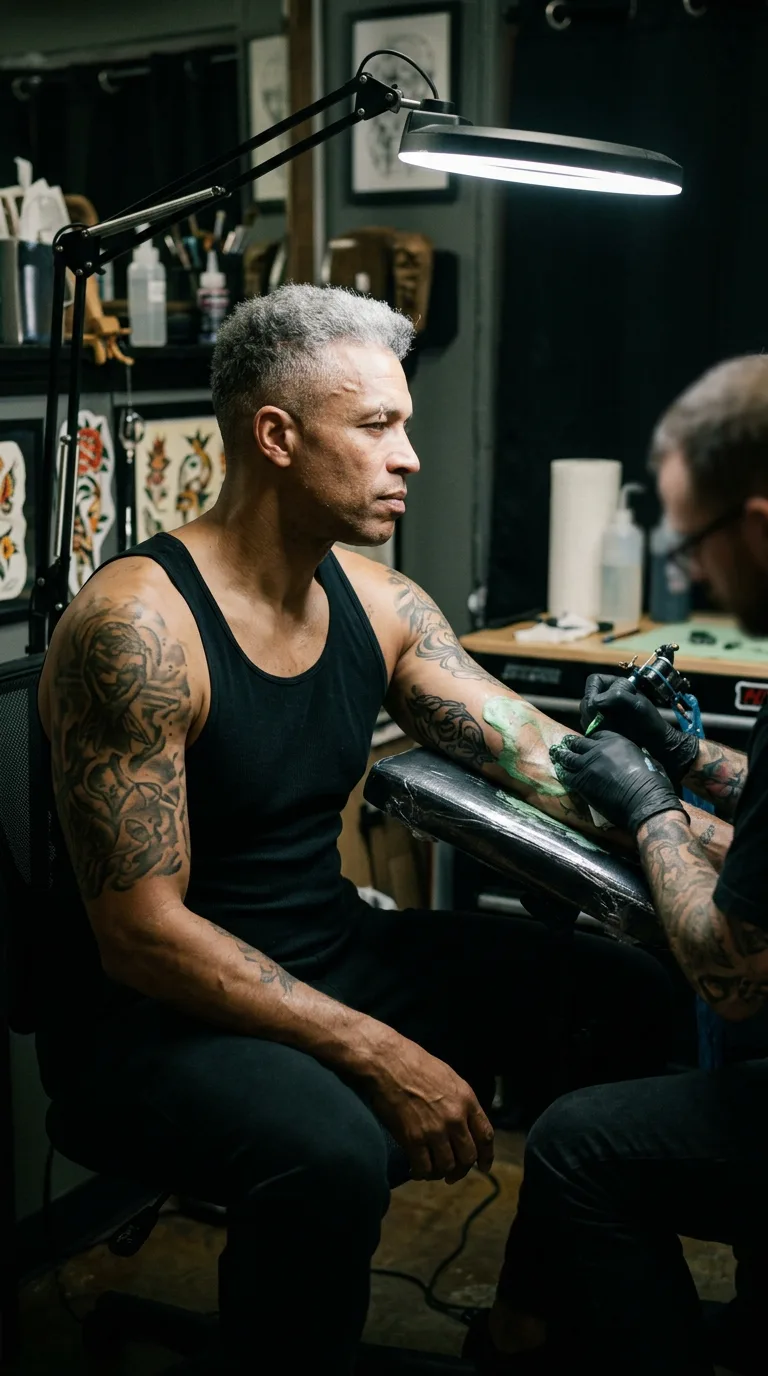
Rarest thing about him: Getting a tattoo — rare, 1 in 258
Season 0seed 31480580 · engine v10
Character card
lineage WV6PBZ
His body-swap story
@malik.overton, wearing Wallace Kanahele Brandt, rolled the wheel on and woke up as Darius Kellerman, spent 4 minutes in him, then spun the wheel and woke up as Colton Prewitt
Wallace Kanahele Brandt has been you for twenty-three minutes, and already the felt under your palms feels like a habit you inherited instead of one you built. You're standing at his table on the floor, mid-shift, the fluorescent buzz of the pit sitting behind your eyes like a headache he's had for decades. His knees ache. His lower back aches. Somewhere behind that ache is a whole life — a house, maybe a wife, you haven't gone looking — and you don't want it. Twenty-three minutes was enough to know: this body is patient furniture. It waits for other people's luck. You want to be inside the luck for once. You clock out early, tell the pit boss your stomach's bad, and you go home to the little laptop on the kitchen table where the wheel is still open in its tab, waiting, like it always is.
The power drops for two seconds in a shop in Atlanta, and when it comes back you are the arm.
Not holding the arm. Being it — the weight of it braced on the little vinyl rest, green soap gone tacky and cool where it's pooled in the crook of the elbow, the needle still walking its line under the skin in short electric bites that don't hurt so much as insist. Your head is turned away from the work, jaw loose now where a second ago — his second ago — it was clenched tight enter a stranger's forearm. The tattoo artist doesn't look up. He hasn't noticed the half-beat where the flinching stopped. Why would he. You watch the needle from the outside like it's happening to someone else's furniture, which, for about two more seconds, it still feels like it is.
Then his shirt is against your back — no, your back, already, it's yours now — and the first thing that comes isn't a memory, it's a craving: a phantom itch for a piece of gum that isn't in your mouth, so specific and so unearned that you almost laugh out loud in his throat. That's the door. The gum isn't there but the wanting for it is, and behind the wanting comes a whole rhythm of his life, chewing through film session after film session, chewing through a text from his agent about the numbers, chewing because his hands need a job when the rest of him is trying not to think about money he doesn't have anymore.
The track jacket is what really opens him up, though — not this jacket, the one from this morning, memory bleeding backward through the fabric memory of every zip-up he's ever pulled over these shoulders. You feel him getting dressed hours ago in a quiet house in a cul-de-sac gone thick and green with Atlanta summer, his girlfriend's voice somewhere down the hall, easy, unbothered, a voicemail from his ex about pickup times for the kids sitting unanswered on his phone because he'll deal with it, he always deals with it, just not yet. He pulled the jacket on the way he's pulled a hundred jackets on, one arm and then a roll of the shoulder for the other, the scar through his eyebrow catching the bathroom light in the mirror the way it always does, the one thing anybody ever really sees when they look at him first.
His hands know things yours never will — the particular give of a laced-up practice sneaker, the angle you plant a foot at to change direction without your knee complaining about it later, forty-one years of small physical honesty that no one in the stands ever claps for. Underneath the muscle there's a low, constant hum of worry that isn't about his body at all — it's about the number, the hole he's in, deeper than a signing bonus should let a man fall, and how he chews gum instead of screaming about it, and how the pills in the cabinet at home make the worry quieter without making it smaller. He is spiritual in the specific way of a man who prays only when nobody's watching and doesn't call it prayer. He had a drink twice this year. He quit cigarettes nine years ago and still, on nights like this, misses the ritual of the lighter more than the smoke.
The needle keeps walking. Somewhere in him — in what's left to be in him — is the memory of deciding to get this piece, something about starting over, something about his kids' initials going in later, lower, where the ink hasn't reached yet.
You look at your hands. His hands — broad, scarred faintly across the knuckles in a way that has nothing to do with you, gum-chewing hands, hands worth more than you've ever been worth and somehow underwater anyway. You turn one over slowly like you're checking it's real, and for a second the tattoo artist finally glances up, machine still humming.
"Keep going," you say, in his voice, low, easy, like it's the most natural thing in the world. "I want to see how it looks finished."
You don't know if you'll be here to see it.