Wallace Kanahele Brandt
Fictional. Generated by AI — not a real person, and no likeness of one is intended.
65, casino dealer in Honolulu · rolled by @malik.overton · card — no film
History
who has worn him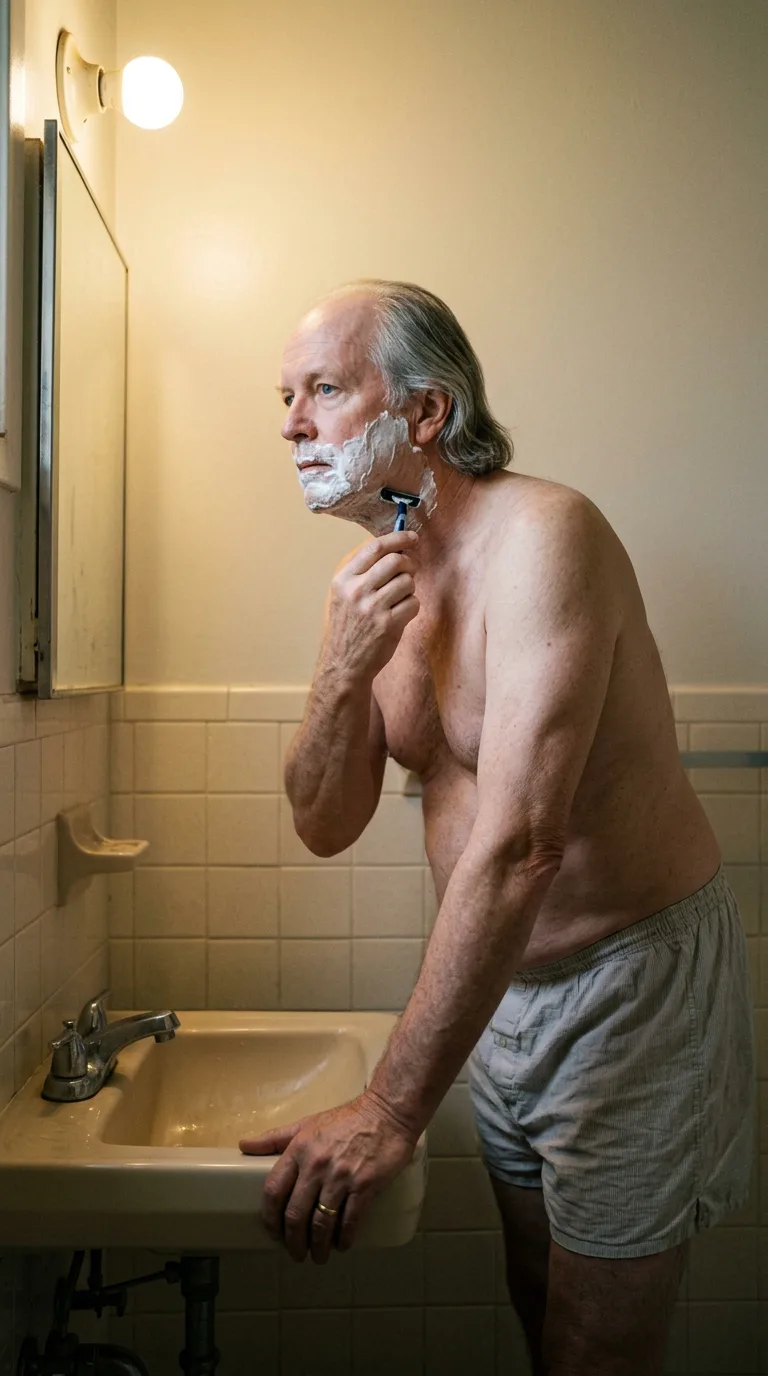
Rarest thing about him: Casino dealer — rare, 1 in 152
Season 0seed 266778668 · engine v10
Character card
lineage WV6PBZ
His body-swap story
@malik.overton rolled the wheel on and woke up as Wallace Kanahele Brandt — their first, spent 24 minutes in him, then spun the wheel and woke up as Darius Kellerman
The apartment is quiet in the way that only a Wednesday night can be quiet, the kind where the dishes are done and there is nothing left to postpone. You have scrolled through everything twice. You find the site the way you find most things now, half by memory, half by the specific gravity of wanting something for a long time before it existed — vessel.cards, plain as a phone bill, a wheel rendered in flat gray light like it's embarrassed to be there. You have wanted this since before you knew to call it wanting: every story where someone wakes up wrong, every film where the eyes change and nothing else does. You pay. The wheel spins without ceremony, no fanfare, just a soft click like a turnstile, and then —
— light, and foam, and a razor already moving.
You are leaning over a sink that isn't yours, that never was anyone's but his, tile the color of old teeth, a bulb overhead throwing everything into a jaundiced gold. Half a face is bare, half is still lathered, and the razor is already climbing his jaw against the grain, no hesitation where — you will learn — he always hesitates, at the corner of the mouth. Your hand, his hand, finishes the second half faster than the first, clean strokes, unthinking. You feel the weight of him settle around you like a coat put on running: tall, more of him to hold up than you expected, a looseness in the shoulders that isn't quite tiredness and isn't quite ease. Water hisses in the pipes. Outside the window it is afternoon, hard Honolulu light, the kind that turns the red dirt yard the color of a wound.
The razor is the first thing that gives you anything. It's cheap, a drugstore double-blade, and it comes with a flash of a thousand mornings just like it — the particular ache low in his lower back from leaning at this exact angle, forty years of it, mornings before shift, mornings after fights, mornings when the water heater was busted and he did this cold. You feel his knees, older than the rest of him agreed to be, and a strange humming steadiness in the right hand, decades of dealing cards living in the tendons, holding still by habit even now.
Then the shirt. It's not on him yet — it's draped over the towel rod, waiting — but your fingers brush the sleeve reaching past it for the towel, and it opens like a door left unlatched. You feel him putting it on hours from now, no — this morning, his morning, before his shift at the Ala Moana casino floor: the specific tug of the collar because his neck has thickened some in the last few years, the vest that goes over it like a second skin he's worn so long he doesn't notice its weight anymore, the bow tie he's tied ten thousand times without a mirror. He hums while he dresses. He always has. His wife, Noe, used to tease him for it, back when teasing was still the main language between them; now it's mostly quiet, comfortable, punctuated by grandchildren's visits and the specific silence of two people who ran out of new things to say decades ago and found they didn't mind.
The wedding band on the left hand gives you a wash of something warmer and sadder both — thirty-eight years, a wedding on the beach at Waimānalo, her dress plastered to her calves by the wind. And under that, further down, half-buried, another feeling entirely: Lani. An old name, an old ache, a girl he loved before Noe and lost to a mainland scholarship and never quite finished grieving, not because he wants her back but because some rooms in a man don't get repainted, they just get quieter. He thinks of her sometimes dealing blackjack to tourists at three in the morning, in the gap between hands, and feels nothing but a kind of soft static, easily set down.
The sink's edge under his palm gives you the cancer — not violently, just a fact laid into his bones like a watermark, three years since the last scan, the specific gratitude he doesn't talk about, doesn't pray about exactly, though something in him thanks something most nights before sleep. He isn't a churchgoer. He believes in something loose and wide and unnamed that watches the ocean with him. His kids — three of them, scattered from Kalihi to Seattle — call more since the diagnosis. He likes that, hates why.
The toothpick isn't in his mouth right now, mid-shave, but the ghost of it is in his jaw, a habit thirty years deep, something to do besides think, besides drink, which he never did, or smoke, which he never did either. His father did both and it took him early, and Wallace decided young that his mouth would hold a splinter of wood instead of anything that could hold him.
You feel the whole geography of him arrive in pieces, unhurried, unbidden — the felt table under his palms at work, swept smooth at the end of every shift, chips racked, the particular tired satisfaction of a job that asks nothing of him but attention and honesty, forty years of it, retirement always almost-discussed and never done because what would he do with the hours. All of it comes through what's touching him: razor, sink, ring, shirt on its hook, tile underfoot. None of it comes through you. You just hold it, the way you're holding him.
The razor finishes its last stroke. You straighten up. You catch the eyes in the mirror — his blue, pale, faintly startled in a way that has nothing to do with the shave — and you look down at the hand still holding the razor, turn it over slow, foam sliding along the wrist, ring catching the bulb's light.
You lift your eyes back to the mirror and say, out loud, in his voice, "Well — there you are."
Whatever happens after this hasn't happened yet. You don't know how long you get to be a man with a bad back and a good marriage and a toothpick habit and a wife named Noe waiting somewhere in the house behind you. You don't know when the wanting comes back, or what it'll cost, or who's next. For now the water's still running, and his face — your face, for as long as this lasts — is half-clean in the mirror, waiting on you to finish.