Owen Delcastillo
Fictional. Generated by AI — not a real person, and no likeness of one is intended.
40, tailor in San Francisco · rolled by @malik.overton · card — no film
History
who has worn him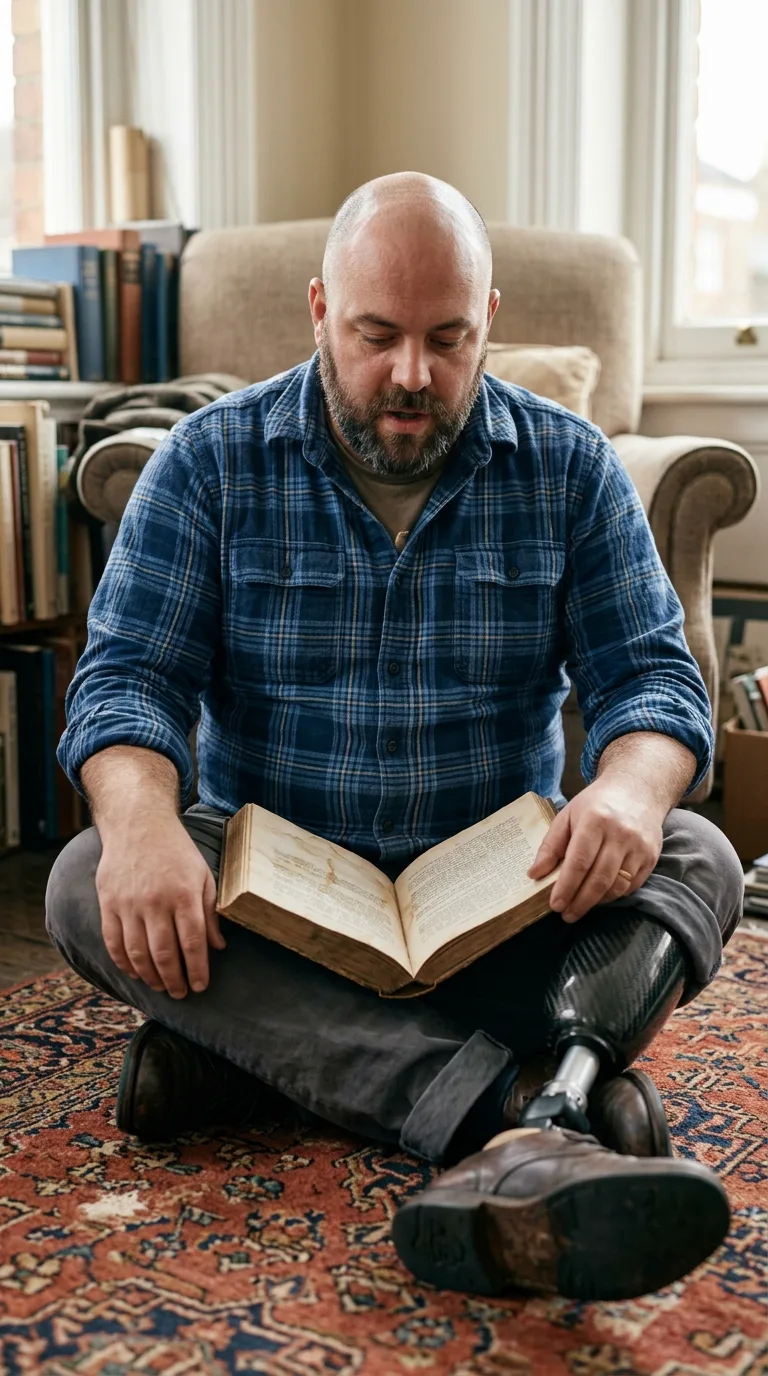
Rarest thing about him: Below-knee prosthetic leg — epic, 1 in 329
Season 0seed 859877074 · engine v10
Character card
lineage WV6PBZ
His body-swap story
@malik.overton, wearing Rigo Estévez, rolled the wheel on and woke up as Owen Delcastillo, spent under a minute in him, then spun the wheel and woke up as Marlon Deese
You are standing in a stairwell that smells like gun oil and cheap cologne, and the hands you are wearing are eighteen years old, and they will not stop shaking.
Not from fear. From leftover adrenaline that isn't even yours, sitting in muscle you only borrowed. Casey Vantrease's hands. You wore him for six minutes — six minutes of a barracks hallway, a locker with his name taped to it, a photo of a girl he was already losing — and then you left him standing there mid-sentence to someone who loved him, and now you're back in the miner, Rigo, feeling Rigo's lungs do the work of breathing like it's a chore assigned to somebody else.
It isn't Rigo's stairwell you're thinking about. It's whose locker was two down from Casey's. You never met that boy while you were wearing his enemy, not with your own eyes — but the hate came through anyway, the way everything comes through, uninvited, in the borrowed body's feeling. A name said like a curse. A story about a woman, or an insult, or nothing at all, the kind of thing that curdles between two men for reasons neither of them could defend in daylight. You don't know his face. You know that Casey's jaw tightened every time the name came near it.
You want to know who he is from the other side now. That's the whole reason, if you're honest, and Rigo's chest is not the chest to be honest in — too tired, too far from anything that matters to you tonight. So you go to the site, the wheel with its cheerful spinning colors, and you pay, and you do not choose, because you never get to choose, and the wheel does not care what you want, only that you want something.
It gives you a tailor. Bald head, heavy shoulders, a body carrying forty years like a weight it stopped noticing. Cross-legged on a rug on the other side of the country, in an evening that is somebody else's morning-feeling, mouthing words out of a water-stained book he found somewhere he shouldn't have looked.
The third line trips him. Yours now — the tongue is yours now, mid-syllable, and the fourth attempt lands clean, vowels dropping into a mouth shaped a half-second before you ever arrived to use it. He does not stumble again. He finishes the page. He does not know that anything in him has changed hands.
You are heavier here. That is the first thing — Rigo's leanness gone, replaced by a gut and a chest that sit low and solid, forty years of a body eating what it wanted and not much caring. Cross-legged is a strange position to inherit; one knee is real and one is a hard curved shape under rolled denim, and when you shift your weight there is no ankle there to catch you, just a socket and a give that isn't pain, exactly, just absence with a shape.
The rug under your knuckles brings it first — his knuckles, cracking without your permission, a habit that isn't yours firing on its own like a nerve with a memory. Then the book itself, water-stained, and a flash: buying it from a stall near the Ferry Building for eleven dollars because the woman selling it swore it was Victorian and he liked the smell of it more than he believed her.
The shirt against your back gives you the morning. Plaid flannel, third button stubborn, the sleeve caught on the socket's edge the way it always catches, a small practiced tug to free it that his hands do without his mind attending. He put this on today not for anyone, because there is no one — the tan line on the ring finger tells you that before any memory does, three years faded now and still there, a woman named Denise who is somewhere else's problem now, no anger left in it, just weather that passed through.
The measuring tape is not on him now but you feel where it usually hangs anyway — the shop, the window light, the cutting table, the half-made jacket waiting on the dummy like a patient man. Twenty-two years of a trade his father taught him in a shop that isn't this shop anymore. Chalk on cloth. A left leg gone below the knee at nineteen, a highway thing, mostly finished grieving now, mostly. Reflux that flares on nights he eats too late, which is most nights, alone, the television loud enough to be company.
No hate anywhere in these hands. That's the strange part, the part you came for and don't find — nothing here connects to the boy from New York, no locker two doors down, no name spoken like a curse. Just a tailor who found an old book and wanted, for one evening, to be someone who could say the words in it and mean them.
You look down at your hands — thick, a pale groove where a ring used to sit, pins still caught in a shirt pocket from some earlier fitting, cuticles ringed with a tailor's permanent chalk-dust. You turn one over like it might tell you something the touch hasn't.
Then you lift your eyes, and say, to no one:
"Guess I was in the wrong story."