Neil Chandra
Fictional. Generated by AI — not a real person, and no likeness of one is intended.
30, roofer in Anchorage · rolled by @colin.hasbrook · card — no film
History
who has worn him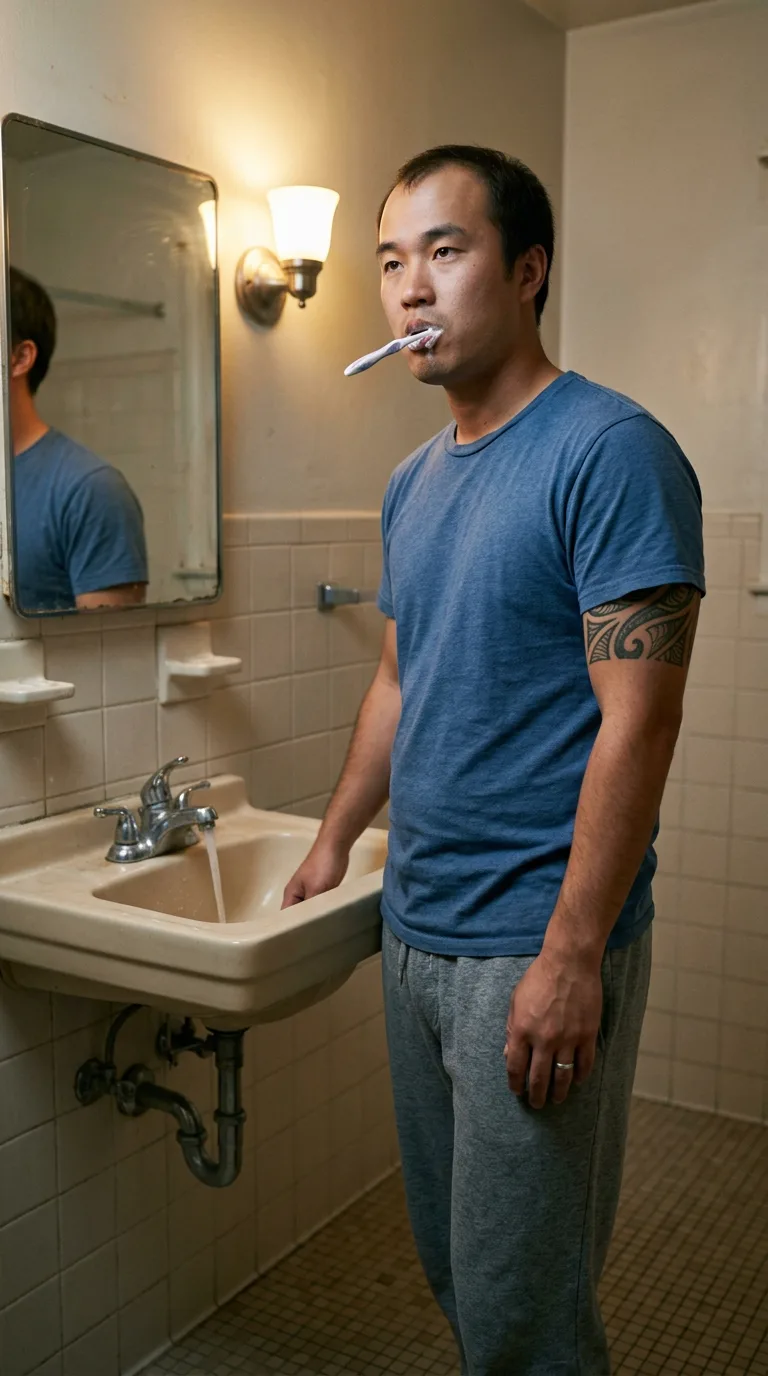
Rarest thing about him: An ancestral tradition — epic, 1 in 124
Season 0seed 328400451 · engine v10
Character card
lineage 2NZHHJ
His body-swap story
@colin.hasbrook, wearing Adrián Fuentes, rolled the wheel on and woke up as Neil Chandra, spent 4 minutes in him, then spun the wheel and woke up as Owen Matsuda
---
Adrián Fuentes has good hands. That's the first thing you notice, coming back into them at a folding table in a borrowed apartment in Queens, the wheel still glowing on somebody's laptop screen. Field archaeologist's hands, careful, sunburned across the knuckles, a scar through the eyebrow you didn't earn and don't feel. He's thirty-four and athletic and he has been sitting in this chair for eleven months of your time and less than a minute of his, and already the itch is back, low and familiar, the thing that has never once been satisfied by staying. It isn't boredom exactly. It's that you spent five minutes in a man named Ravi twenty-seven minutes ago — a wrestling coach, thick through the shoulders, a house that smelled like chalk dust and cedar — and in those five minutes you found a photograph on his fridge of a man who looked enough like him to be him and wasn't, and underneath it, in Ravi's own hand, a magnet holding up a Post-it that just said *call Neil back*. You didn't. You spun instead. That unfinished thing sits in you now like a hook set shallow, and Adrián's good hands are already reaching for the laptop.
The wheel spins. It always feels like nothing, which is the worst part.
—
The water is running before you are. That's how you know it's happened: the sound arrives a half-second ahead of the rest of you, tap-hiss against porcelain, and then you are the one standing over the sink with foam cooling on your lip and a toothbrush already reversing direction, moving to the other side of your mouth on its own, unbidden, because his hand knows the rhythm before you do. Fluorescent light, warm and a little yellow, a mirror with a corroded edge. Grey water pooling at the drain. You did not choose this angle, this bathroom, this tiled wall at your back — you arrived already mid-stroke, already leaning the same three degrees he was leaning, and for a second there is only the taste of mint and the dumb animal comfort of a routine older than any thought.
You rinse. Twice, because that's what he does, though you didn't decide it. You stand the brush bristles-up in the cup, out of water that has clearly held it that way for years, and only then do you let yourself feel the rest of the room arrive around the shape of him.
—
The shirt is what starts it — a soft grey T-shirt, worn thin at the collar, and the second your shoulders settle into it you get a flash of a closet, cedar-smelling, a row of identical grey shirts because he buys four at a time and never thinks about it again. Then the sweatpants, elastic gone soft at the waist, and with them a whole morning comes back sideways: getting dressed forty minutes ago — no, his forty minutes, his afternoon, because up here the light outside the frosted window is flat and white and early, mid-shift light, and you understand without being told that he works nights on the roofs in winter when the crews go up before dawn to beat the wind, and that this is his one waking hour of daylight, stolen in the middle of everyone else's day, and it always makes him feel like he's cheating something.
The tattoo on his inner forearm warms under your own touch as your hand brushes it toweling off — tribal black, inked nine years ago in a shop that doesn't exist anymore, a design he picked because it meant nothing tribal to anyone, least of all him, and that not-meaning is the whole point of it. He remembers his father's face when he saw it. He remembers not caring.
The wedding band is cold and then it isn't, and that's a bigger door than the tattoo. Behind it: a wife, a kitchen, an argument eight months ago about money that wasn't really about money, and under that, quieter, guiltier, a woman who isn't his wife — recent, recently over, a name that surfaces and that you let go without chasing, because it isn't yours to want. What is yours, or close enough, is the ordinary marriage underneath it: her laugh at something stupid on the television, her cold feet against his in December, the specific tired peace of coming home from a roof at four in the afternoon smelling like tar and having someone there.
His scalp — his hand goes to it without his asking, the M of hairline pushed back at both temples, and you feel how he's stopped minding, mostly, except in photographs. His body underneath is thirty and solid and a little sore in the lower back in a way that has become just weather to him, not pain exactly, the tax on a man who spends his days on a pitch above a whole town laid out small underneath him. His hands know hammers, know the particular give of shingles in cold weather, know a hundred rooftops from Spenard to Eagle River without needing his eyes.
And under all of it, quiet as a floorboard: a brother. Ravi, thirty, a wrestling coach across town, and a stack of unreturned calls that Neil feels in his chest like a stone he carries and never sets down and never names out loud to anyone, not his wife, not the ex, nobody. Whatever it is between them — an old fight, a debt, a silence that outgrew its reason — you have stood on both sides of it now, and it still doesn't resolve into a shape you can hold. Just weight. Familiar weight, five minutes old and twenty-seven minutes gone.
—
You look down. His hands, blunt and careless-knuckled, foam-water still on the left one where the ring sits.
You turn the hand over once, like it might explain itself.
Then you lift your eyes to the mirror, to the tired fluorescent version of his own face, and you say, quietly, to no one who could possibly hear it right:
"Call your brother back."
The tap is still running behind you. You don't know for how long you'll be the one to do it.