Adrián Fuentes
Fictional. Generated by AI — not a real person, and no likeness of one is intended.
34, field archaeologist in New York · rolled by @colin.hasbrook · card — no film
History
who has worn him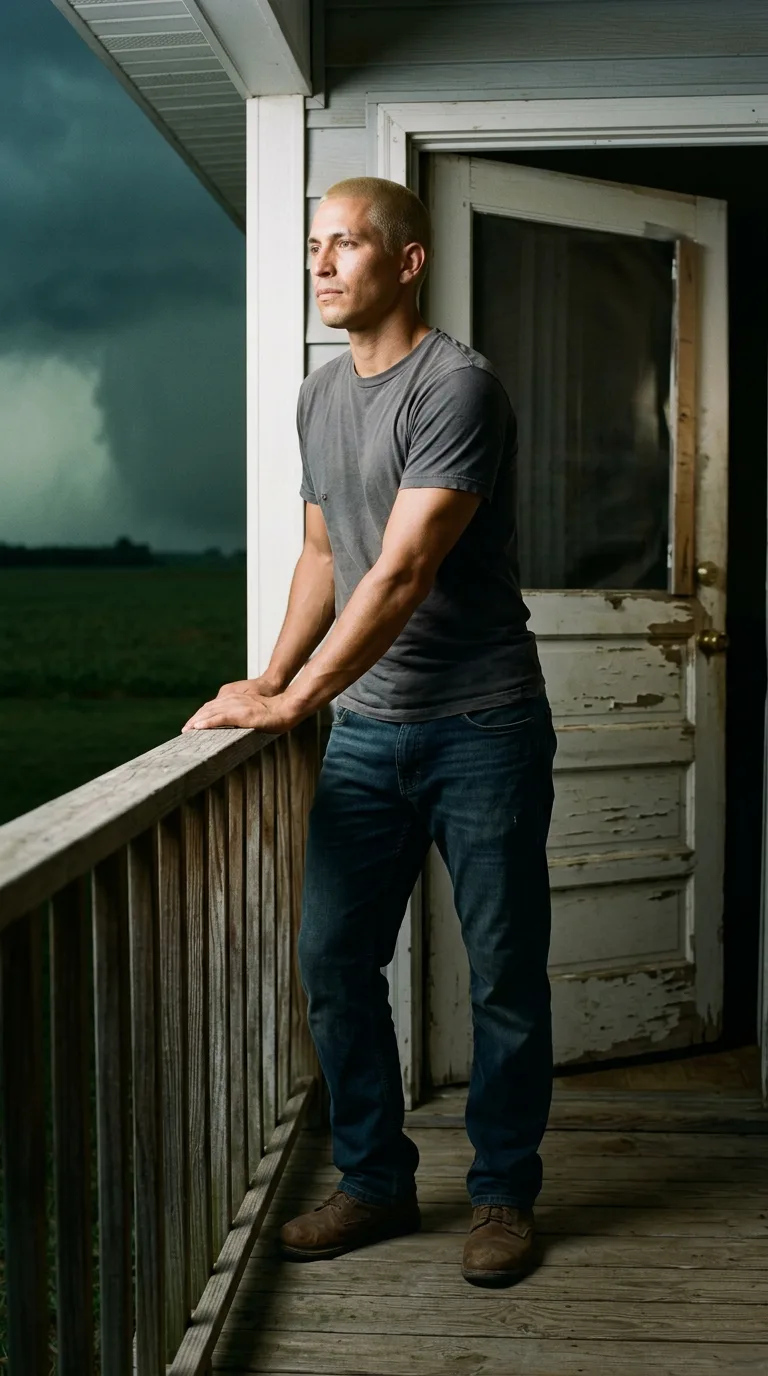
Rarest thing about him: Nipple — legendary, 1 in 139
Season 0seed 1141840717 · engine v10
Character card
lineage 2NZHHJ
His body-swap story
@colin.hasbrook, wearing Yusuf Haddad, rolled the wheel on and woke up as Adrián Fuentes, spent under a minute in him, then spun the wheel and woke up as Neil Chandra
The dorm room smells like instant noodles and unwashed sheets, and you are sitting cross-legged on the floor of it in a body that isn't yours either, not really — Yusuf's body, 22 years old, hazel eyes, a laptop open to a economics assignment due at midnight that you have no intention of finishing. Four minutes you've had him. Four minutes of his roommate's music thudding through the wall, his phone buzzing with a name you don't recognize, his own leg — thin, restless in a way that isn't the same restlessness you're about to inherit — jittering under the desk. It isn't boredom, exactly. It's that you spun for a college kid and got a college kid, and somewhere in the four minutes you remembered that the wheel doesn't owe you anything good, and that the only cure for a body that bores you is another one. You open the laptop. The site is already bookmarked, of course it is, bookmarked four hundred and eighty times over by however many hands you've worn to type it in. You pay. You spin.
Wind. Then no wind. That's the first thing — a wall of green-black cloud stopped mid-approach like a held breath, and under your boots — his boots — old porch wood, soft with weather, and a screen door somewhere behind you still swinging on its hinge, tik, tik, slowing. You are stepping off the porch. Not toward the house. Away from it, into the field, and the body under you takes the step easy, unhurried, like it has been waiting its whole life to walk into something instead of away from it. Chin up. Shoulders loose. The grass out past the porch steps is already flattening sideways in a wind you can't feel yet because the wind hasn't caught up to what's coming. Six feet of him. Thirty-four years of him. You feel the specific gravity of a man who spends his days on his knees in dirt, weight settled low, forearms corded in a way Yusuf's never were.
And then his shirt — gray cotton, sun-faded, damp already at the collar from the humidity that comes before rain — gives you the first flash: this morning, sleeve by sleeve, standing in a room with a window unit rattling and a woman still asleep with one arm flung across where he'd been. Marisol. The name arrives with the smell of her shampoo still on the pillow. He'd pulled the shirt over his head one-armed, the piercing catching cold against the fabric for a second the way it always did, a small ordinary jolt he'd stopped noticing years ago except in moments exactly like that one. He'd looked in on Teo's door — six years old, starfished across the bed, one sock on — and not gone in, because there wasn't time, because the site director hated when people were late for the flight out to the dig, and he'd told himself he'd call at lunch instead.
The jeans against your legs now — his jeans, dig jeans, the knees permanently pale with old dust no wash cycle ever lifted — bring back a whole year in a rush: the trench in full sun, string lines squared taut over red earth, the particular satisfaction of a trowel finding a straight edge where a wall used to stand two thousand years ago. His hands know that motion without him — scrape, brush, scrape — a rhythm laid down so deep it isn't memory anymore, it's just what his hands are. You feel the calluses at the base of each finger, the old ache low in his back from years of kneeling, the tan line at his collar that stops dead where the shirt does. His hands, when he isn't watching them, don't reach for a cigarette — he never started, some old promise to his mother, Catholic guilt doing the work nicotine patches do for other men — they just go to his knee instead, bouncing it, an engine that never fully shuts off even in his sleep, Marisol used to say, laughing, swatting at it under the sheets.
The porch railing under your palm gives you weather — not this storm, other ones, watched from this same spot on visits home, his father's voice somewhere behind him saying come inside, mijo, before the door bangs and doesn't stop banging. And under that, quieter, something he wouldn't bring up if you asked him straight: a woman before Marisol, and how it ended, and how he doesn't think about it except in weather like this, the green kind, the kind that used to mean something was about to be taken whether you were ready or not.
The screen door behind you keeps banging. Nobody comes to shut it. The field ahead is close enough now that you can smell the ozone coming off it, and his body — your body now — keeps walking toward it, unafraid, the way a man walks toward something he has spent his whole life digging other people's endings out of the ground and has never once believed would be his.
You stop. You lift your hands — his hands, wide-knuckled, dirt worked so far into the creases it will never fully wash out — and turn them over in the last of the light, like you're checking they're real, like some part of him almost expects them to still be someone else's.
"Teo," you say, out loud, to no one, to the field, to whatever was left of him that put the name in your mouth before you knew you were going to say it.
The wind arrives all at once, and you don't go inside.