Yusuf Haddad
Fictional. Generated by AI — not a real person, and no likeness of one is intended.
22, student in Seattle · rolled by @colin.hasbrook · card — no film
History
who has worn him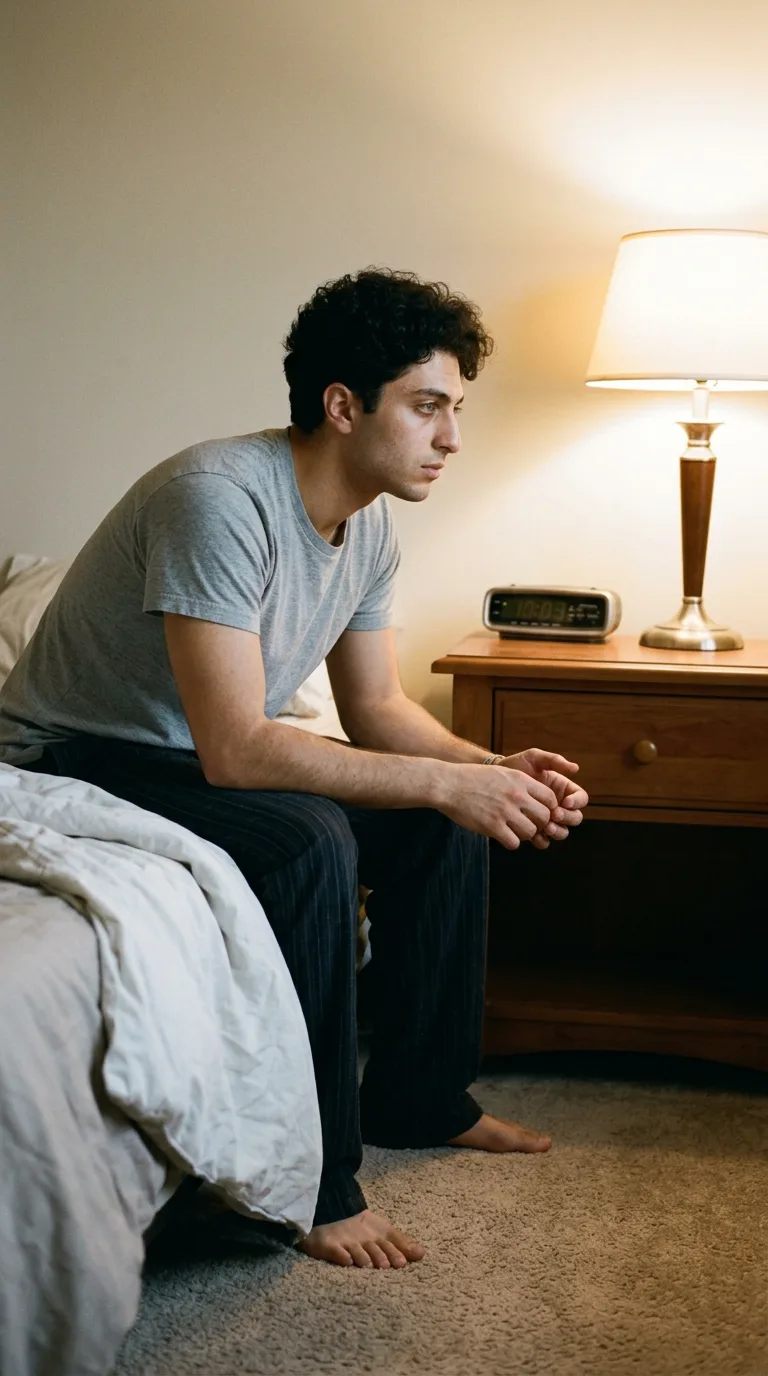
Rarest thing about him: An old injury that never healed right — epic, 1 in 86
Season 0seed 956966570 · engine v10
Character card
lineage 2NZHHJ
His body-swap story
@colin.hasbrook, wearing Otis Prather, rolled the wheel on and woke up as Yusuf Haddad, spent 5 minutes in him, then spun the wheel and woke up as Adrián Fuentes
Otis Prather's classroom is empty now, the whiteboard still smeared with a sentence about the Missouri Compromise nobody erased, and you are sitting at his desk in his body with his reading glasses pushed up into the bald scalp, and you are bored in a way that has nothing to do with him. That is the thing you would not say out loud: it is not the knee, though the knee aches standing at the board six periods a day; it is not even that he is old, though sixty-three sits on you like somebody else's coat. It is that you spent less than a minute being him on purpose — chose him twelve spins ago, when Meagher's small quick body wasn't what you wanted anymore, and this time you drove home from school, graded nine essays in his handwriting, and felt nothing. Forty-five seconds of a man is not a life. You are hungry for the part right after the wheel stops, when someone else's whole self comes pouring in through a shirt collar. You take his phone out of his own jacket pocket — the scar through his eyebrow itching where his glasses rest on it — and you open vessel.cards, and you spin.
—
Your knees are already down. That is the first thing: not standing, not sitting, down on a mattress edge with your weight balanced wrong on both kneecaps and your hands loosely folded in front of you like you were about to finish something. A clock on a nightstand says an hour that means nothing to you yet. You had been rising — the body remembers the half-second before you arrived, a little lift through the thighs, breath already going out on a laugh — and now you are going back down instead, forehead dropping to the bedspread, and the laugh dies in your throat mid-breath like a hand closed over it.
The bedspread is cool cotton against your forehead and it opens first, small and immediate: a Tuesday, sheets kicked to the floor, someone's voice from the doorway saying *are you seriously still in bed*, and his own huff of a laugh answering. That's Layla. The name comes with warmth attached, unearned and total, the specific fondness of missing someone you saw six hours ago. You are still down against the bedspread and it keeps giving: the mornings he prays like this, kneeling instead of the full motions, because his roommate's asleep on the other side of a thin wall and he doesn't want the production of it, doesn't want to explain, does it fast and half-embarrassed and means maybe a third of the words. Not very seriously — his own judgment on himself, worn smooth from repeating it. Guilt so mild it's basically a habit.
Your hands are folded together and that's a door too — his hands, no jewelry on them, and what they know without asking is his own face, three fingers rising to touch his jaw when his mind wanders, a tic from some childhood nobody ever named for him. Right now the fingers stay laced because you haven't let them move yet.
The t-shirt against your back gives you the morning of it, sleeve by sleeve — he pulled it over his head forty minutes ago after a shower, chose it because the gray hoodie was already balled up in the backpack from yesterday and this was what was clean, jeans after, the ones with a hole starting at the left knee that Layla keeps threatening to patch. The jeans are still on the floor by the closet in this room; the shirt is what you're wearing into the prayer, and under it your chest is twenty-two years of ordinary — no scar, no mark, average build carrying itself well, a body that has never really had to worry about itself. Except the knee. Both knees, actually, right now, pressed into the mattress edge at a bad angle, and one of them sends up an old, familiar wrongness — a soccer fall from freshman year of high school that never quite reset, a click it does going up stairs, ignored so long it's stopped being news. It's news now. You feel all of it at once: the ache, the cotton, the folded hands, a laptop somewhere across town on a campus lawn that isn't in this room, a whole rhythm of a life that was three sentences from being finished and set aside for the next ordinary thing.
There's more, coming in on the smell of the room — laundry, a candle Layla left last time, the particular staleness of a bedroom with the blinds down at an hour that should have daylight in it, because his shift ran late last night, closing the campus café, and this is a Friday off that started at noon for him and doesn't feel like Friday at all. Somewhere under all of it, quieter, is a vape pen on the dresser he only touches around friends, and the flat certainty that he has never in his life wanted a drink, never once, not even to seem normal at a party — that one comes with no weight at all, just fact.
You feel him love this — the missing pieces of a fast, half-serious prayer, the small mercy of getting to say amen and go back to being twenty-two on a Friday. You feel it end.
Your hands are still on the bedspread. You lift your forehead off it slowly, the way he might if he'd simply gotten distracted, and you turn your right hand over in front of your face — knuckles, then palm, a thin white line of an old scrape nobody would call a scar, the fingers already twitching once toward your own jaw out of habit before you stop them. You look up, past the nightstand clock, into whatever is in front of you, and you hold there.
"Okay," you say, out loud, to no one. "Okay — that's new."