Marlon Etienne
Fictional. Generated by AI — not a real person, and no likeness of one is intended.
52, nurse in Houston · rolled by @colby.nash · card — no film
History
who has worn him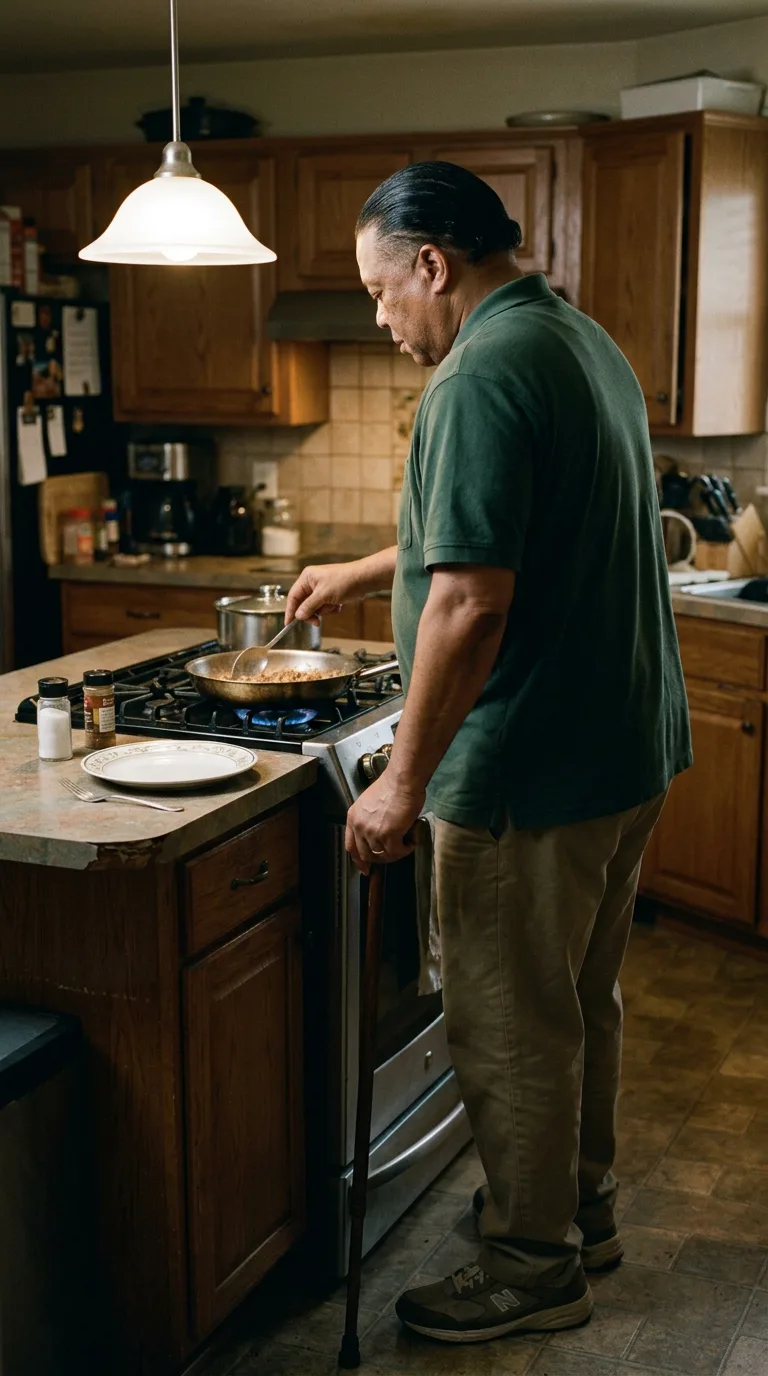
Rarest thing about him: A mobility limitation — epic, 1 in 204
Season 0seed 1397968798 · engine v10
Character card
lineage E1W54H
His body-swap story
@colby.nash, wearing Nathan Prejean, rolled the wheel on and woke up as Marlon Etienne, spent 3 minutes in him, then spun the wheel and woke up as DeShawn Hargis
Nathan Prejean's hands are wrong and you know it two minutes in. Skinny wrists, a beauty mark you keep catching in the edge of your vision like a smudge on glass, and the ache of a body that moves furniture for a living settling into shoulders that were never built for it. You are sitting on the edge of somebody else's bed in New Orleans at an hour nobody sane is awake for, laptop glow on your face, and the wanting is already back — it came back fast this time, faster than the eighth or ninth, like the gap between spins is a muscle that's loosening with use. You tell yourself it's boredom. It's not quite that. It's that you spent three minutes in Ray Aliaga's rival two spins from now — no, seven spins ago, the dates get slippery — and some small mean part of you never finished with him, and the wheel is sitting right there, blue light on a phone screen, asking you for money you don't feel like you earned because none of it is yours to begin with. You open the site. You do not let yourself think about Nathan, who will wake up tomorrow and never know two minutes went missing from a Saturday. You spin.
The kitchen arrives around you before you do.
Fluorescent-warm light, low and yellow, a hood fan ticking somewhere above a gas flame. Your hand — his hand, thick-fingered, a pale stripe where a ring used to sit — is stirring something in a pan with a wooden spoon, going clockwise, and then it isn't, then it's going the other way, and the motion catches on itself like a record skipping. You feel the weight of him settle into you all at once: heavy through the gut, wide through the shoulders, a hip that doesn't want to take his weight so a cane is already under his other hand, planted, familiar, load-bearing before you even know why. You salt the pan without tasting it. You reach up into a cabinet and your hand — his hand — takes down a second plate and sets it beside the first one on the counter, and you don't know why you did that, except that some current still running in the wiring of him wanted it, wanted it so plainly that your new hands obeyed before you'd caught up.
Then the shirt.
It's an old green polo, soft at the collar from a hundred washes, and touching it — being it, wearing it against your back — gives you the morning he put it on: sitting on the edge of a bed alone, working the cane into position first, always first, the polo going on one careful arm at a time because reaching overhead pulls something in the hip that has never fully forgiven him for whatever happened to it. Marlon. The name arrives with the shirt, easy as breath — Marlon Etienne, and under it a whole life crowding in through your palms.
You get the cane in your hand and it's the pin that unlocks the room: fourteen years of night shifts, the nurses' station under lights that never dim, his handwriting getting sloppier by hour six of a double, coffee gone cold in a paper cup with his name misspelled on it. He is good at this. His hands know how to find a vein in the dark, how to move a two-hundred-pound man three inches to the left without hurting him, how to be calm in a room where somebody's dying and not let it show in his voice. He likes the work. He is tired of the work. Both at once, the way you can be tired of anything you've given your whole self to for that long.
The counter under your other hand gives you the marriage — eleven years, a woman named Denise who left not because of one thing but because of the accumulated weight of him always being somewhere else, at the hospital, at the gym trying to save a hip that surgery only half-fixed, in his own head. Three kids, then a fourth from her side he half-raised anyway and never stopped calling his. Divorce papers signed at this counter, this exact stretch of laminate, five years back. He still cooks two plates sometimes. Not for anyone. Just because the habit outlived the reason for it, the way a phantom limb keeps itching.
The cane again — steadier grip now, molded to a hand that leans on it a thousand times a day — and it gives you the accident, quick and ugly: a car, a wet highway, a hip that never sat right in its socket again no matter what the surgeons tried. He was thirty-one. He learned to walk with it the way he learned everything hard — quietly, at night, telling no one, coming back to work three weeks early against every doctor's advice because the money mattered and so did not being the kind of man who stays down.
Money. That current is there too, humming under everything, some inheritance from a father who ran a shrimping operation into a small fortune before he died, and Marlon never touched most of it, just let it sit and grow while he punched a clock for a paycheck he didn't need, because the punching mattered more than the money did. Millionaire who wears eight-dollar polos and drives a truck with two hundred thousand miles on it. You feel the particular pride in that, borrowed and real at once.
Your tongue finds a nail bitten down past comfortable — his habit, worry chewed down to the quick over decades of double shifts and custody schedules and a body that won't do what it used to.
The pan is still on the flame. The second plate sits there beside the first, waiting for somebody who was never coming.
You look down at your hands — his hands, broad, freckled clean up the backs of them same as his face, the pale untanned ring of skin at the base of the fourth finger — and you turn them over slow, like you're checking they're real, like some part of him is still in there checking with you.
You say, out loud, to the empty kitchen: "Who am I setting this for."
Somewhere down in New Orleans, a body named Nathan Prejean is sitting alone in the dark with a laptop cooling on its own, and here, in Houston, at an hour that belongs to men who work nights, you lift your eyes off your own hand into nothing in particular — and hold there.