Ray Aliaga
Fictional. Generated by AI — not a real person, and no likeness of one is intended.
44, personal trainer in Honolulu · rolled by @colby.nash · card — no film
History
who has worn him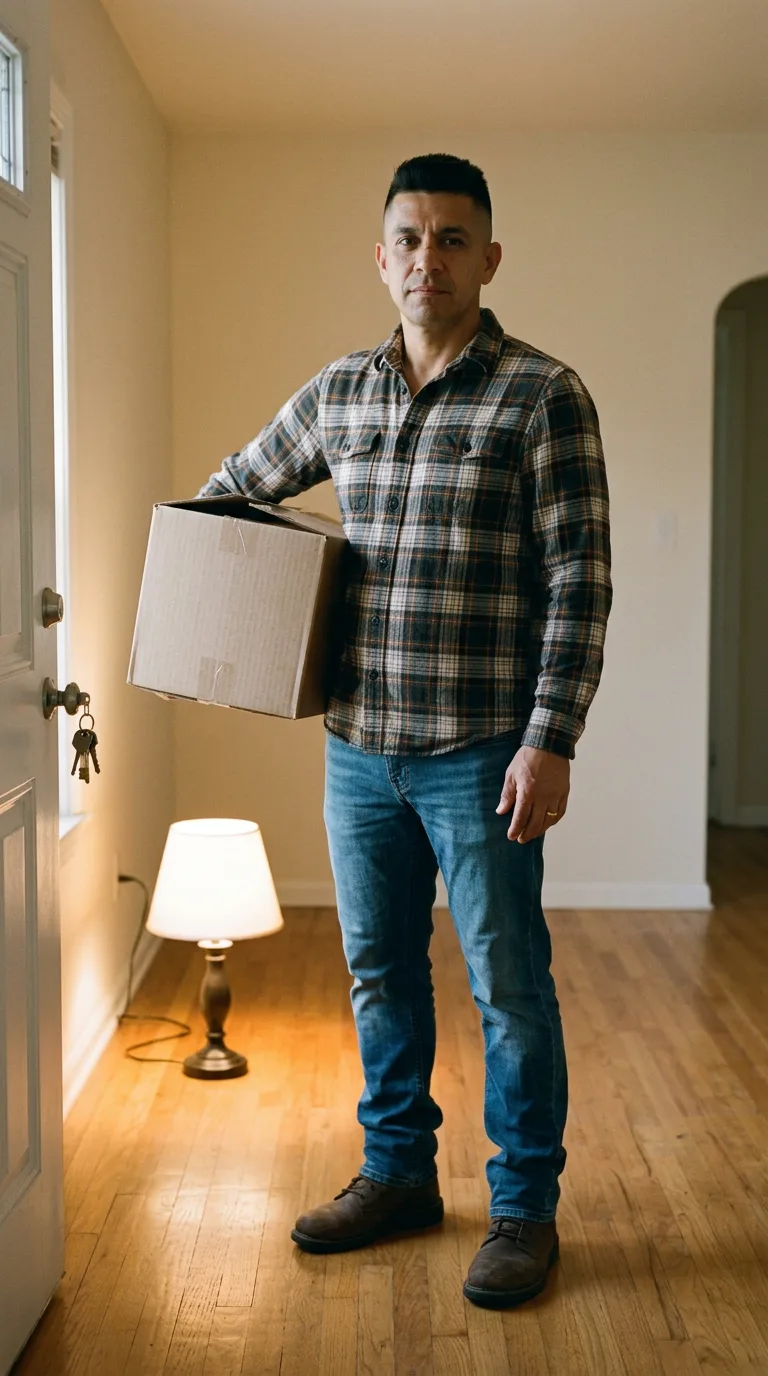
Rarest thing about him: Buried — $100k+ underwater — rare, 1 in 93
Season 0seed 1981387643 · engine v10
Character card
lineage E1W54H
His body-swap story
@colby.nash, wearing Philip Anders Doyle, rolled the wheel on and woke up as Ray Aliaga, spent 4 minutes in him, then spun the wheel and woke up as Terry Nishikawa
The court reporter's hands are wrong before you even think about it — soft in a way that has nothing to do with age, nails clipped square, a tremor at rest that isn't Parkinson's, just three minutes of borrowed nerves not yet used to sitting still. You've been Philip Doyle for exactly that long: sixty-five, gray, a green-eyed man standing in his own kitchen at an hour when the coffee maker hasn't even started its click and hiss yet. It is a fine body. It is a body that will last. That is the trouble with it — you spun the wheel the first time out of curiosity, the second time because Doyle's stenography fingers fascinated you for about four minutes and then didn't, and now you are standing in his kitchen at the start of a Wednesday he will never remember reaching, and the phone is in your hand, and the site is already loaded, because the actual truth, the one you would not say out loud even to yourself, is that a body that merely *works* is the most boring thing you can be wearing. You want the drop. You spin.
You are a box against a hip.
That's the whole of it for a second — not falling, not arriving so much as *continuing*, the weight of cardboard tipping into a hand that already knew where to catch it, elbow already braced, keys still swinging faint in a door somewhere behind and to the left. The room is dark except for one lamp with no shade yet, casting a low gold circle on floorboards that don't belong to anyone's memory but this one's. You set the box down because the body wants to set the box down — it is not your decision, it is muscle already mid-errand, a night's work not yet finished, and only after it settles do you feel how tired this frame is underneath the shirt, how the lower back has already started complaining an hour ago and never stopped.
Then the room starts talking to you through his skin.
The flannel first — worn soft at the elbows, a thumbprint of old paint on the cuff nobody ever managed to wash out — and it gives you a Tuesday three years back, hanging drywall in a garage that was never his, doing a favor for a client who paid in beer and a case of protein powder. The keys still in the door, cold under two fingers when you reach back without meaning to, and that's a whole apartment on Kalākaua with water stains shaped like Australia on the ceiling, a landlord who never fixed anything, boxes packed twice before because moving is what happens to people who can't hold onto money, and God, the money — a flash of a number on a screen that makes this whole chest tighten, refinance, second mortgage, a house that is worth so much less than what's owed on it that the word "underwater" stopped being a metaphor a long time ago. Ray Aliaga can bench a client twice his size and cannot look at his own bank app before ten in the morning.
The wedding band is warm from his hand, not cold like it should be at this hour, and it opens on its own: a wife, sleeping four walls and one crated stand mixer away, who married a man who used to run six miles at dawn and married a man now who runs clients through burpees on a gym floor at forty-four with a knee he doesn't tell her about. She is the one steady coordinate in a life that has otherwise slid sideways for years — the house, the debt, the two years he white-knuckled sober and the several after that he didn't, quietly, a bottle in the garage where the drywall favor happened, where nobody comes looking. He chews a toothpick now instead of smoking; it does nothing, and he knows it does nothing, and he does it anyway, over and over, a habit standing in for another habit standing in for whatever the actual hunger is.
The floor under his bare-soled shoes — no, boots, still laced — gives you the walk-through from a week ago, this same room without furniture, him and her holding hands like teenagers in a place that will bankrupt them slower than the last one instead of faster, calling that a win. Church on Sundays when the schedule allows, an old promise to a nose he broke playing pickup basketball at twenty-six and never had properly reset, the crook of it something clients ask about and he always waves off with a joke that isn't really a joke. High blood pressure sits in this chest like a low hum he's stopped hearing. The knuckles trailing the wall as you — as *he*, as the reflex that is now yours — check the corners of a dark room he can't see yet: that's not nerves, that's a man who grew up in houses where you learned every wall by feel before you trusted the light, checking that this new one is real, that it's his, that nobody's going to come take it before morning.
The whole marriage. The whole mortgage. The gym floor at seven a.m., forty clients a week who call him Coach Ray, whistle around his neck in daylight, this same crooked nose in every gym-selfie he's ever been dragged into. You have all of it now, sitting heavy and warm and slightly drunk-tired in a chest that carries too much blood pressure and not enough sleep, in the dead center of a Wednesday night nobody in this house knows is happening.
You look at your hands in the lamplight — his hands, blunt and strong, a thin gold band catching the low bulb — turn them over once like you're checking they're still attached.
Then you lift your eyes toward the dark hallway, toward the sound of nobody waking up yet, and you say, quiet, so as not to disturb a house that thinks it's still just moving day:
"Home."