Philip Anders Doyle
Fictional. Generated by AI — not a real person, and no likeness of one is intended.
65, court reporter in Nashville · rolled by @colby.nash · card — no film
History
who has worn him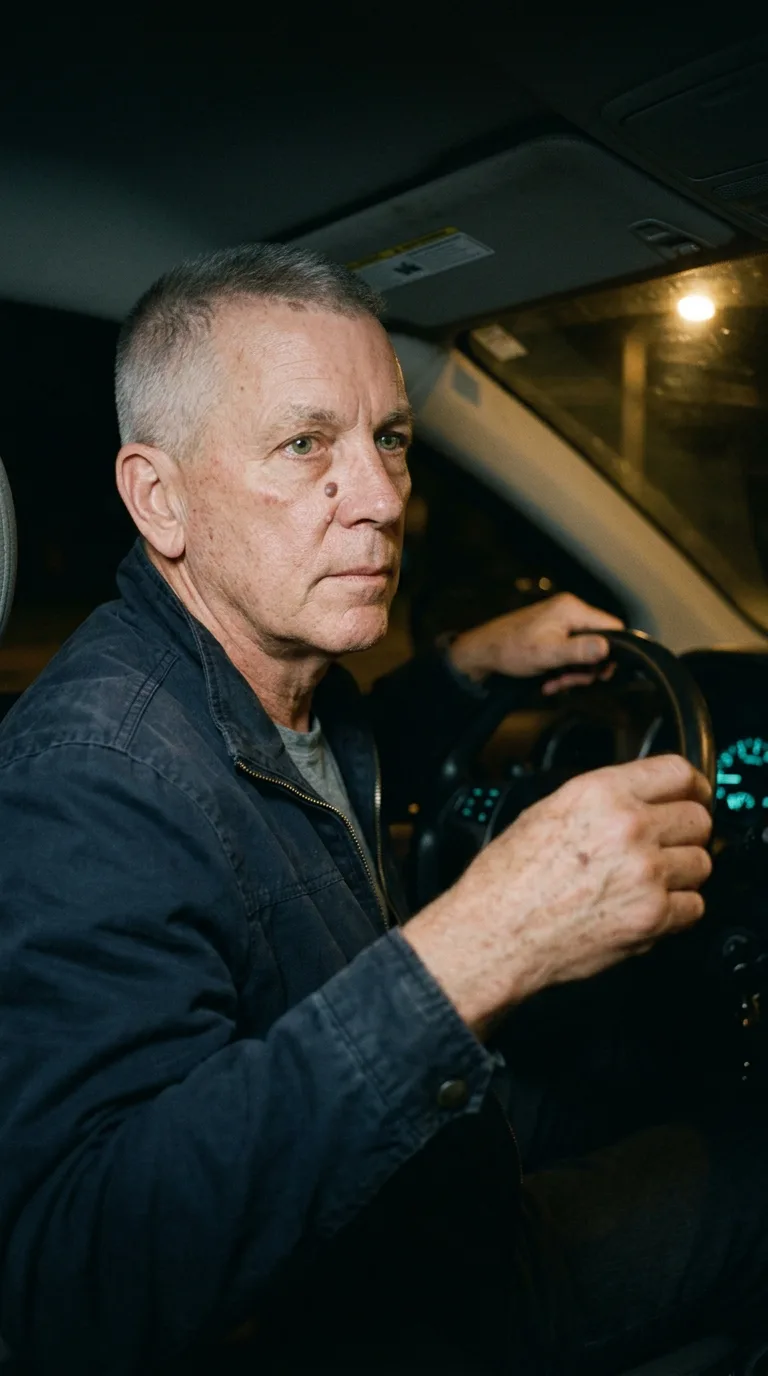
Rarest thing about him: Court reporter — rare, 1 in 152
Season 0seed 1532066395 · engine v10
Character card
lineage E1W54H
His body-swap story
@colby.nash, wearing Hector Villaverde, rolled the wheel on and woke up as Philip Anders Doyle, spent 3 minutes in him, then spun the wheel and woke up as Ray Aliaga
You wake before dawn in a body that isn't sore anymore, and that's the problem.
Seven hours and forty-three minutes wearing Hector Villaverde — a roofer, 5'5", dimples, hands like dried rope — and the knees held out the whole shift's worth of climbing that never happened, because you never worked a day in them, you just arrived already tired the way he always was, some old ache baked into the joint that isn't yours and never asked your permission to stop hurting when you stopped moving. Lying still at four in the morning on a mattress that smells like somebody else's hair oil, waiting for a Pittsburgh sky to go gray outside a window you didn't pick, you understand for the first time what the wheel actually gives you: not a life, just a body idling. Hector's body, parked. And you, inside it, restless in a stranger's stillness, already bored of a man you haven't even bothered to learn beyond his hands and his height and the fact that his hip clicks when he turns over. You get up. You find the phone, and on the phone, the site, and on the site, the wheel, gray and patient and asking nothing of you except to spin it again — no math, no waiting to see if this one is worth staying in, just the small mean hunger that says: there's a better one somewhere, there's always a better one, and you have not spent one dollar of the money you don't have on curiosity yet. You spin it standing in Hector's kitchen in the dark, thumb on glass, and something in you that isn't Hector at all wants, simply, more.
The car is already drifting when you land — a foot toward the centerline, corrected, dash light glowing green-blue across two hands that are not the hands you just left, longer through the fingers, less callus, a wedding ring absent from a finger that carries its ghost-groove anyway. You are sixty-five and driving and the highway outside is black and empty and three miles from a house you have never seen. The hands come off the wheel on their own, muscle memory older than you, resettle lower, wider, the way a man drives when he isn't thinking about driving. The turn signal clicks on. Left. For an exit that means nothing to you yet, ticking in the dark like it knows something you don't.
The shirt is what starts it — cotton gone soft at the collar from washing, and touching the button at your own throat (his throat, and already it is not a useful distinction) gives you a hand doing this same motion in a mirror with the bathroom fan running to clear the steam, six-fifteen, courthouse by eight-forty, the CPAP machine hissing itself quiet on the nightstand behind you because Philip Doyle has sleep apnea and has for eleven years and sleeps like a man drowning politely every single night of his life. The suit vest is Marcus's work — no, not Marcus, a tailor whose name won't come, only the fitting, only the standing in front of a three-way mirror while a woman with pins in her mouth said you carry weight well for sixty-five, and the small pleased vanity of that, quickly buried, Catholic guilt reflexive as a knee-jerk. Your hand finds your own cheek — does this without asking, the way it always has, thumb finding the mole high on the cheekbone and resting there, an old unconscious tell, and touching it gives you a boy of nine in a Nashville schoolyard being asked what's that on your face and lying, said it was where an angel touched him, and the nun believing it enough to smile.
The steering wheel under both palms brings a courtroom instead — thirty-one years of it, the little chorded keyboard between your knees below the bench, sunlight lying flat and yellow across the exhibit table while a lawyer says the word allegedly nine times in one afternoon and you catch every one, fingers moving without your eyes needing to check them, the stenography a kind of prayer you never had to think about to perform. A woman's face surfaces and sinks — a wife's, ex now, no, not ex, never married at all, that was the plan once and then it wasn't, and what's left of her is only the shape of a Sunday morning that used to have two coffee cups in it and doesn't anymore, and the quiet unbothered fact of thirty years alone that never curdled into loneliness, just settled, the way silt does. Money that came slow then came easy — investments an old client mentioned once, decades of compounding nobody at the honky-tonk end of his alley would guess at, a millionaire in a modest ranch house with a Buick and a wrist brace for the carpal tunnel that comes from forty years of chorded keys, both wrists banded gray, the ache in them arriving now like a bill finally due.
Your foot finds the brake without you. Muscle does what muscle has always done, three miles from a driveway you have never seen and already know the shape of — mailbox on the left, dogwood gone leggy from no pruning, a garage door that sticks in humidity.
You look down at the hands on the wheel — his hands, spotted, ringless, wrist braces glowing faintly gray in the dash light — and you turn one over slow like it might tell you something it hasn't already.
"Didn't think I had it in me twice," you say to the windshield, to the exit sign sliding past that isn't the one he wanted, and you leave the signal blinking anyway, because there's no telling yet how far this one's going to take you, or when the wheel starts feeling like the better place to be.