Hector Villaverde
Fictional. Generated by AI — not a real person, and no likeness of one is intended.
65, roofer in Pittsburgh · rolled by @colby.nash · card — no film
History
who has worn him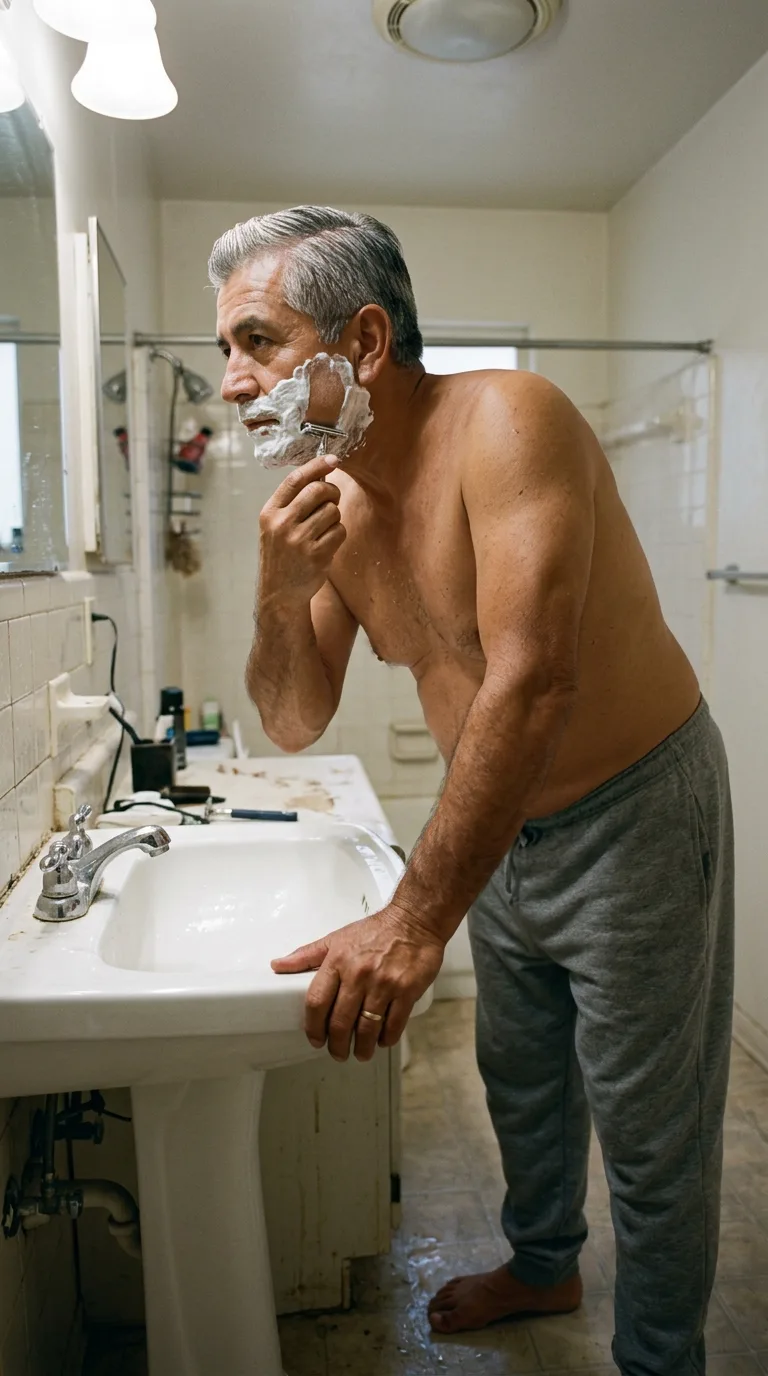
Rarest thing about him: Roofer — rare, 1 in 101
Season 0seed 1420317819 · engine v10
Character card
lineage E1W54H
His body-swap story
@colby.nash rolled the wheel on and woke up as Hector Villaverde — their first, spent 8 hours in him, then spun the wheel and woke up as Philip Anders Doyle
The site loaded slow, like it didn't trust its own claim. A wheel, gray on black, and a button that said SPIN and a price that felt like nothing for what it promised. You have wanted this since you were young enough that wanting it felt like a secret — not any specific body, not any specific life, just the door itself, the idea that somewhere a hinge existed and you could be the one to push it. Every version of it you'd ever read stopped at the threshold. Tonight, on a Tuesday that had given you nothing else, the threshold had a price tag and you paid it.
The wheel spins the way wheels do in dreams, a little too long, and then it isn't spinning, and you're not anywhere. You're behind eyes. You're leaning over a sink. There is foam on the left half of a face that is not the face you have ever had, and a razor is already moving up along the jaw against the grain, unhesitating, and your hand — his hand — takes the second half of the face in half the time the first half took, because whatever was steering it a second ago knew this jaw the way you know a doorframe you've walked through ten thousand times in the dark. You didn't do that. It got done through you.
You stop. The water is running. Somewhere behind the wall a pipe knocks once, settles.
The razor is warm from his skin. That's the first thing that comes through it — not a memory exactly, more a temperature, a familiarity, the small ordinary claim of *mine* that objects carry when a man has held the same one every morning for six years. Then the flash: this same sink, a different light, younger hands, a woman's voice from the hallway saying his name like it was a whole sentence — *Hector* — amused, already dressed for work, and him answering with his mouth still half in foam so it comes out garbled and she laughs every time, twenty years of the same joke worn smooth as a stair.
The sweatpants against your legs open something else, dimmer: a couch, a game on low volume, a second wife's hand on his knee, not the first wife's hand — a whole marriage folded into the gray drawstring waist, a comfortable late-life thing, quieter than the first one, easier, no less real for being the second try. There is an ex-wife somewhere in the weight of the room too, not hostile, just present the way a former job is present — you did that, it's done, it made a kid you'd die for and you don't regret the years even though you don't miss them.
The tool belt isn't on him now but your hands know its weight anyway, phantom, the way an amputee knows a limb — the hammer's grain-worn handle, the particular ache that lives permanently in the lower back and both knees, thirty-some years of pitched roofs translated into a body that gets up stiff every day of its life and doesn't complain because complaining was never useful up on a roof at seven in the morning with the town spread out under you like a map you helped nail down, shingle by shingle, one strip at a time. He is good at this. He has always been good at this. It is past midnight here and there is a roof waiting for him in six hours whether his back likes it or not, which is why the bathroom light is on at an hour when the rest of the street is dark — the alarm is already set, the job's already lined up, some other roofer's crew short a man, and Hector Villaverde does not turn down work even now, even at sixty-five, even doing as well as he's doing, because doing well is a habit built on not resting when rest was offered.
The mirror gives you dimples — his, not yours, showing even now with his face composed into nothing, a groove at each corner of his mouth that would be there if he were asleep. Your hand — his hand — comes up without asking and touches his own jaw, checking the shave the way he's checked it ten thousand mornings, fingers finding the clean skin, and on the way down they find the wedding band on the same hand, plain gold, warm already just from being worn, and behind it: a church, incense, a kid in a suit too big for him, *Padre nuestro* murmured by a hundred people at once, faith as a room you walk into and out of without thinking about the walls.
The water's still running. You reach over — old ache in the shoulder complaining faintly — and shut it off.
You look down at both hands at once, turning the right one over like you've never seen a palm before, calluses in the shape of a life you didn't build and are, as of a few seconds ago, entirely inside.
You look up into the mirror, into his eyes, and you say, quiet, so as not to wake anyone down the hall:
"Okay. Okay — who am I now."