Terry Nishikawa
Fictional. Generated by AI — not a real person, and no likeness of one is intended.
54, photographer in Denver · rolled by @colby.nash · card — no film
History
who has worn him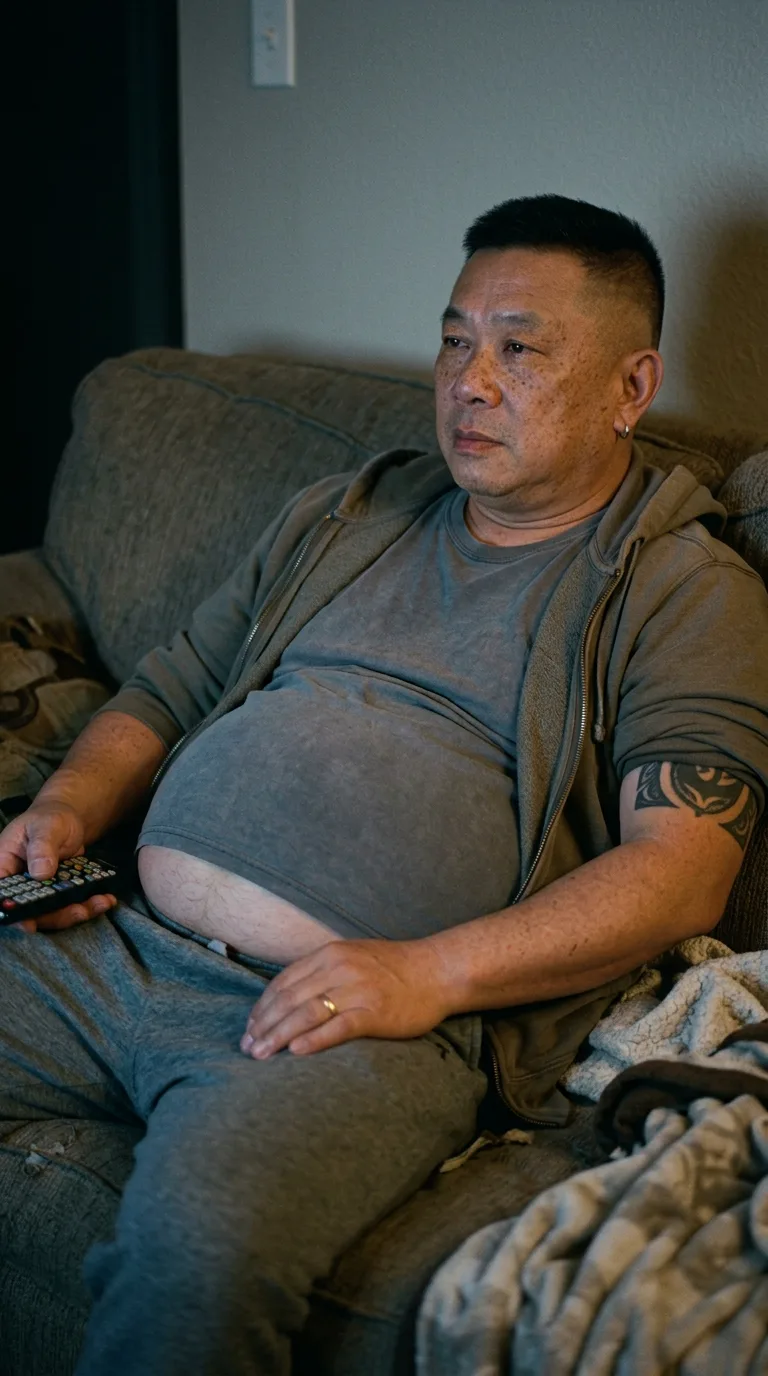
Rarest thing about him: One, upper arm — epic, 1 in 52
Season 0seed 1720502860 · engine v10
Character card
lineage E1W54H
His body-swap story
@colby.nash, wearing Ray Aliaga, rolled the wheel on and woke up as Terry Nishikawa, spent 2 minutes in him, then spun the wheel and woke up as Dean Halvorsen
---
Ray's kitchen is quiet in the way only 3 a.m. is quiet, the fridge humming, the window black. You are standing in his body — skinny fat, once-broken nose, a personal trainer's forearms gone soft at the edges — and you have been him for three minutes, long enough to open his fridge, drink his guava juice straight from the carton, and feel nothing. That's the problem. You spun for Ray because his card looked like fun, a body that could still throw a punch, and it is fine, it is a fine body, but it isn't *interesting*, and three minutes was enough to know it. Through the window over his sink you can see the neighboring house, dark, the porch light off, and you remember — because Ray remembers, dimly, the way you remember things that were never yours — the neighbor's husband who photographs weddings and does headshots out of a spare room, a soft-spoken guy always lugging gear to his car in the morning. Ray's phone is on the counter. You don't need it. You open the laptop instead, the wheel already loaded from an hour ago like a held breath, and you spin again standing in Ray's kitchen with Ray's juice on your breath, and somewhere it is already tomorrow.
The television cuts to a bright frame and you are sitting up straight before you mean to, spine snapping into a posture this body didn't choose, and the remote — his remote, warm from his palm — is already being set down on the couch arm by hands that are not the hands you had a second ago. Shorter fingers. A wedding band. A small ring of cold metal in the left ear that you notice like a foreign object before you understand it's an earring. The room is dark, a blanket heaped at the far cushion, and there's a weight in the middle of this body, low and soft, that Ray's stomach never had. Something in the low back complains the moment you shift, a dull ache that has apparently been there so long it isn't even news anymore. On the screen, whatever this man was watching goes on being funny, and you find you are not laughing, though something in the body's memory insists it laughed a moment ago, at this same joke, in a version of tonight that no longer happened to him.
The couch fabric is rough under one palm — worn corduroy, a hundred nights of this exact position — and touching it opens a door: a Tuesday last winter, this same cushion, a beer going flat on the side table, his wife long asleep down the hall because she gets up for a 6 a.hift at the hospital lab and he doesn't, not anymore, not since the studio started paying for itself. Terry Nishikawa. The name arrives with the couch, solid, unglamorous, his. Fifty-four years old and up at an hour that used to belong to the end of the night and now belongs to the start of one, because insomnia crept into his back before it crept into his head, and somewhere along the way watching bad television alone in the dark became the only version of quiet he could stand.
The remote is still faintly warm where his hand held it, and it gives you a hallway of remotes, decades of them, TV rooms in three different apartments before this bungalow, a boy in Aurora falling asleep to infomercials because his parents worked nights at the restaurant and the glow felt like company. Then, without waiting to be asked, it gives you her — not the wife, the other one, Dana, nineteen years old on a fire escape in Capitol Hill, both of them too broke for real dates, him with his first camera, a hand-me-down, learning her face before he learned anyone else's. She left for Seattle in a year he still, at fifty-four, could tell you the month of. He never told his wife how much of his eye — the way he frames a face, the patience he has for waiting on light — he built trying to make Dana's photographs perfect enough to keep her. He never had to tell her, exactly. She knows there was someone. She has never asked for the name and he has never given it, and that not-asking has become, itself, a kind of vow between them, older now than half their marriage.
The T-shirt against your back is soft from washing, thin at the shoulders, and it remembers this morning — his morning, hours from now and also already lived, the way memory sits sideways in a body like this — pulling it over his head standing in front of the closet, the tattoo on his upper arm catching the sleeve for a second the way it always does, black tribal lines he got at twenty-six with money he shouldn't have spent, a decision his wife still teases him about and he still doesn't regret. The vest goes on over it for the shoot he has today, cargo pockets already knowing the weight of two lens caps and a light meter he never uses but can't leave home without. His wedding band clicks once against a cabinet handle reaching for coffee that isn't made yet in this hour, in this telling, because right now there's no coffee, there's only the couch and the dark and the ache low in his spine settling in the way it does every night around this time, old and familiar and not going anywhere, an ache that has outlasted two cameras and one kid, grown now, who calls on Sundays and not always.
His son's face comes with the freckles, somehow — you feel them on your own nose and cheeks like a fact more than a sensation, and it drags up an afternoon on this same porch, a disposable camera in a six-year-old's hands, Terry crouched behind him going *lower, lower, there* — the same patience, passed down before the boy was old enough to know he was being taught anything. Sunday will come, the phone will ring, and this man will answer it smiling before he even says hello, the way he always does.
You look down at the hand still resting on the remote and it does not look like a hand that has ever thrown a punch. Soft knuckles, faint old ink at the edge of a sleeve, a ring worn thin at the band from thirty years of turning it. You turn it over once anyway, the way you always do, checking it's real, checking it's yours now, and the ache behind the ribs — his, not yours, but yours to carry until further notice — settles into place like it's been waiting for you specifically.
"Huh," you say, out loud, to the dark room and the moving light. "Wrong guy laughed at that."