Dean Halvorsen
Fictional. Generated by AI — not a real person, and no likeness of one is intended.
23, soldier in Anchorage · rolled by @colby.nash · card — no film
History
who has worn him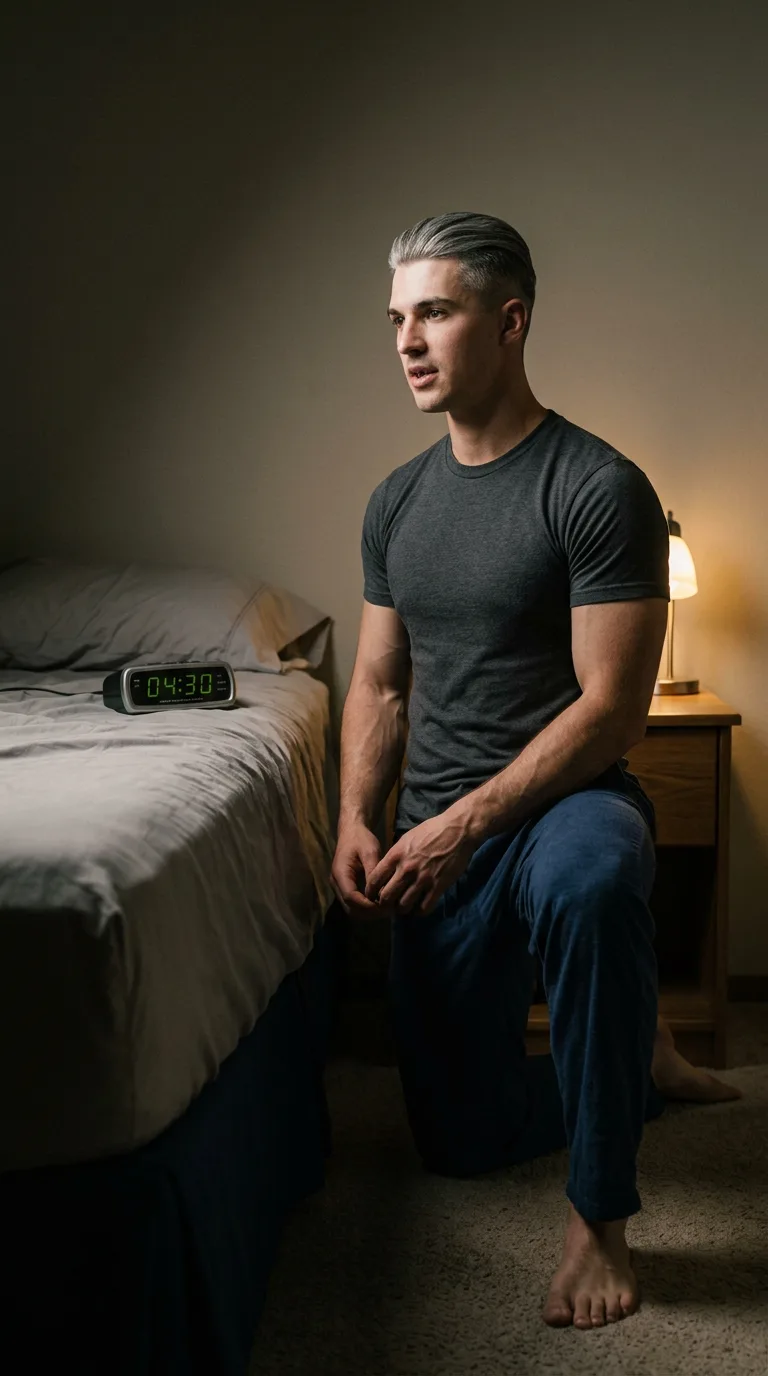
Rarest thing about him: Gray / silver — rare, 1 in 50
Season 0seed 1037385675 · engine v10
Character card
lineage E1W54H
His body-swap story
@colby.nash, wearing Terry Nishikawa, rolled the wheel on and woke up as Dean Halvorsen, spent 16 hours in him, then spun the wheel and woke up as Curtis Abernathy
You are still Terry Nishikawa when you decide, which is the joke of it, because Terry is the one body out of four that ever fit anything like a life. Fifty-four, soft in the middle, camera bag by the door where you left it a minute ago in a different man's habit. You have been him sixty seconds. You already know the freckled backs of these hands from three spins ago, and you already hate the small ache behind this particular sternum, the thing his cardiologist would call a symptom and Terry calls Tuesday. You spun into him wanting a rest. You are done resting. That's the whole reason, and it isn't a good one: the coffee's not made, the light through his kitchen window is the gray of every morning he's ever had, and some old appetite that has nothing to do with Terry Nishikawa sits up in his borrowed chest and says again, again, again. You set down the mug. You open the site on his phone, thumb print and all, and you spin without deciding to, the way you always tell yourself you didn't decide to.
The wheel doesn't ask permission and neither do you.
You come up already kneeling, which is not a thing Terry's knees have done for anyone in years, and the first thing you have is weight — a lot more of it than you had a second ago, arranged differently, forearms braced and heavy, a t-shirt pulling tight across a back that goes on for a while. Your forehead is a half-inch from a bedspread you've never seen. Somewhere below you a smile is dying on a mouth mid-breath, and you feel the exact shape of that death, a held note stopping. Cold floor under bare feet that aren't cold in the way Terry's would be — this body runs warmer, runs harder, an engine built for a different job. There's a clock on the nightstand, red digits, and it does not agree with any hour a normal man kneels in. You understand before you understand: wherever this is, it is deep night, and someone here is awake in it on purpose.
The room comes in through what you're touching, because that's the only door there is.
The bedspread under your forehead gives you a barracks smell, bleach and gun oil and someone else's aftershave two rooms over, and with it a name arrives sideways, the way his own name always arrives to a man half-asleep — Dean. Dean Halvorsen, twenty-three, and the mattress under his knees has taken his weight after every kind of night there is: the ones after the range, the ones after the phone calls from his mother he doesn't return, the one two months ago when the unit lost a guy in a training accident nobody talks about now, and Dean started kneeling at the edge of his bed most nights since, not because he found God exactly, more because his grandmother used to and it felt like borrowing something sturdier than himself. He's not devout. He gets through the words the way he gets through push-ups, counting more than meaning it, and tonight — this dead hour before a 0500 formation, the whole barracks quiet except for someone's fridge humming down the hall — he got to amen early and felt almost proud of himself for finishing at all.
The t-shirt against your back gives you more: gray, soft from washing, the one he pulled on after a shower that didn't do much against the smell of the motor pool. Under it, the muscle remembers itself — shoulders that know how to carry a pack forty klicks, a body built at a gym that isn't vanity so much as job requirement, hands that have zeroed a rifle in weather that would kill Terry Nishikawa outright. There's a soreness low in the back that isn't injury, just twenty-three doing hard things on no sleep, and it sits there almost pleasant, the good ache of a body used correctly.
Your calf itches where a sock has ridden down, and that gives you the tattoo without you asking for it: the insignia, needled in on a dare-slash-tradition after his first field problem, the artist half-drunk, Dean grinning through it because everyone in his platoon has one and he wanted the mark that says I was there before he'd been anywhere yet. He is, underneath the joking, proud of it in a way he'd never say to anyone's face.
The dresser across the room, unseen but known, gives you the mornings: this exact routine, sleeves rolled the same two turns every time, boots laced bottom to top in a rhythm his hands do without his eyes, dog tags dropped over his head last so they don't catch on the collar. He dresses like a man checking off a list that keeps him alive, because somewhere he was taught that sloppy is how people die, even here, even in Anchorage, even in a bedroom with plywood siding and a snowmobile parked under a blue tarp outside that he hasn't ridden since the divorce of two friends split the trail buddy he used to go with. He drinks more than he'd admit to the medic doing his intake form. He keeps a tin of pouches in his cargo pocket instead of cigarettes because smoking outside in this cold is its own kind of punishment. When he's not thinking about his hands they go to his jaw, his cheek, checking himself the way some men check a door is locked.
None of it is dramatic. That's what makes it his: a man scraping by on a private's pay in a state that eats paychecks whole, single, no one waiting up, nothing he'd bring up if you asked him what's wrong. Catholic enough to kneel. Not Catholic enough to mean every word of it. Straight, unattached, a gap in his front teeth he used to hate at nineteen and now doesn't think about, the thing everyone remembers about his face after they forget everything else.
You feel all of that arrive the way heat arrives in a cold room, and you feel your own want sitting inside it like a stone in a shoe — the old hunger, wearing his good shoulders now instead of Terry's soft ones, already looking past this kneeling body toward whatever it does next.
You lift your head off the bedspread. You look down at hands that are not freckled, not fifty-four, not yours by any right at all — big hands, a white line of old rope-burn scar across one knuckle you didn't put there and don't remember, the gap in the teeth showing when the mouth opens on its own before you've decided to speak.
"Wrong prayer," you say, to the dark, to the clock, to nobody, and you almost laugh, because you don't know yet if that's true, and you don't know how long you get to find out.