Nathan Prejean
Fictional. Generated by AI — not a real person, and no likeness of one is intended.
43, furniture mover in New Orleans · rolled by @colby.nash · card — no film
History
who has worn him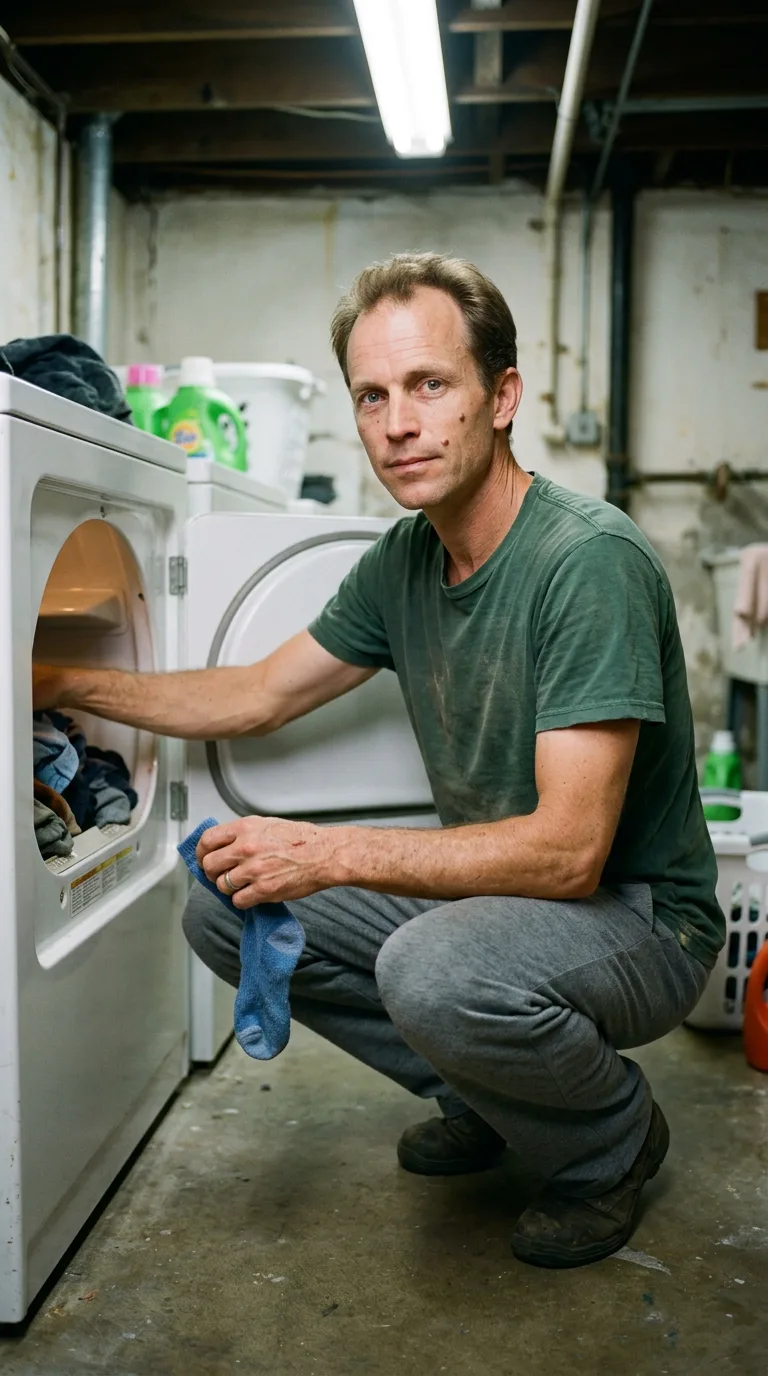
Rarest thing about him: High cholesterol — rare, 1 in 40
Season 0seed 1196119872 · engine v10
Character card
lineage E1W54H
His body-swap story
@colby.nash, wearing Colin Petrosky, rolled the wheel on and woke up as Nathan Prejean, spent 3 minutes in him, then spun the wheel and woke up as Marlon Etienne
Colin Petrosky's apartment smells like creosote no matter how many showers you take in him, and eight hours in you already know the smell doesn't come out. You're sitting on the edge of his mattress at three in the morning, twenty-five years old, forearms still black-lined at the wrist where the gloves stop, and you are bored in a way that has nothing to do with him being bad. He's fine. He's young and quick up ladders and his knees don't ache yet. But you spun for that once — young, quick, no ache — and now you have it, and having it stops being the thing you wanted about four hours in, same as always. You open the laptop. The wheel is already loaded from last time, spinning lazy and pointless in the corner of the screen like it's been waiting up for you. You don't decide so much as notice your thumb already on the mouse. You pay. You spin.
The dryer door is warm against your knuckles before you know you have knuckles again. A sock, damp-warm, small, ribbed at the ankle — a kid's sock — between two fingers of a hand that is not the hand you just had. You are crouched. Fluorescent light is buzzing white through closed eyes you haven't opened yet, and when you do, the light is ugly and constant and the room is concrete-floored and low-ceilinged and smells like bleach laid over mildew that the bleach never quite wins against.
You pull the load. It comes out in an armful, hot through a thin gray T-shirt already stuck to a back that is not your back — narrower than Colin's through the shoulders, a little more give at the waist, forty-three years of low-grade wear in it that doesn't announce itself as pain so much as a kind of general dues paid. You drop the load in the basket and your hands go. That's the first thing that isn't yours: the hands know how to fold before you do. Corners meet corners. A fitted sheet becomes, impossibly, a neat rectangle inside four seconds, the trick of it living somewhere below thought, in tendon. Upstairs — you know there is an upstairs, you know it the way you know your own name for a half second before the name arrives — there is a drawer with eight shirts crumpled into it that another pair of hands, his own, folded badly for twenty years. Nobody in this house has ever seen him fold like this. Nobody will tonight either. He is alone down here with the tube light and the machines and it is the kind of hour that shouldn't have anybody awake in it, except the moving truck runs before dawn on a Saturday when the crew is dodging the heat, and somewhere upstairs two kids and a wife are asleep not knowing he never made it to bed at all, that he came home smelling like someone else's dead grandmother's house and started this instead of sleeping because sleep wasn't going to take anyway.
The sock is what opens it — small, blue, a boy's, seven or eight years old by the size, and it comes with a whole Tuesday: a school gym class, a note pinned to a lunch bag, his own voice saying *tie your shoes twice, buddy, I mean it* on a porch in weak sun. Then the shirt against your back gives you this morning — his morning, hours and hours before this basement, though basement and morning sit strangely close together now, folded into the same short night. Green cotton, a collar gone soft from a hundred washes, pulled over his head in a bedroom with the shade still down, his wife's shape a warm dark comma under the sheet behind him, not stirring. He'd dressed by feel in the dark so as not to wake her, jeans first then the belt he keeps looped through them permanently so he never has to hunt for it at five a.m., the canvas strap of the moving harness already slung and settled into the groove it has worn into his left shoulder over eleven years of couches and church pews and one baby grand that nearly took his back out on Esplanade. Boots last, the left one always a little tight over a bunion he has never once mentioned to anyone. That's this body: skinny, wearing down at both temples in a way he catches in truck mirrors and doesn't comment on, blue eyes, a mole high on his cheek that his wife touches sometimes without seeming to know she's doing it. High cholesterol he manages with a pill and doesn't think about otherwise. A ring on the left hand worn thin and shiny at the band from twenty years of gription — couch legs, dolly handles, doorframes taken sideways.
There's a whole marriage folded into the smell of this room — fabric softener she buys because he likes it, an argument four years back about money that ended with him taking a Sunday shift he didn't tell her about so the numbers would just quietly be fine again, the two kids named for saints neither of them prays to anymore though something in him still turns toward the cathedral when he walks past it, a feeling more like weather than belief. Big nights out once or twice a month, hurricanes with the guys from the crew, the two-day head that follows, worth it every time. No cigarettes, ever — his own father's lungs the whole reason. A little money put by that he doesn't talk about, that lives in his chest like a small warm stone: not much, but enough that a bad month wouldn't take the roof off them.
You are still crouched. Your knees — his knees — complain faintly, an old man's complaint filed early in a young enough body. The basket is full and perfectly square-cornered and none of it is your doing and all of it is now yours to keep doing, for as long as this lasts, which is a thing you already know you cannot know.
You look down at the hand still holding the empty sock. It turns it over once, slow, like checking it for a hole. Then you lift your eyes to nothing in particular, into the buzz of the light, and you say, out loud, to the empty basement:
"Whose kid is this little."