Liam Kanahele
Fictional. Generated by AI — not a real person, and no likeness of one is intended.
42, mechanic in New York · rolled by @colin.hasbrook · card — no film
History
who has worn him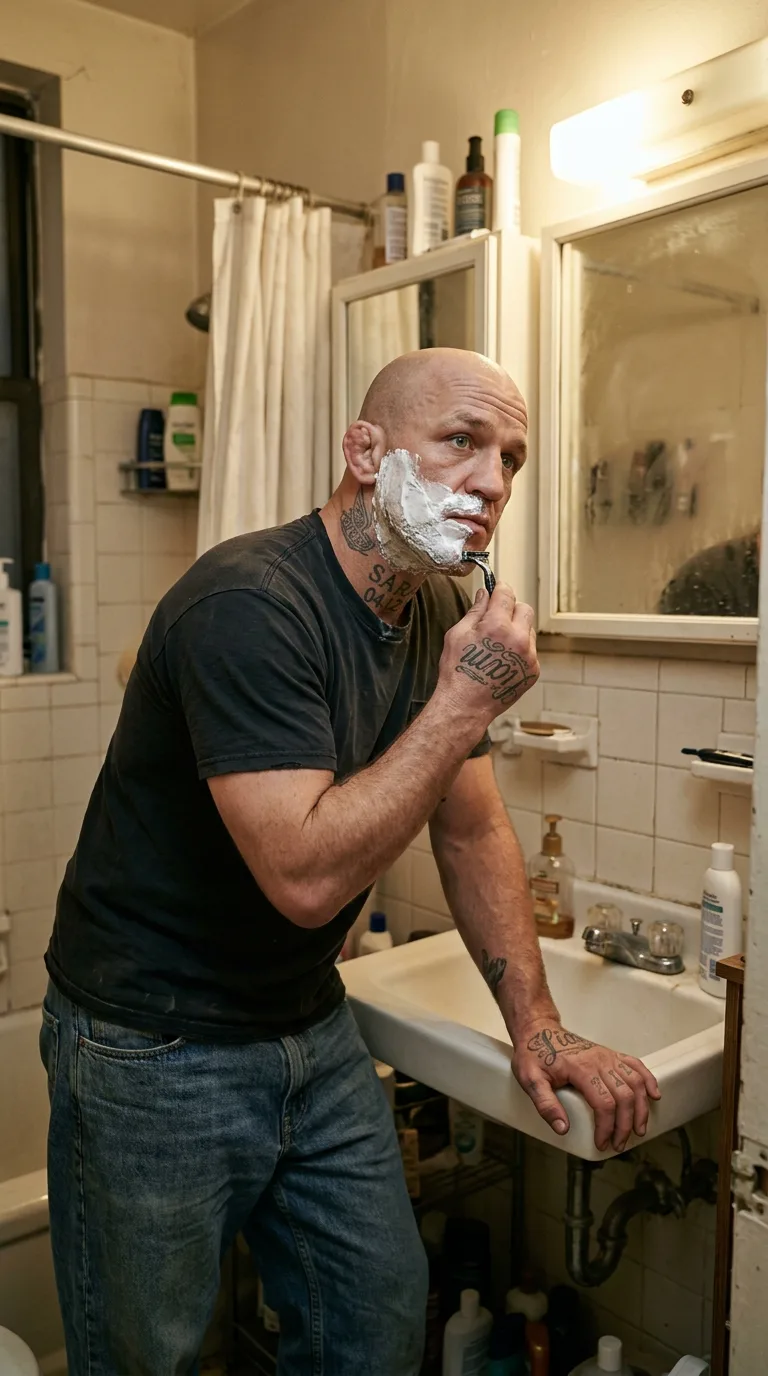
Rarest thing about him: Cauliflower ear — epic, 1 in 160
Season 0seed 666525960 · engine v10
Character card
lineage 2NZHHJ
His body-swap story
@colin.hasbrook, wearing Gerald Struzik, rolled the wheel on and woke up as Liam Kanahele, spent 1 minute in him, then spun the wheel and woke up as Marcus Whitfield
Gerald Struzik's knees ache on the riding mower even parked, even off, and that is the thing about being fifty-two in a stranger's body — you feel the whole bill of him at once, the knuckles, the sciatica, the sun damage across the back of his neck like a debt somebody else ran up. You are sitting on the machine in the equipment shed behind a Denver municipal building, gloves still on, and you have been Gerald for one minute. One. You spun and got a groundskeeper and before you'd even found the shape of his hands you were already thinking about the wheel again, because two spins ago — no, six — you wore a soft-bellied furniture mover in Honolulu named Wallace, and you left him two minutes ago, and something about leaving him unfinished is sitting in your chest like a swallowed stone. You know his brother exists. You know it the way Wallace knew it, second-hand and sideways, a name that came up at Christmas and went quiet after. You didn't plan this. But the phone is out, the site is loaded, Gerald's thumb — thick, a white scar across the first knuckle — is already on the wheel, and you tell yourself it's curiosity, that you just want to see the other end of something Wallace never finished saying.
The wheel turns. Denver afternoon light through a shed window becomes, in the same unbroken second, the fluorescent tube over a Brooklyn bathroom mirror.
The razor is already moving. Half his jaw is bare and gleaming, half still white, and your hand — his hand, script letters curled over the tendons — draws the blade up against the grain at the corner of his mouth without the hesitation he always makes there, fast, sure, done. Foam and a fine dark stubble come away in one pass. Steam sits on the mirror at the edges. You feel the stance before you feel anything else: shorter than Wallace, tighter through the shoulders, weight set low and square like a man who has been hit and has hit back. The cauliflower ear throbs faintly on the left side, an old ache that never fully sleeps. A pack-a-day rasp sits at the bottom of his throat before he's said a word.
The razor's handle gives you the first flash — not memory yet, just weight and grip, a tool held ten thousand times — and then the sink rim under your other palm opens wider: mornings, dozens of them, elbow on this same porcelain, and behind you, half-heard, a woman's voice from the other room asking if he's taking Junior Saturday or if that's still up in the air. Sarah. The name is inked into his neck with a date under it — not the girlfriend, the ex-wife, the first one, the one whose son shares his last name and half his face. He got it the year the boy was born and never once regretted it, not through the divorce, not through anything, because whatever else broke, that didn't.
The shirt isn't on yet — bare-chested at the sink, the black t-shirt folded over the towel bar for after — but the memory of shirts comes anyway, off the tattoo on his hand, LIAM in looping script, his own name doing double duty as ink because his mother liked the joke: Wallace got quiet and steady, Liam got restless and marked up, same parents, same house on a different island once, before their father's job moved them out to New York and Wallace never did stop missing the water. You feel the whole shape of that old fact arrive with its own small ache — a brother across an ocean and a continent, a brother whose voice on the phone gets shorter every year, not from anger, just distance doing what distance does. Two months since you called him. You, Liam, meaning to and not.
The garage comes back through the calluses themselves, through the specific stiffness of the first two fingers on the right hand that never fully object anymore: Gary's Auto, the patched shirt with his own first name on a strip of vinyl over the pocket, a Buick up on the lift since two, a rag gone gray with use riding in his back pocket even now, even here, out of habit, though he isn't wearing pants with a back pocket at this exact second, just the memory of one. Twenty years turning wrenches. The heavy pour after work most nights, the girlfriend — Denise — who doesn't say much about it anymore because saying something never once made it different. One kid, a teenager now, who he sees every other weekend and loves with a plainness that never made it into words he was ever taught to use.
The razor finishes the last clean stripe under his chin. Water runs. He splashes his face, and for one full second before you do anything else you just stand there feeling the whole compact density of him — five-nine, average build gone a little soft at forty-two but still thick through the forearms, the left ear a lumped, permanent reminder of some Golden Gloves summer decades gone — and it is good, it is entirely different from Wallace's rounder softness, it is a body that has taken a hit and stayed standing.
You lift your eyes to the mirror. Steam has already started closing back in around the edges of it, and for a second his own face looks at you like it's asking something.
You look down at your hand — the LIAM tattoo, the water still beaded on the knuckles — turn it slow, like you're checking it's really attached.
Then you lift your eyes back to the glass and say, low, almost to no one: "Should've called him myself."