Wallace Kanahele
Fictional. Generated by AI — not a real person, and no likeness of one is intended.
46, furniture mover in Honolulu · rolled by @colin.hasbrook · card — no film
History
who has worn him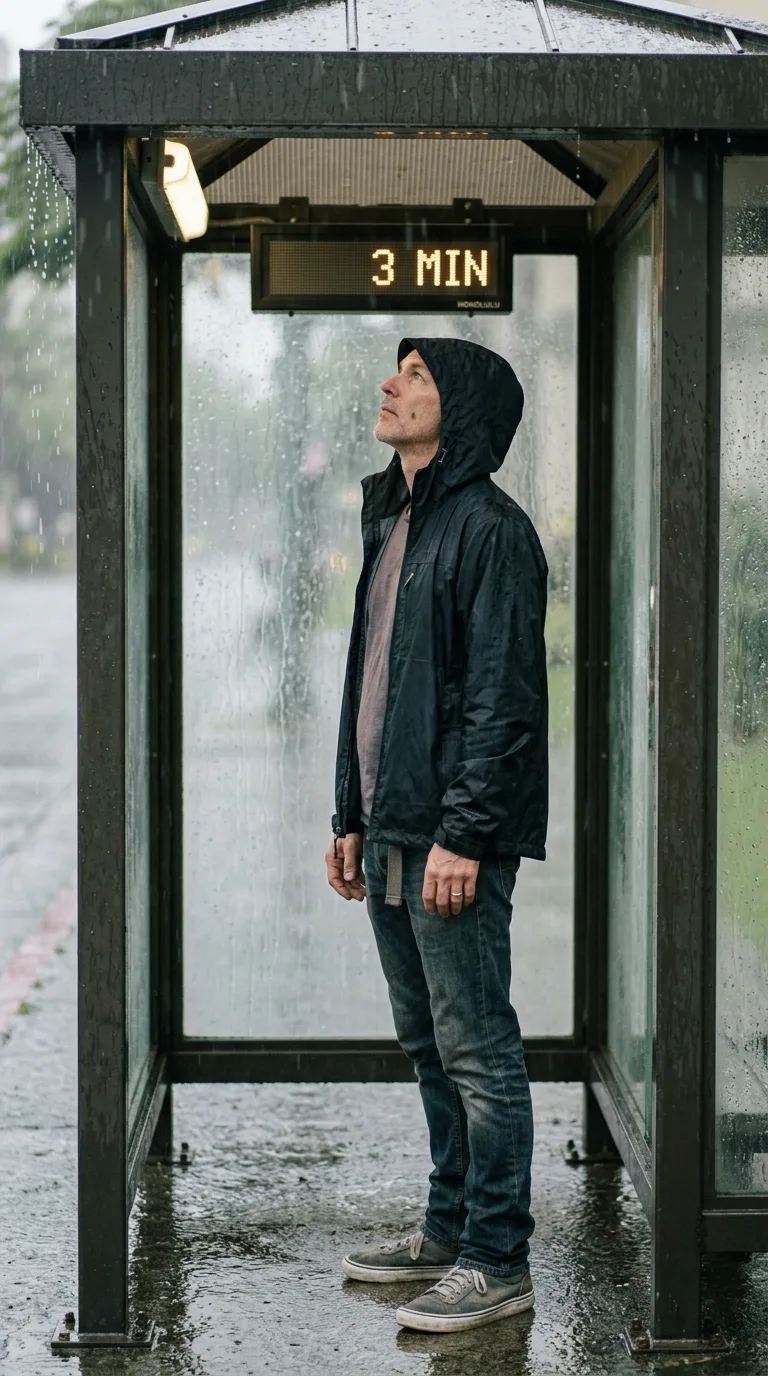
Rarest thing about him: Honolulu — uncommon, 1 in 44
Season 0seed 608892792 · engine v10
Character card
lineage 2NZHHJ
His body-swap story
@colin.hasbrook, wearing Gary Trembach, rolled the wheel on and woke up as Wallace Kanahele, spent under a minute in him, then spun the wheel and woke up as Rigo Casillas
Gary Trembach's turnout coat still smells like last night's grease fire, and you have been him for maybe forty seconds when you already know you're done with him. It's the boredom that does it — the particular, grinding boredom of a body that aches in a dozen small places from twenty years of a job that never lets up, standing in a kitchen doorway at the end of a Monday shift in a town so small the fire horn doubles as the noon bell. Somewhere behind Gary's eyes there's a wife heating up something in a crockpot, a dog barking at nothing, a recliner with his name worn into the cushion. It is a fine life. It is not one you want a second helping of. You feel his knees complain as you sit down at his laptop still in his boots, and you go straight to the site, because that particular ache in the lower back is the whole reason you spun in the first place.
You pay. You spin. The wheel does what it does.
The rain hits you first — not Ohio rain, real weight to it, warm as bathwater, coming down in ropes — and your face is already tilted up into it, mouth open a little, before you understand you have a face to tilt. There is a bus shelter around you, glass beaded and streaming, a board glowing 3 MIN through the wet. Your hood is shoved back off wet gray-silver hair. Your feet — smaller feet, lighter — are planted in the runoff coming off the curb, and you are not stepping back from it. You are standing in it like you have been waiting your whole life for exactly this water.
The jacket is the first thing that talks to you. Nylon, cheap, a good zipper — and under your fingers, without you asking, comes a hand pulling this same zipper up on a morning with the sky already white with glare, a woman's voice from the kitchen saying take the black one, the tin roof's leaking again, and a boy's sneakers by the door, size gone up again since Christmas. Wallace. You have his name before you have anything else, the way it arrives is just a fact sitting there like the floor under him — Wallace Kanahele, and the dimples are already there in his slack rain-wet face, grooves worn so deep by forty-six years of a particular kind of smiling that they show even now, doing nothing.
The ring is next. It's on the hand hanging at your side, and you turn it without meaning to, a habit so old it isn't even a thought, just skin remembering skin, and it opens a wedding fifteen years back, a backyard, folding chairs sinking into grass gone soft from the same rain that's on you now, her mother crying happy tears into a paper plate of laulau. Leilani. The name comes with warmth in it, unearned by you and entirely his, and it sits strange and good in a chest that isn't used to holding anything so plainly.
The couch comes back through his shoulders — a phantom weight, the specific bite of a moving strap, the exact grunt you make going down a ramp backward, trusting a man named Kimo you've trusted for eleven years not to let his end drop. Tuesday through Saturday, a truck with a bad clutch, red dirt worked so deep into his palms it doesn't wash all the way out anymore, only fades. It's a body that knows work the way some people know prayer — which is fitting, because he has one without the other. No church, but something. A thing he says to himself on the ramp, half a breath, not quite asking anyone for anything, just acknowledging that something is listening.
His shoes on the wet concrete tell you he hasn't had a drink in nine years, and that the wanting still shows up sometimes, quiet, at the worst hours, and that he has never once told anyone how close some of those hours got. Nobody knows that. It isn't a secret so much as a room in him with the door shut, and you are standing in it now without having knocked, feeling how tired the not-drinking makes him some nights and how proud it makes him every single morning.
And under all of it, plainest of all, closest to the surface: a boy, eight years old, asleep still probably, this exact hour, in a house on posts with a roof that pings under rain like this one. A boy who thinks his father can lift anything. The love for him doesn't come as a memory. It comes as weather, all at once, the whole sky of it, and it is the only part of any of this that makes you hesitate, half a second, water running off your borrowed chin.
Then you look down at your hands — his hands, thin-fingered, a plain gold band catching the wet light — and you turn the ring once, out of a habit that was his and is now, for however long this lasts, also yours.
"Three minutes," you say, out loud, to no one, looking up out of the shelter and past the board and into the rain like it might answer you.