Marcus Whitfield
Fictional. Generated by AI — not a real person, and no likeness of one is intended.
49, butcher in Atlanta · rolled by @colin.hasbrook · card — no film
History
who has worn him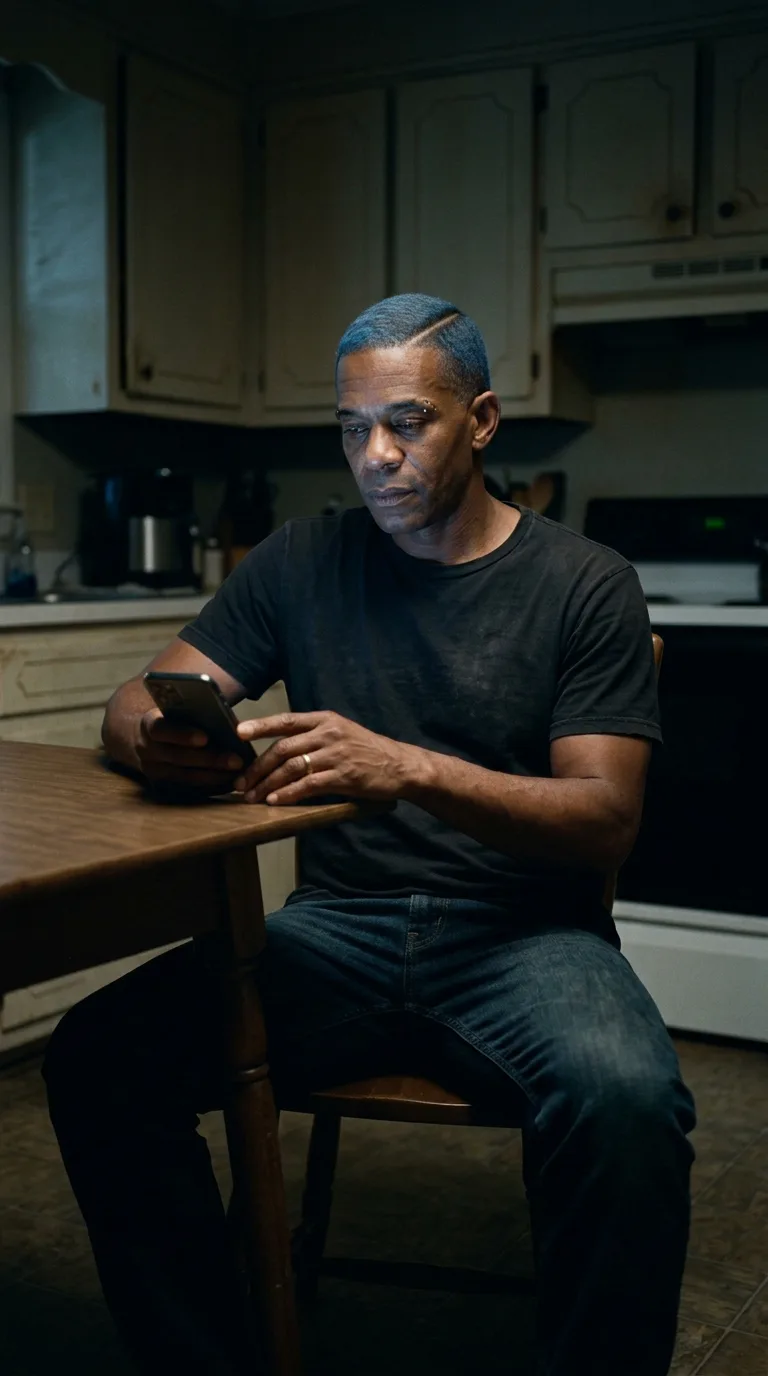
Rarest thing about him: Fashion color — legendary, 1 in 333
Season 0seed 1192718958 · engine v10
Character card
lineage 2NZHHJ
His body-swap story
@colin.hasbrook, wearing Liam Kanahele, rolled the wheel on and woke up as Marcus Whitfield, spent under a minute in him, then spun the wheel and woke up as Gary Pruszynski
The garage smells like brake dust and it is not your smell, has never been your smell, no matter how many times you have stood in it. Liam Kanahele's cauliflower ear throbs faintly in the cold — someone else's old fight, someone else's old life, sitting on the side of a head you are only borrowing. You have been him forty-some minutes. He clocked out, drove nowhere, sat down at his own kitchen table like a man visiting a museum of his own house. His wife called out from another room and you didn't answer right, and she gave you a look. That was enough. That is usually enough. There is a particular flatness that comes over a body once you understand exactly how it will spend the next thirty years, and Liam's flatness came fast, came before dinner even. You take out the phone. vessel.cards loads the way it always loads, patient, waiting, and you do not think of it as leaving him so much as setting him down.
You pay. You spin.
The wheel is still turning somewhere behind your eyes when the kitchen changes around you — not York, not brake dust, but Georgia heat pressing in through a window unit that's losing the fight, cabinets the color of old teeth, a phone warm and slick under your thumb. His thumb. It is already lifted off the glass, already frozen a half-inch above a price that means nothing to him and everything to him, four figures for a watch, and you feel the lift complete itself, feel the phone turn face-down on the table like a decision somebody else made a half-second ago and left for you to finish. The hand — his hand — does not go back for it.
You are sitting. A chair creaks under weight that is not the weight you had a moment ago, taller, heavier through the chest, forty-nine years worn into a body that still holds itself like it used to be quicker. A ring bites the base of the left ring finger, plain gold, worn thin on the underside from something rhythmic — you don't know what yet. An eyebrow ring you didn't ask for. Hair that isn't your color under your palm, buzzed close, dyed some blue you can't see but can feel the memory of, a barber's clippers, a joke somebody made in a shop that made him laugh for a week.
The shirt is what opens him. Thin black cotton against your back, soft from washing, and it comes to you the way his wife pulled it from the dryer this morning still warm and threw it at his chest without looking up, still half-asleep, and he caught it against his stomach and said something about her not sleeping right lately and she said something back that wasn't unkind, just tired, both of them tired in that companionable way of nineteen years married, and he pulled the shirt over his head standing in the bedroom doorway, right arm through first out of habit, left arm dragging a little because the shoulder's been stiff since a box came down wrong at the shop last spring. Marcus. His name arrives with the shirt, quiet, unglamorous, the way your own name never announces itself either.
The jeans against your legs bring the counter — steel cold under his forearms at six a.m., trays of brisket and neck bones under glass, the saw's whine starting up somewhere behind him, a regular named Ruthie who always wants the fat trimmed different than her sister wants it. He is good with his hands in a way that has nothing to do with gentleness; twenty-six years of a blade doing exactly what he tells it. The mesh apron isn't on him now but its ghost weight is, a phantom strap over the shoulder that aches anyway, the shoulder that never got looked at because insurance and because pride.
The wedding band gives you more than the shirt does. A wedding in a backyard, folding chairs, his mother in a hat too big for the yard, saying this boy finally found somebody who could out-stubborn him. His wife's laugh coming through the ring itself somehow, worn into the metal. No children — a door that opens onto quiet instead of grief, something settled long ago and not spoken of daily, just there, like furniture.
The chair under you is the same chair from every night like this one: him at this table after a shift, ankle jiggling against the table leg without his permission, a habit his wife teases him for, says she can feel it through the floor upstairs. Nicotine wants itself right about now, a pack a day for twenty years, and some dull throb behind his eyes that is blood pressure doing what the doctor warned him about, unglamorous and constant as weather. He doesn't drink much. A few times a year, holidays, a cousin's wedding. Mostly he is just tired, and mostly he is just looking at a watch he will never buy, in a kitchen that is dark because he didn't bother with the light, because turning on the light means admitting he's sitting here doing this again.
You feel all of it settle into your chest at once, thick Atlanta air outside a window unit losing its fight, cicadas going in the yard, his wife somewhere upstairs already asleep because she works mornings and he works this late scroll into himself like a wound he keeps checking.
You turn the hand over. His hand. Broad, nicked along two knuckles in old white lines, ring loose enough to spin if you wanted to spin it.
"Didn't need it anyway," you say, to no one, in his voice, and you almost believe it's his own regret and not something you borrowed to fill the silence.