Gary Pruszynski
Fictional. Generated by AI — not a real person, and no likeness of one is intended.
46, casino dealer in New York · rolled by @colin.hasbrook · card — no film
History
who has worn him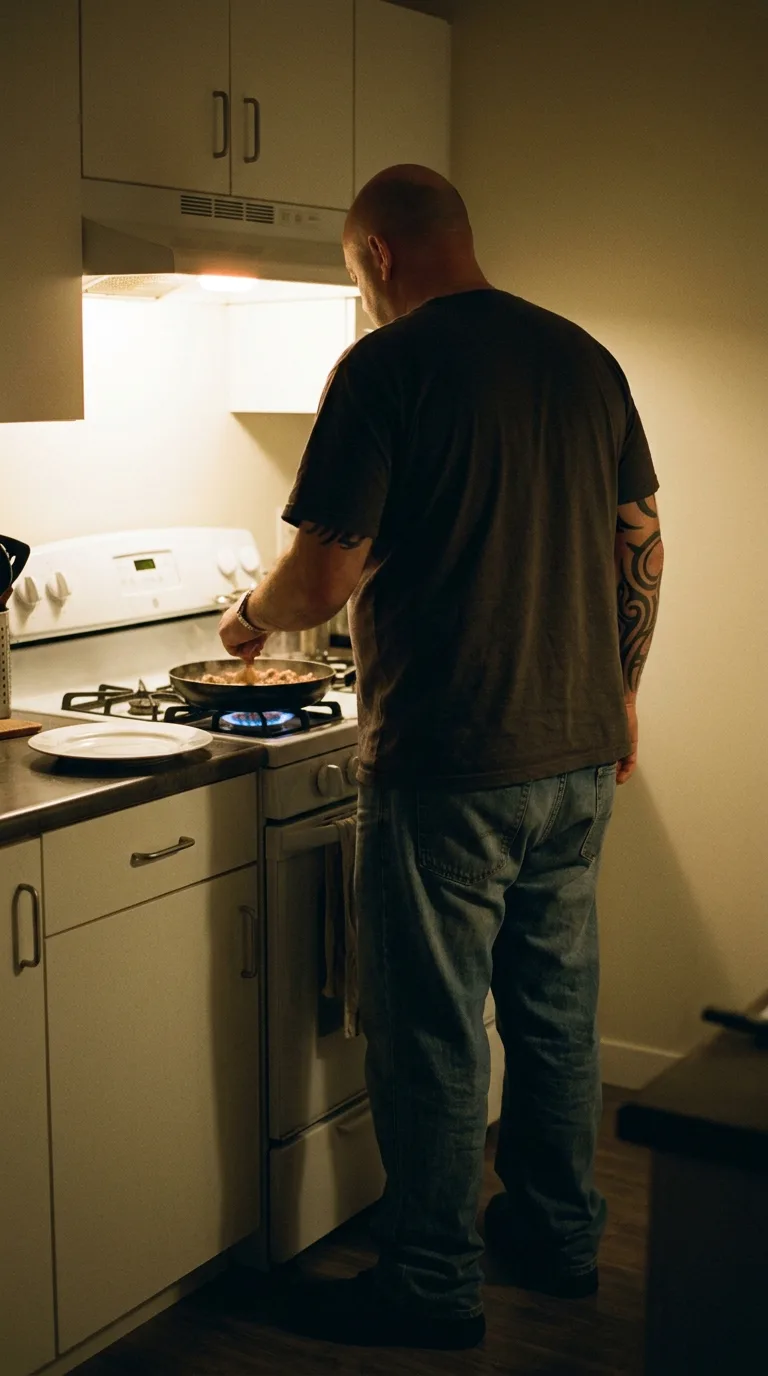
Rarest thing about him: Vapes daily — rare, 1 in 28
Season 0seed 564824947 · engine v10
Character card
lineage 2NZHHJ
His body-swap story
@colin.hasbrook, wearing Marcus Whitfield, rolled the wheel on and woke up as Gary Pruszynski, spent under a minute in him, then spun the wheel and woke up as Dustin Redcloud
You are standing behind a butcher's counter that closed four hours ago, in a body that isn't going to be yours much longer, and Rigo Casillas's kitchen is still on your hands.
You know it the way you know your own name, except it isn't your name, none of these ever are — the grease under the nails, the smell of the fryer that gets into a man's pores and stays there through two showers, the particular give of a knife handle worn smooth by someone else's grip. You were him for less than a minute. A minute was enough to know what he wanted, sitting at the wheel in his own cramped apartment, rent due, a photo on the counter he kept meaning to throw out. You gave him that minute and then you spun out from under him, because that's the arrangement, and because Marcus — the butcher, athletic, black hair, a man who has been carrying you around Atlanta for less time than it takes to say his name — never asked to carry Rigo's want along with his own body. Marcus is fine. Marcus is more than fine. But Rigo wanted something specific, and you already know exactly who has it, because you were inside him seven spins ago and you left something unfinished there that isn't yours to finish anymore — except it is, because everything you touch stays yours until the wheel says otherwise.
So you go back. Atlanta evening light through a window Marcus never really looked at, his heart still settling into its own rhythm, and you put the coin in again.
The stirring stops mid-circle in a kitchen four hundred miles and one hour ahead of the one you just left, and starts again the other way — wrong-handed, someone else's wrist finishing someone else's motion. Salt goes into the pan. Nobody tastes it. A cabinet opens above the sink and a hand that isn't asking permission from anyone takes down a second plate, sets it beside the first, square, like it belongs there.
You are heavier than you were a second ago and lower to the ground, a gut that sits differently than Marcus's flat stomach, feet planted in socks on a floor that creaks a specific way at the third board from the stove. Steam off the pan smells like garlic going dark at the edges. Your back is to a room you haven't seen yet.
The shirt is what opens first — cotton, soft from washing, snug at the shoulders in a way that means it was bought two sizes ago and kept out of stubbornness — and through it comes a morning: this man standing in front of a closet at four in the afternoon because his shift starts at six, pulling this exact shirt off the hanger, deciding against the polo because the polo makes the tattoo look smaller somehow and he likes it seen. His name comes up sideways, the way a man's own name always does — Gary — said by a pit boss, said by nobody in particular in a long time, said by no one who mattered enough to keep. The jeans against your legs give you the walk to the F train, the vape in his jacket pocket that he'll hit twice before shift and tell himself that's the last one today.
The half sleeve on your right arm burns faintly with its own history — a tattoo shop above a laundromat, twenty-six years old, a design he picked because it looked like nothing his father had, and his father is three years gone now and the ink outlived the reason. Your leg starts bouncing against the cabinet under the sink, an old tic with no home to go to, no felt to hide it under tonight.
The apartment comes in through your feet, through the counter under your forearm as you lean into the stir — small, clean, the kind of quiet a man builds around himself on purpose. Fourteen years dealing blackjack, watching other people's luck happen to them from three feet away, night after night, never a hand of his own on the table. A marriage that lasted long enough to learn her coffee order and not long enough to matter now. No kids, and some nights that's a relief so complete it scares him, and he never says that part to anyone.
The spoon in your hand knows the rest — how many nights this exact pan, this exact single plate, this exact recipe learned off a cooking channel because eating out every night on a dealer's tips stopped making sense around year three. One plate, every night, for longer than he'd admit.
Then your other hand, without being told, takes the second plate down and sets it beside the first.
You look down at both of them on the counter, at hands that are thicker through the knuckle than you expected, a tribal pattern running dark under the kitchen light, and you turn the right one over slow, like you're checking it's real.
"Didn't think I'd be having company," you say, to no one, to the empty second chair, and you don't know yet how long you'll be the one who says it.