Dustin Redcloud
Fictional. Generated by AI — not a real person, and no likeness of one is intended.
33, bartender in Miami · rolled by @colin.hasbrook · card — no film
History
who has worn him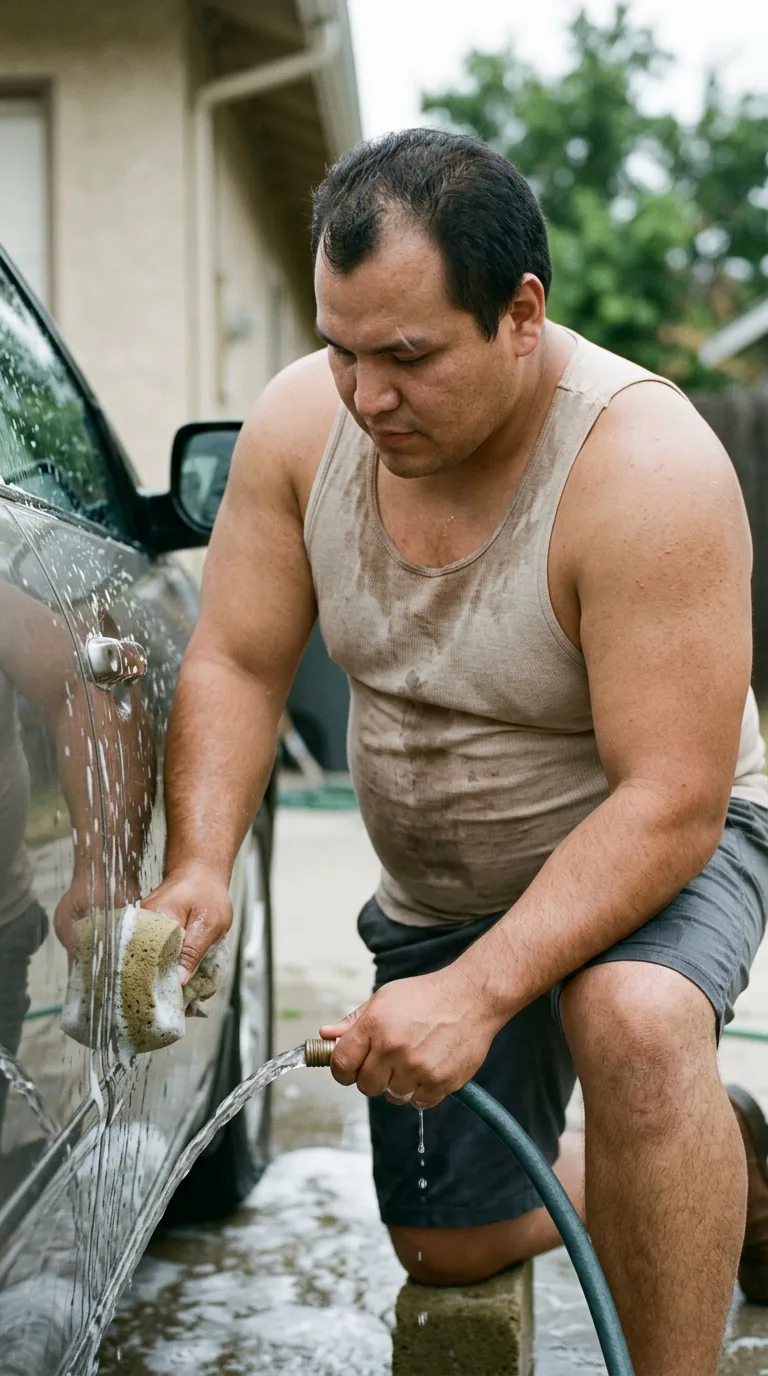
Rarest thing about him: Native American — rare, 1 in 41
Season 0seed 1263457160 · engine v10
Character card
lineage 2NZHHJ
His body-swap story
@colin.hasbrook, wearing Gary Pruszynski, rolled the wheel on and woke up as Dustin Redcloud, spent under a minute in him, then spun the wheel and woke up as an unnamed body
The dealer's stool is warm under a body that isn't yours, not really, and it hasn't been three hundred and seventy times over, and it never will be, but right now it's the only body you've got: bald by choice, brown eyes going soft and unfocused, the felt of the blackjack table rasping under a palm that has learned to shuffle without thinking. The pit boss is on break. The floor is quiet, that dead stretch before the evening crowd, and it should be enough — it was enough an hour ago — but there's a specific itch starting behind the sternum, the one that isn't hunger and isn't boredom exactly, more like the feeling of a good book finished and the next one not yet chosen. Nothing happened tonight. Nobody insulted you, nobody tipped badly, the shift is fine. That's almost the whole reason. Fine is unbearable when you've had three hundred and sixty-nine other lives to compare it to. You palm the phone under the table, thumb already knowing the address, and by the time the boss comes back from his cigarette the stool will be empty, or it will hold someone else entirely, and he'll never think to ask which.
The wheel spins its lit ring on the little screen and lands, and you're not looking at a screen anymore.
You're crouched. Water is running warm-cold over your knee where it's braced on a wet paving stone, and there's a sponge fat with suds in your right hand, pressed flat against a car door, and your other hand is closed around a hose with a brass nozzle worn smooth, thumb hooked over it, adjusting the stream without being told to. The grip changes on its own — thumb tucking in, wrist rolling a small circle — a motion so practiced it happens before you've caught up to owning the arm that does it. Soap runs down the panel in a wide arc and stops. No more swirl marks behind it. The car, dark and mid-size, sits patient in a driveway striped with early evening light, the sky behind a stucco roofline gone that particular flat gold that isn't quite dusk yet. Somewhere close, gulls, and past that, the low unbroken hum of a boulevard.
The shirt isn't on you — it's draped over a fence post a few feet off, you register that dimly, dark and buttoned, sleeves rolled — but the tank top plastered to your back is his, damp through with sweat and hose-spray both, and it's that fabric against your shoulder blades that opens first: the memory of this exact morning, hours ago in his day though it is not hours ago in yours, pulling this same tank over his head in a bedroom with the blinds half down, the ceiling fan clicking on its third setting because the second one rattles. Rosa was still asleep, one arm thrown across the pillow where he'd been, and he'd stood there a second just watching her breathe before he found his shorts on the floor by feel. ADHD brain already three tasks ahead of his hands — car, then the register order for the bar, then call his mother back, then car again because he'd forgotten he was already doing the car. He'd laughed at himself, quietly, so as not to wake her.
The scar over his eyebrow itches faintly with the soap running near it, and that itch drags up a whole afternoon: nine years old, a bike, a curb he misjudged, his older cousin driving him to the clinic with a dish towel pressed hard to his face, both of them scared, both of them, afterward, unable to stop laughing about it in the waiting room out of sheer relief. The scar healed pale and thin and it is the first thing people notice about him and he has never once minded that.
The hose in your hand knows the length of driveways he's washed cars in — three, maybe four, over different years, different apartments, always this ritual, always alone with it, some Sunday-brother of the noise and crowd of the bar. The bar comes up next, heavy and full: the particular weight of a bottle of well tequila lifted and poured in the same motion he's done ten thousand times, the sticky give of a rubber mat under his boots at 4 p.m. before the doors open, counting limes into a bin, the register's certain click. He likes the hour before opening best — the quiet, the smell of citrus and bleach, nobody needing anything from him yet. He is good at the job in the specific way big unhurried men are often good at jobs that punish smaller quicker people: nothing rattles him, and when it does, nothing shows.
There's an ex in the wet denim of his shorts, somehow, in the particular worn seam at the pocket — Camila, gone eight months now, and the memory that surfaces isn't the breakup but a Tuesday before it, her laughing at him for alphabetizing spice jars he never used, and how much he missed being laughed at like that, gently, until Rosa did it too, differently, and it stopped being a wound. Rosa is inside the house right now — you can feel that knowledge sitting in him like a light left on in another room — probably at the counter, probably half-watching for him through the kitchen window the way she does, pretending not to.
His body holds all of this the way it holds the crouch: 5'4" and thick through the shoulders and gut both, a build made for lifting kegs and holding a bar top's worth of noise without flinching, knees that complain a little on wet stone, forearms dark and corded from the hose and the years before the hose. Nothing hurts exactly. Everything is used. The hairline retreating at both temples above the scar has never bothered him — Rosa runs a thumb along it sometimes and calls it distinguished, and he believes her because he wants to.
The sponge is still moving when you stop being only him and start being both of you, and you let it finish its arc before you straighten out of the crouch, slow, feeling out the unfamiliar low center of this weight.
You look at your hand — the one with the sponge, suds sliding warm between the fingers — and turn it over like you're checking it for a wound. Then you look up, past the roofline, into the flattening gold light, and you say, to no one, in his voice and not quite his cadence:
"Whose house is this."