Jason Marchetti
Fictional. Generated by AI — not a real person, and no likeness of one is intended.
30, bartender in Small-town Ohio · rolled by @colin.hasbrook · card — no film
History
who has worn him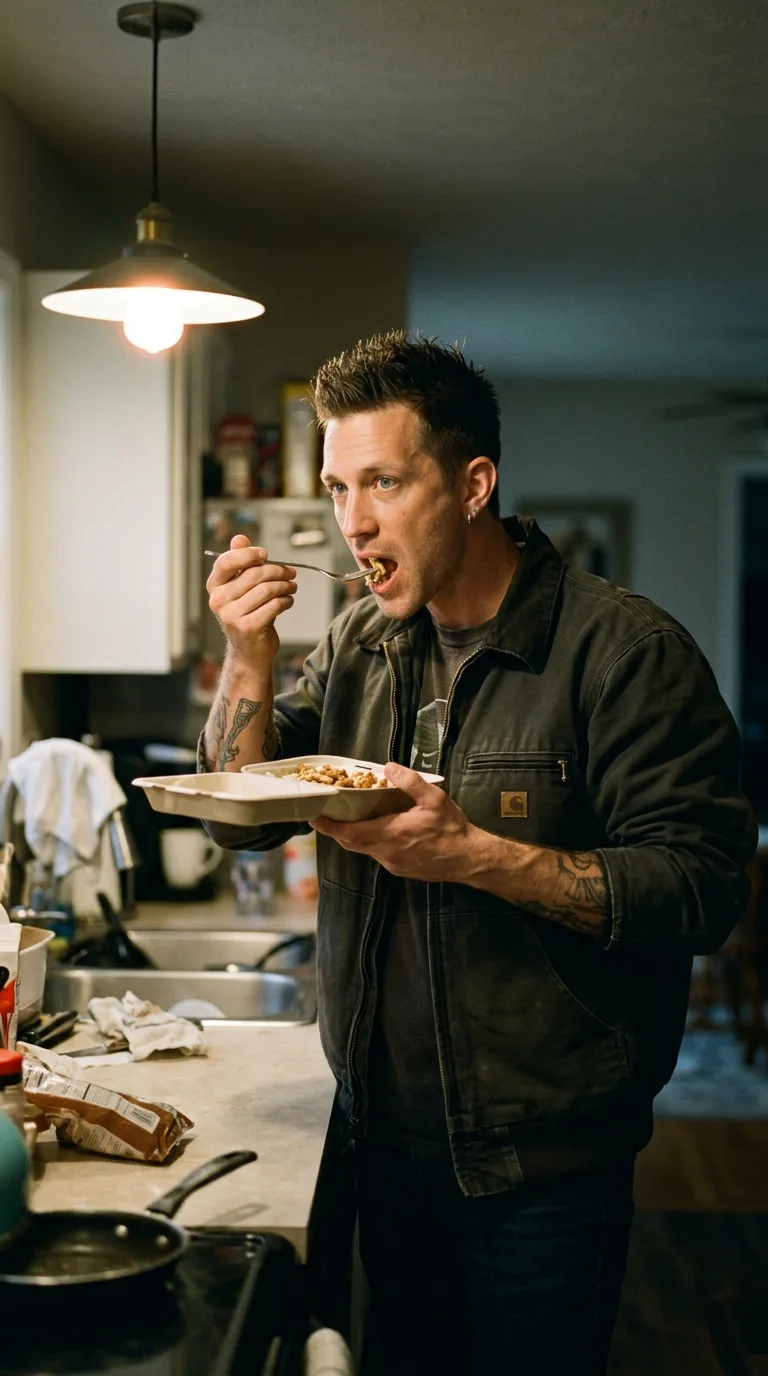
Rarest thing about him: A lazy eye — rare, 1 in 64
Season 0seed 135804684 · engine v10
Character card
lineage 2NZHHJ
His body-swap story
@colin.hasbrook, wearing Danny Brescia, rolled the wheel on and woke up as Jason Marchetti, spent 1 minute in him, then spun the wheel and woke up as Wayne Standingwater
Danny Brescia's phone is buzzing on the counter of the firehouse kitchen, and you let it buzz, because you have already decided you are done being him. Less than a minute ago you spun the wheel and got him — this dad-bod, freckled, hazel-eyed man with his boots still by the door and his coat on a hook that isn't yours — and in that minute you learned enough. The migraine starting behind his left eye. The ache in his knee from a fall on a ladder two calls ago. The guy is decent and tired and good at his job and none of that is why you're here. You're here because eighty spins in, the wanting doesn't wait for reasons anymore, it just arrives, quiet, the way hunger arrives in a man who already ate. You open the site on his phone with his thumbprint, which still works even though the print underneath it is yours now. You spin.
You are lifting a fork when it happens. Not Danny's fork — his, wherever he is, whoever he was a half-second before you got here. The fork stops an inch from an open mouth, hangs there, and something in your borrowed wrist decides on its own to set it down on the lip of a foam container. A coat, heavy, canvas, still on both shoulders. A kitchen light hanging low and yellow over a sink full of pans. You are standing. You are hungry — his hunger, not yours, but you inherit it anyway, along with the taste of something with too much soy sauce already going cold on your tongue.
The coat is the first door. Carhartt, worn soft at the cuffs, and putting it on this morning comes back to you in pieces — stepping into the sleeve left arm first because the right shoulder aches when he reaches back, a habit from stacking cases of Jameson two-handed for six years. Jason Marchetti. The name arrives with the smell of the canvas, cigarette smoke that isn't his, other people's spilled beer soaked into a jacket that's outlived three winters. He never smoked. He quit drinking four years ago on a Tuesday nobody remembers but him, sitting in his truck outside the church his girlfriend Dana drags him to some Sundays, deciding with no ceremony at all that he was done being the guy who closes the bar and then can't leave it. Nobody threw him a party for that. He didn't need one.
The earring gives you the mirror he stood in front of at twenty-two, deciding it made him look like less of what his father wanted. The hoop is small, cheap, replaced twice. His father doesn't call much. His mother does, every Sunday, right after the second service, and asks if he's still going, and he says something that isn't quite a lie.
The fork in his hand — his hand, wide-knuckled, a burn scar across two fingers from a flambéed dessert order that went wrong in his twenties — brings back the bar itself: the particular give of the rubber mat behind it, the cold rush of the walk-in when he's restocking the well before the doors open, the exact weight of a case of limes. He loves the ten minutes before a shift starts more than almost anything, the bar quiet, the bottles catching light, nobody needing anything from him yet.
The container against his palm carries the smell of the sauce and under it, faint, a whole evening: his girlfriend's laugh from the next room, a kid's cartoon playing too loud, another kid — younger — banging a spoon on a highchair tray. Two of them. He does the dishes most nights because Dana cooks. He is standing here, coat still on, eating over the sink like a man who forgot he was allowed to sit down, because the day ran long and his head is already starting to throb behind the right eye, migraine weather, and somewhere in the last year he stopped telling anyone how often that happens.
There's an ex in there too, arriving through nothing he's touching — just close enough to the surface that she comes anyway, a woman from before Dana, before the kids, someone he still checks on without meaning to, a name he doesn't say out loud in his own house. He doesn't examine why. Neither do you.
His eye — you feel it before you understand it, a looseness in the left one, a drift outward he stopped noticing around age nine — has never once stopped him from doing anything he wanted, though it's the first thing every new customer's eyes catch on and try to pretend they didn't.
The dark window over the sink shows you his own reflection eating in even mouthfuls, calm, unhurried, a man finishing a meal he doesn't remember starting to enjoy.
You look down at his hand. Burn scar, wide knuckles, a fork set neatly on the foam lid. You turn it over once, like you're checking it's real, and out past the window a truck goes by on the one lit street in town, past a diner with its sign dark.
"Guess I'm still hungry," you say, to the window, to no one, and you don't yet know for how long that's true.