Danny Brescia
Fictional. Generated by AI — not a real person, and no likeness of one is intended.
35, firefighter in Pittsburgh · rolled by @colin.hasbrook · card — no film
History
who has worn him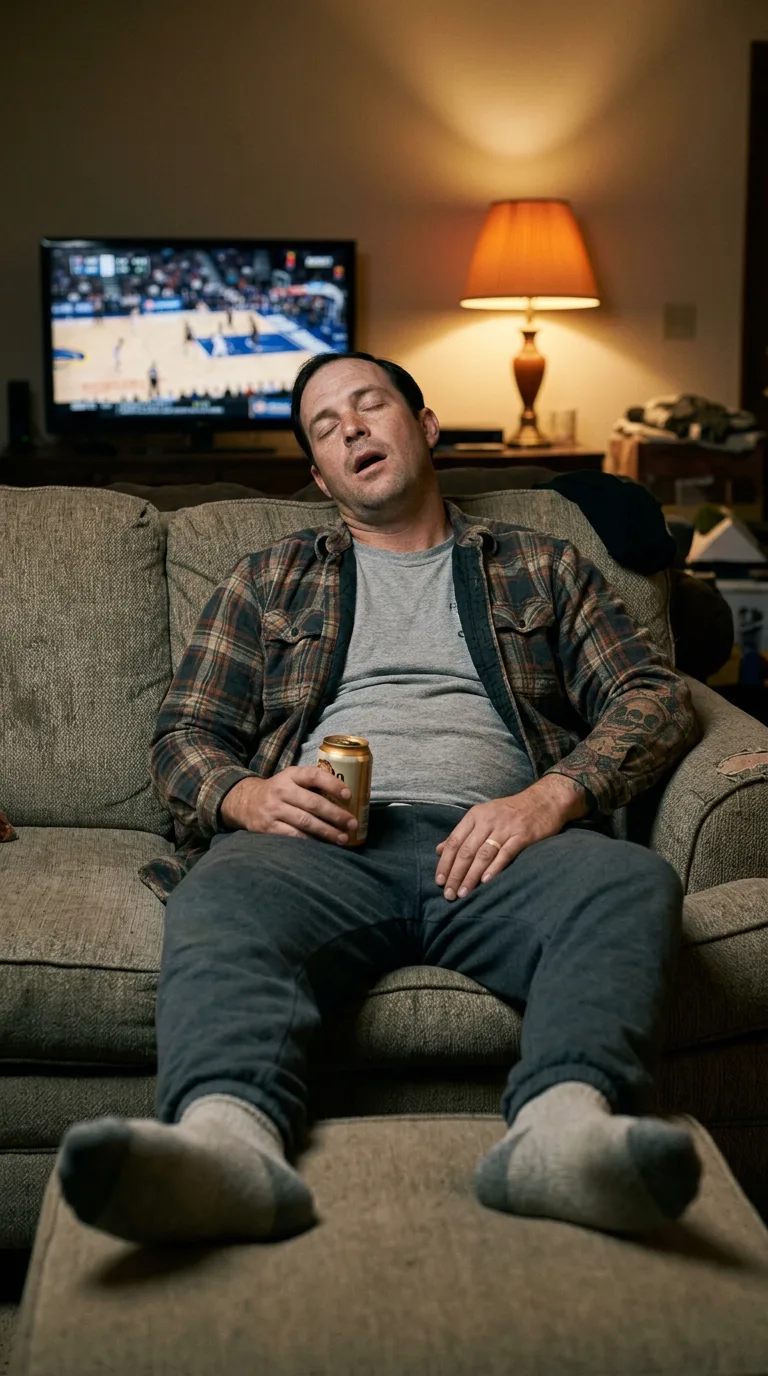
Rarest thing about him: Dyed black — legendary, 1 in 138
Season 0seed 909201389 · engine v10
Character card
lineage 2NZHHJ
His body-swap story
@colin.hasbrook, wearing Marcus Reddick, rolled the wheel on and woke up as Danny Brescia, spent 1 minute in him, then spun the wheel and woke up as Jason Marchetti
You are standing in a warehouse aisle in Miami, in a body that is not tired, and that is the problem.
Marcus Reddick's knees don't ache. Marcus Reddick's back doesn't complain when he reaches the top shelf. Four minutes in him and already you know this is a body built for the job it does, wiry and quick, and there is nothing wrong with it, and that is exactly why you are bored. You spun for weight last time — for something heavier to carry, a life with furniture in it — and got a picker with a cleft chin and a pallet jack and a shift that isn't even half over. The scanner in his hand beeps at a barcode. Somewhere above you a forklift backs up, beeping too, patient, the whole building beeping like it's trying to remind you of something. You are not thinking about the last man, or the one before him. You are thinking that you paid for this feeling — the half-second before the wheel stops — and you have not felt it in four minutes, and four minutes is too long.
You take out your phone on your break, thumb already knowing the site by muscle memory that isn't yours yet either. Vessel.cards. The wheel loads. You spin.
—
The couch takes you before you understand you have a couch. Weight settles into you all at once, gut and shoulders and a slack jaw, and your eyes are already open because his were, mid-blink, watching a basketball arc toward a rim on a television that is too loud for the room. A can, warm, half-crushed at the middle, sits loose in a right hand gone heavy with tattoo ink under fabric. The game shows a replay. Something in your chest — his chest, now yours — exhales through the nose, and your thumb, unbidden, finds the volume button on a remote wedged against your thigh, and turns it down two clicks with a precision that has nothing to do with the four beers already gone.
You did not choose to sit forward. The body did that on its own, the way a man leans in for a foul call he already knows was correct.
—
The flannel against your back arrives first, and with it, cold — this apartment keeps its heat low, on purpose, because heat costs money and money is tighter now than it used to be when there were two incomes instead of one and a half. The shirt underneath, gray, thin at the collar where it's been washed four hundred times, gives you a Tuesday: pulling it over your head in a bedroom with boxes still stacked against one wall eight months after the move, because unpacking felt like agreeing to something. The flannel went on after, because the building's radiators lie about spring. Your hand did up two buttons and stopped, the way it always stops, because who buttons a flannel all the way, and some woman's voice that isn't in the room anymore used to say you dress like nobody's watching, and you used to say nobody is.
The sofa cushion holds a memory of two bodies' worth of wear on one side. That side is not where you're sitting.
Your ring finger is bare and pale where a band used to sit, and touching your own thumb to it — an old habit, worn into the muscle before you ever arrived — brings back a courthouse hallway with bad fluorescent light, papers, her signature going down fast like she'd practiced it, and a boy in the hallway outside in a Steelers jersey too big for him, eight years old, not understanding why Dad was crying in a hallway with vending machines. He calls twice a week now. Wednesdays and Sundays. Sunday is today, and the phone is somewhere on the cushion beside you, and you were going to call after the game, and the game is still on, and this is the exact shape of the thing you keep almost doing and then falling asleep before you do it.
Your back, this back, is thirty-five years old and heavier than it wants to be and it holds turnout gear all day without complaint, because the job asks that of it and it has learned to comply; the shoulders are strong in the specific way of a man who has carried people out of buildings, and soft everywhere the shoulders don't reach. There's a dull hum behind your eyes that isn't the beer — sugar running high again, the way it does on shift days when the vending machine is easier than the cooler — and a thirst that the beer is making worse, not better, and a body that knows this and drinks anyway because it is Sunday and the apartment is quiet in the specific way apartments are quiet when a marriage used to be in them and now isn't.
The sleeve on your right arm — anchor, skull, roses, the ink gone soft-edged with age the way flash tattoos always do — remembers a boardwalk, twenty-two years old, a buddy from the academy laughing at the chair next to him, both of them sure this was the last stupid thing they'd ever do together. It wasn't. There were more. Some of those men carried caskets, later, for men who didn't walk back out of buildings. You don't reach for that memory. It arrives anyway, the way station-house memories do, uninvited, smelling like diesel and coffee left too long on the burner.
The can in your hand is nearly weightless, nearly empty, and warm the way beer gets when a man falls asleep holding it instead of finishing it, and that detail alone — the last thing his hand knew before yours arrived in it — feels like the whole man in miniature: something good, left unfinished, gone warm on the way to nowhere.
—
You look at the hand. Freckles across the wrist that continue, you already know, onto a nose and cheekbones you haven't seen yet tonight, not in this light. You turn the hand over slow, the way you always do, checking the fit, and the thumb finds the pen that isn't there — an old tic, someone else's, already yours — clicking air.
You look up into the dead eye of the television, where the glass throws enough of a reflection back to serve as a mirror, and you say, to no one in the empty apartment, in a voice thicker than you expected, warm-slurred at the edges:
"Where's my kid's picture."