Marcus Reddick
Fictional. Generated by AI — not a real person, and no likeness of one is intended.
40, warehouse picker in Miami · rolled by @colin.hasbrook · card — no film
History
who has worn him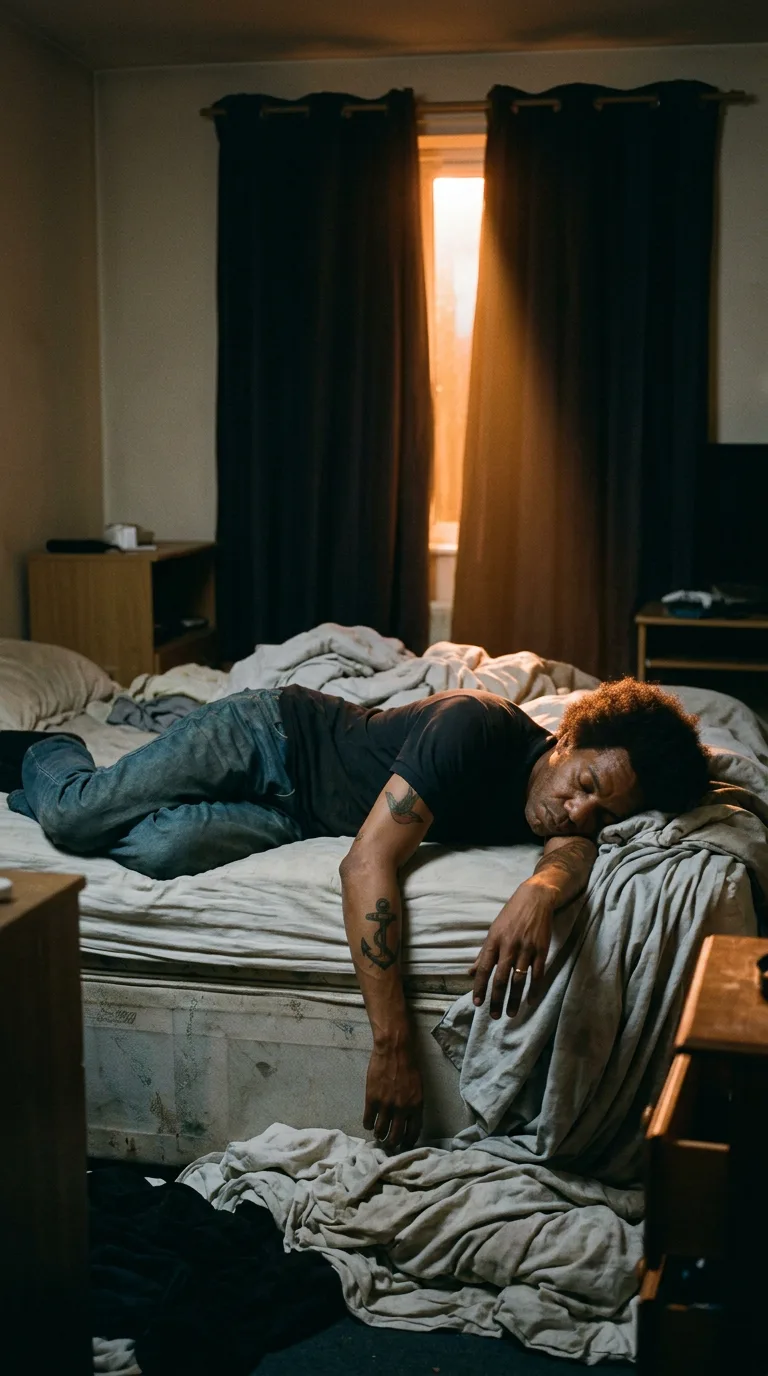
Rarest thing about him: A cleft chin — rare, 1 in 24
Season 0seed 619788403 · engine v10
Character card
lineage 2NZHHJ
His body-swap story
@colin.hasbrook, wearing Hector Villagrán, rolled the wheel on and woke up as Marcus Reddick, spent 4 minutes in him, then spun the wheel and woke up as Danny Brescia
Hector Villagrán's knees ache first, the way they always do, standing at the edge of a flowerbed he has weeded a thousand times, and that ache is what decides it. Sixty seconds in this body and already the bad hip is talking. You know this ache. You have known it for less than a minute and it already feels older than that, a rented pain, and you are done with it before you have even finished being it. The phone is in the truck's cupholder. You don't need to walk to it. You've never needed to walk anywhere for this. You just need to want it enough, and you do, the way you always do, the wheel humming somewhere behind your eyes like tinnitus that only this fixes.
You spin.
The breath changes first — his, not yours, ragged going even in the space of one inhale, like a held note resolving. The arm that was hanging off the mattress lifts itself, unbidden, and the body underneath it rolls from its stomach onto its back, hands folding at the chest, a position you can tell immediately he never sleeps in, not once in forty years, and yet here it is, arranged like a man laid out for a viewing. Streetlight comes through the gap in the curtain in one gold blade across the ceiling. Somewhere below the window, a car alarm chirps twice and gives up. You are small in this one — five-seven, no weight to speak of — and the mattress under you is bare in places, a stripe of ticking showing through worn sheets, and none of that matters yet because you are only just arriving, the way you always arrive, all body and no name.
Then the name comes, because the pillow under your cheek smells like him — sweat and Suave coconut shampoo and something like WD-40 ground into the pillowcase from hands that never quite get clean — and it opens like a door: Marcus. Marcus Reddick. Thirty-nine hours since he last called himself anything else, out loud, to his wife, in this room, laughing about something you don't get to keep.
The tattoo on your inner forearm is warm from being pressed into the sheet, and touching it — just the weight of your own arm lying across it — brings back a flash of a tattoo parlor in Opa-locka, nineteen years old, a sailor's anchor because his uncle had one and his uncle had been somewhere, Marcus never had, and he wanted the ink to say he might. Bold lines, faded now, blue gone to gray-green, and under it the memory of his uncle's laugh, gone eleven years, still funny in Marcus's chest like a held breath.
The wedding band is on your left hand, and that is the one that unspools longest. Denise. Not white dress and church bells — a courthouse, her cousin as witness, because they didn't have money for anything else and neither of them cared, not then, not now. Her voice this morning — this last morning, hours ago by the clock on the wall, though your body doesn't know that yet — saying pick up something for dinner, we out of rice, and him saying yeah baby half asleep, not even opening his eyes, because the graveyard shift at the warehouse eats the front half of every day and gives back the back half broken into pieces too small to use.
Two kids. A boy and a girl, and you get them in flashes too fast to hold — a birthday cake with the wrong number of candles because the store was out, a school play where the girl forgot her line and Marcus stood up anyway and clapped like she'd said it perfect. The love in that is not yours. It arrives anyway, borrowed and total, the way all of it arrives.
The body underneath the memories: skinny in a way that isn't chosen, a metabolism that burns whatever it's given, and a lower back that has been wrong since a pallet jack caught wrong four years back, a dull line of fire that flares when he stands too fast and is flaring now, low and familiar, a thing he has stopped mentioning to anyone because Denise worries and worrying doesn't pay bills. His jaw wants a toothpick between his teeth even now, even asleep, some old reflex from quitting Newports six years ago that never fully quit. The cleft in his chin — his mother used to press her thumb into it when he was small, said God left his fingerprint there on purpose. He believed her long after he stopped believing most things his mother said.
You remember, distantly, dressing for this shift — not this morning, but every morning, because it is the same every time: the navy polo pulled over the head, catching a little on the afro, the orange vest zipped up crooked and yanked straight, the jeans already gone stiff with a day's dried sweat that never fully washes out, boots laced loose because tight laces make his feet swell worse by hour six. All of it rented to you in pieces, sleeve by sleeve, through cloth that still smells like him.
Your eyes open. Streetlight, curtain-gap, gold blade on the ceiling, ten in the morning outside pretending to be night in here because a man on graveyard learns to make his own dark. You lift the hand off your chest — his hand, ring and all — and hold it above your face and turn it, slow, like it might not follow the order.
"Whose house is this," you say, quiet, to the ceiling, and you almost laugh, because you already know, and because somewhere back in Houston a groundskeeper's body is standing empty over a flowerbed nobody will find strange for a while yet, and because you don't know if you'll want out of this one in an hour or in a year, and neither does he, and neither does anyone.