Hector Villagrán
Fictional. Generated by AI — not a real person, and no likeness of one is intended.
59, groundskeeper in Houston · rolled by @colin.hasbrook · card — no film
History
who has worn him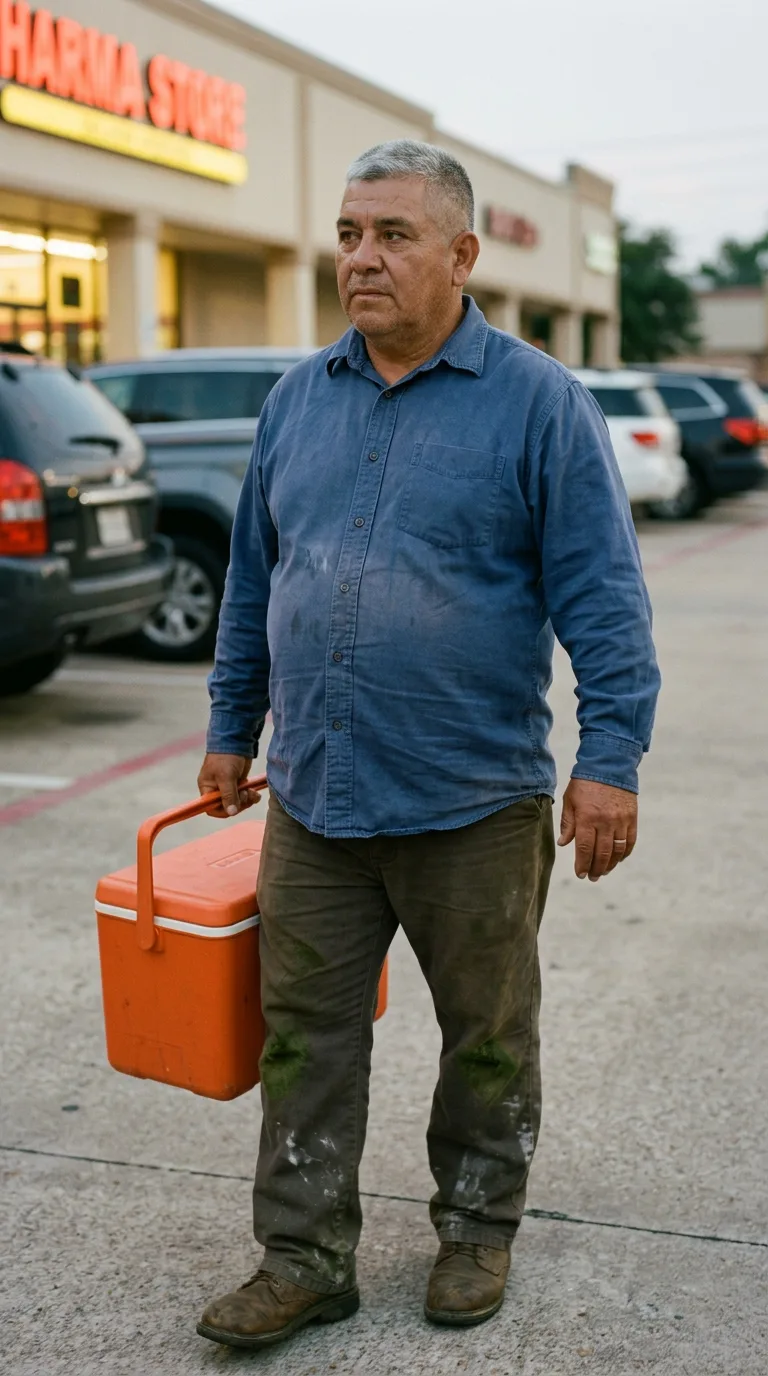
Rarest thing about him: Prosthetic eye — legendary, 1 in 496
Season 0seed 1997183501 · engine v10
Character card
lineage 2NZHHJ
His body-swap story
@colin.hasbrook, wearing Wendell Iseman, rolled the wheel on and woke up as Hector Villagrán, spent under a minute in him, then spun the wheel and woke up as Marcus Reddick
The condo has good light at noon, and Wendell Iseman's bald head catches it in the bathroom mirror, and you hate it, a small clean hatred you have gotten used to living inside of. Sixty years old, once-broken nose healed a little crooked, standing in a robe that costs more than some men's rent, waiting on an open house that doesn't start for two hours. This body sells houses to people richer than it. This body has never once been tired in a way that mattered. You have been him seventy-seven spins deep into other men, and less than a minute into this one, and already the boredom is a physical thing, a low hum under the ribs, because you know exactly how the rest of his Monday goes: the same tour, the same handshake, the same joke about square footage. Nothing left in him to be surprised by. You go to the laptop still open on the kitchen counter, the wheel already loaded from last night when you couldn't sleep in a body that never gets tired enough to need it, and you pay again, and you spin, not because Wendell has done anything wrong but because he has done nothing at all.
The wheel lands on Houston, on afternoon heat, on a man carrying an orange cooler across striped grass, and the click of the spin becomes the click of your own weight shifting wrong on your feet — heavier, lower to the ground, a gut you didn't have a half-second ago pulling at a shirt that's damp through the back. Your left eye doesn't track when you try to look down at what your hands are doing. One hand is closed around a cooler handle. The mower is off to the side, ticking as it cools, stripes laid fresh and dark-light-dark down the outfield behind you, the stands standing empty in a heat that presses on the skin like a hand. Your feet, his feet, are already walking, and for one motion — setting the cooler down at an angle it has never once been set down at in ten thousand shift-breaks — you get it wrong. You correct it. You do the next ten sips of water like a man checking his own work, which he has not needed to do in the twenty-two years he's kept this field, and something under all of it does not notice a thing has happened, because there is nothing under it anymore to notice.
The shirt is what opens first — a chambray gone soft blue-gray with washing, sweated through at the back before noon most days — and it comes with the smell of the laundry room off the kitchen, the particular clunk of that dryer, and a woman's hands, Marisol's hands, snapping it straight before she hangs it, the two of you married thirty-one years this October and her not saying anything anymore about how many times a shirt like this can be re-collared before it should just go in the trash. You feel, before you see it, the ring on the left hand — plain, no stone, worn thin on the underside where it rubs the wheel of the mower — and it brings the wedding itself, folding chairs in her cousin's backyard in '93, and it brings, unbidden, a face from before that, Lucia, who you almost married at twenty-six and didn't, who still texts you every few years on nothing occasions, a habit neither of you has ever explained to anyone. There's a daughter in there too, Selena, twenty-eight now, a nurse in Pasadena who calls on Sundays, and the pride of her sits in the chest like something warm and separate from the rest of the day's weight.
The pants are Carhartts stiffened at the knee with grass-stain and old fertilizer, and kneeling in them for the low mow along the warning track brings back every knee you've ever had, the right one that clicks going up stairs, the left one that doesn't anymore because the surgery in 2019 actually worked. The boots know this dirt without asking the rest of you — twenty-two years of walking this exact infield, first at Dow Park and now here, and the feet find the mower lines without looking because looking was never the job, the job was doing it until it lived somewhere under thought. The body itself is fifty-nine and carrying it everywhere it's allowed to be carried — belly soft and permanent, shoulders still thick from a younger man's version of this same work, the glass eye a bright brown that never quite lands where the real one does, a Little League foul ball in '02, a story you've told so many times it doesn't hurt to tell anymore. There's no drink in the last nine years, not since the doctor's face on a Tuesday, but there's a lighter in the front pocket doing nothing, worn smooth, moving between two fingers without being asked to, the way it does every time the hands go idle and there's a beer to go with it later and there almost never is anymore. What he carries, if you asked him, he'd say nothing — and mean it, and be wrong the way most men are wrong about that.
You look down at the hand on the cooler handle, at the ring, at the knuckles thick from twenty-two Houston summers, and you turn it over once in the heat coming up off the grass, and Hector Villagrán's mouth says, out loud, to the empty stands, in a voice that isn't asking anyone's permission to exist here:
"Bueno. Otra vez."