Wayne Standingwater
Fictional. Generated by AI — not a real person, and no likeness of one is intended.
60, barista in Eastern Kentucky · rolled by @colin.hasbrook · card — no film
History
who has worn him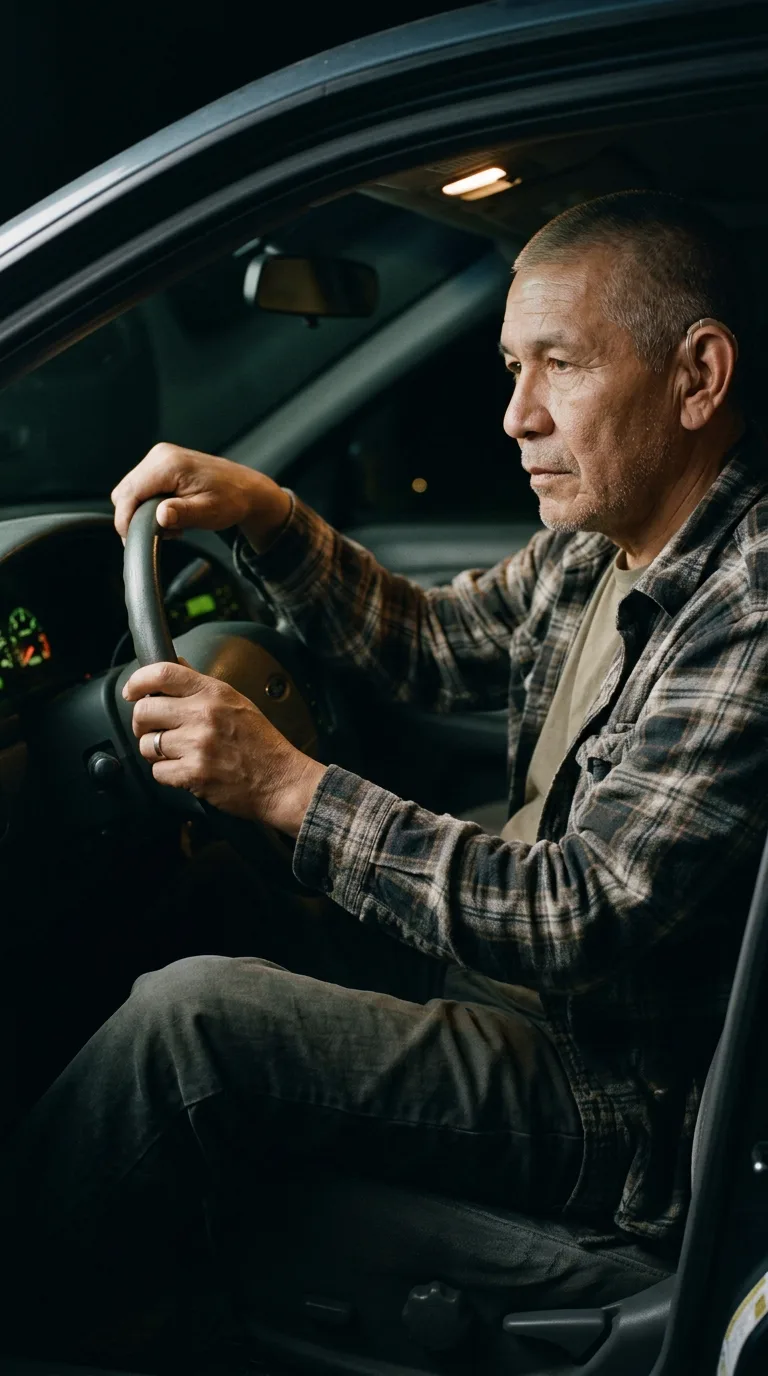
Rarest thing about him: Hearing loss, wears aids — rare, 1 in 48
Season 0seed 1211634050 · engine v10
Character card
lineage 2NZHHJ
His body-swap story
@colin.hasbrook, wearing Jason Marchetti, rolled the wheel on and woke up as Wayne Standingwater, spent under a minute in him, then spun the wheel and woke up as Rafael Cendejas
You are thirty years old, standing behind a bar in Small-town Ohio, one minute into a body you already know is wasted on you. The lazy eye drifts when you're tired, and you're tired now, and the regulars keep looking at the wrong side of your face like they can't decide which eye to trust. Jason Marchetti's hands know this bar — the rag, the taps, the particular give of the register drawer — but you don't want his hands. You had them for sixty seconds and that was enough to know: nothing here is going to happen. A slow Monday, a dishrag, a coaster with a beer ring on it. You wipe the ring away out of some leftover politeness to a man who isn't going to be using this body's manners much longer, and you think: not this one. Eighty-one men and you have learned the taste of a wasted spin inside the first minute, the way you can tell a bad meal from the smell alone. You go to the site on your phone, thumb on the glass, blue light on Jason's stupid, undeserved face. You spin.
Three miles from his own driveway, on a dark road with the dash light green on his knuckles, a man's hands come off the wheel.
They resettle lower, wider — your hands now, learning the wheel new even though it has thirty years of calluses ahead of you in his skin. The car drifts a foot toward the centerline and pulls itself straight, smooth as something that meant to do that. The turn signal clicks on for an exit that isn't his. You don't know that yet. You don't know anything yet — just weight, a stranger's weight, low and solid through the hips and shoulders, and a highway with no other cars on it, and a sound in both ears like the inside of a shell, a small mechanical hiss under the engine noise that isn't the engine.
The hiss is the hearing aids. You don't know that either, not yet, but your hand — his hand, the one with the plain gold band — comes up off the wheel and brushes the curve of plastic behind your ear the way a man does forty times a day without knowing he's doing it, and that touch is the first door. It swings open on a fitting room in Lexington, a younger version of this same weight in the chair, a woman's voice through a speaker asking can you hear that, and now this, and a feeling underneath it that isn't shame exactly, more like a low fee paid every day for thirty years, the fee for a factory floor he worked before the café, the roar of a stamping machine that took the top half of the world's sound away from him and left him the bottom half, engine rumble, his own voice from inside his own skull, his wife's voice close up but not from across a room anymore.
His wife. The ring on the hand on the wheel is the next door, and it opens wide, unhurried — thirty-six years, a courthouse wedding neither family thought would last, and it lasted. Her name comes back not as a word but as a whole climate: her laugh cut short by her own hand over her mouth, the smell of her shampoo on a shared pillow, the two of them slow-dancing in a kitchen to a radio because a doctor had used the word arrhythmia about her mother that morning and neither of them wanted to say anything true out loud. Two kids raised in that same kitchen, grown now, gone to Lexington and to Columbus, and a phone that doesn't ring as much as he'd like, and he doesn't say that to her, ever, chews his gum instead, works his jaw the way he's doing right now without meaning to, a habit older than the hearing aids, older than the marriage — jaw working, working, because his hands are full of a wheel and his mouth needs something to do.
The steam wand. That memory comes in through nothing you're touching, just the ordinary undertow of a Monday's muscle memory rising because the body expects it — mornings behind a counter that smells like scorched milk and orange cleaner, a name tag with a name on it that isn't quite his, a regular who tips in exact change every day and calls him chief, the particular ache low in his back by two in the afternoon that never quite leaves anymore, sixty years old and average in every measurement and strong in the ways that don't show — forearms that know the weight of a full pitcher without checking, knees that have learned forty new ways to bend without complaint. Straight roads, decades of them, three miles from a house with a porch light his wife leaves on. A man who never touched a drink in his life, never wanted a cigarette, found his steadiness some other way — church on Sunders, a coffee counter on weekdays, gum in his jaw and a woman at home who knows exactly which of his silences mean what.
The shirt against your back — flannel, worn to softness at the elbows — gives up one more thing: this morning, buttoning it in a dim bedroom while she still slept, working the buttons slow because his fingers get stiff before coffee, looking at her sleeping shape in the gray light and feeling something so plain and so entire that he didn't have a word for it and didn't go looking for one. Just stood there a second with the shirt half-buttoned. Then finished, and went out to start the car.
You feel all of that arrive and settle like water finding a level, and it is more than Jason Marchetti's whole life gave you in sixty seconds, and you understand, distantly, why you spun again — not boredom with him, not exactly, but a hunger for a body with something in it, some weight of years, and here it is, heavier than you expected, gray-haired and gum-chewing and married thirty-six years to a woman whose name you now know and will not say out loud, not yet.
You lift both hands off the wheel — just for a second, dangerous, the car still doing sixty — and look at them in the dash light. Blunt fingers, brown skin, the gold band catching what little light there is.
"Okay," you say, to no one, in a voice with thirty years more gravel in it than you've ever owned. "Okay."
The turn signal is still ticking for the wrong exit. You put your hands back on the wheel, ten and two, and you don't yet know how long you get to keep them.