Héctor Marroquín
Fictional. Generated by AI — not a real person, and no likeness of one is intended.
53, butcher in Miami · rolled by @colin.hasbrook · card — no film
History
who has worn him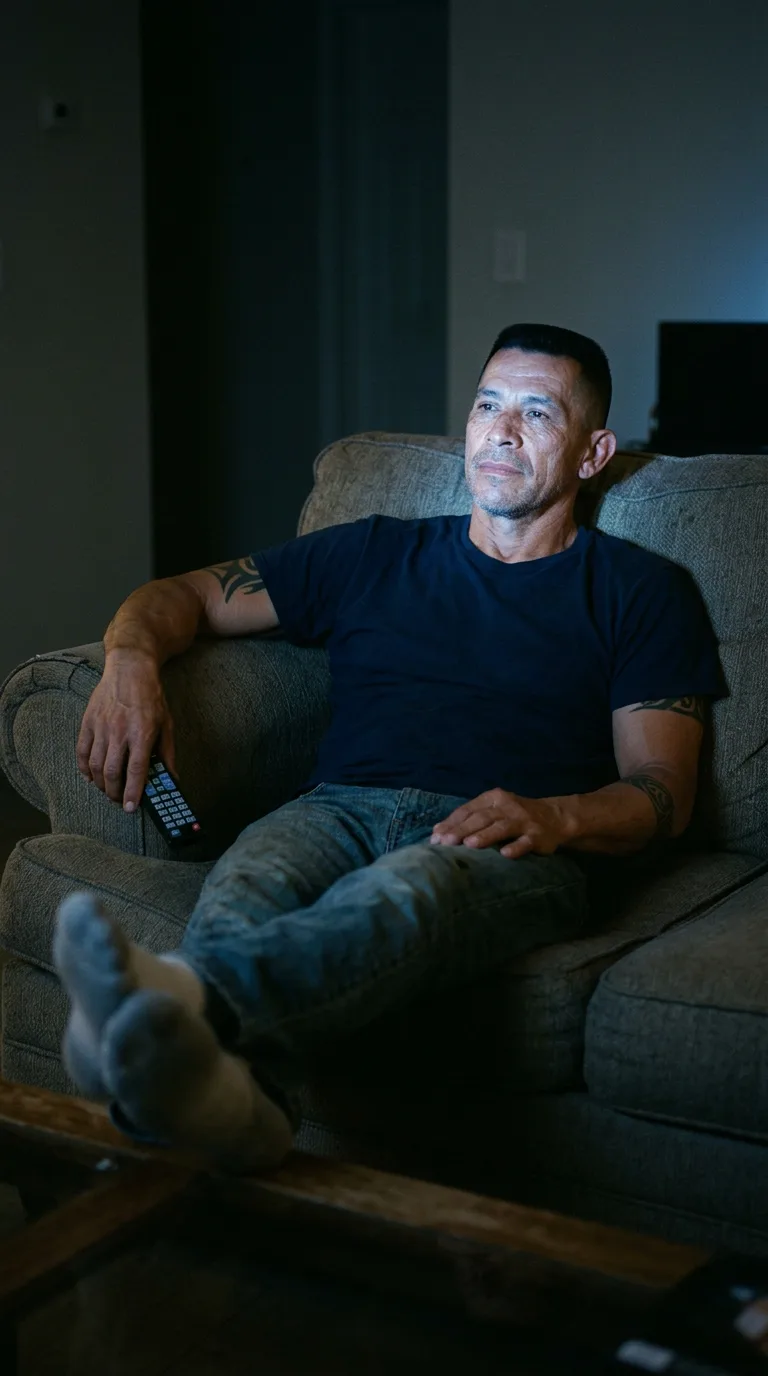
Rarest thing about him: A few, scattered — rare, 1 in 24
Season 0seed 1706187539 · engine v10
Character card
lineage 2NZHHJ
His body-swap story
@colin.hasbrook, wearing Rodrigo Ontiveros, rolled the wheel on and woke up as Héctor Marroquín, spent under a minute in him, then spun the wheel and woke up as Darius Whitfield
Rodrigo's hands smell like the shop even now, mid-afternoon, standing in the little apartment kitchen that isn't yours — never was, only borrowed 353 times over in other men's kitchens that all smell faintly of someone else's soap. You are wearing him lightly today, the way you wear all of them near the end, like a coat you already have your arm out of. Forty-eight, going soft at the middle in a way this one carries with dignity, freckled like a boy though he is not one. He is fine. He is nothing. That is the whole problem: after thirty-one minutes inside Peter Skoglund's surgeon hands, after feeling what it is to hold a scalpel and know exactly, cellularly, what to do with it, going back into Rodrigo's stiff shoulder and his ordinary Monday is like stepping out of a warm bath onto tile. You did not spin again out of hatred for him. You spun again because comfortable is the one thing you have learned, after 353 times, that you cannot sit still inside. The wheel is already loading on the cracked phone screen before you have finished deciding.
It lands, and the tile becomes carpet.
You are sitting upright before you mean to be, spine snapping straight against a couch cushion, and the remote is already out of your hand, set down on the arm of the chair by fingers that were not asking you first. The television throws its blue light up across a face that is not Rodrigo's — broader through the jaw, freckled too, but differently, a spray across the nose like something thrown. Your foot, socked, is up on a coffee table you don't recognize. Somewhere behind you, through a wall, the ocean is doing whatever the ocean does at the end of a Miami evening — you can feel the haze of it more than hear it, salt-heavy air coming through a cracked balcony door.
The couch remembers him first. Fabric worn smooth in exactly the shape of a man who sits here every night after work, right hip sunk lower than the left, an old habit from favoring a knee that's been bad since a box of ribeyes came down wrong eleven years ago. That's when the back pain flashes in, not a story yet, just weather — a dull permanent ache low in the spine that has been there so long it isn't even unpleasant anymore, just Tuesday, just every day, the price of admission for thirty years of standing on concrete with a blade in your fist.
Then the shirt. It's not on him now — he's in a navy T-shirt gone soft from washing — but the ghost of the work shirt is still in the muscle memory of his shoulders, and it comes anyway, unbidden: this morning, sleeve by sleeve, the white cotton stiff with starch, buttoning it one-handed while the coffee maker coughs behind him, the apron — chainmail, heavy, cold even through cloth — settling over his head the way it's settled ten thousand mornings, strap catching for a second on the collar the way it always catches, his own hand reaching back without looking to free it. He has done this so many times his hands stopped needing him for it around the third year on the job.
The jaw clenches. That's his, not yours — a tic so old it isn't even a decision, tension gathering at the hinge whenever the mind wanders somewhere it doesn't want to be walked through twice. And it wanders now, walking you with it: a wedding that ended amicably enough that he still doesn't know how to talk about why; a woman named Marisol who he let go eight years ago over something so small he cannot anymore remember the shape of it, only the shape of missing her, which never got smaller; three kids' worth of birthday parties and one long-distance phone call every Sunday that he never once, not once, forgot to make. A girlfriend now, Yolanda, good to him, warm, waiting probably right now on a text he hasn't sent. The tattoos on his forearm — black tribal bands, done at nineteen and twenty-three, before the freckles had all this gray stubble to sit inside — carry a flash of a garage in Hialeah, a buddy with a homemade gun, laughing so hard neither of them could hold still, the line coming out crooked and neither of them caring.
The show on the screen is a rerun he's watched before, and some part of him, an hour ago, on this same couch, laughed at the same joke coming up now. You feel the joke arrive and you do not laugh. You feel his face not do the thing his face was about to do, and something in the room — nothing, no one, just the air — notices the absence.
You look down. His hands: broad, scarred faintly white across two knuckles, a life's worth of small blade-nicks gone silver, strong in a way that has nothing to do with looking strong. You turn the right one over slowly, palm up, like you could read something there that isn't yours to read.
"Not laughing tonight," you say, to no one, in his voice, and it comes out low, a little rough, and you don't know yet — won't know for however long this lasts, an hour, a year, no telling — whether that was his sense of humor giving out or yours arriving.