Peter Skoglund
Fictional. Generated by AI — not a real person, and no likeness of one is intended.
26, surgeon in San Francisco · rolled by @colin.hasbrook · card — no film
History
who has worn him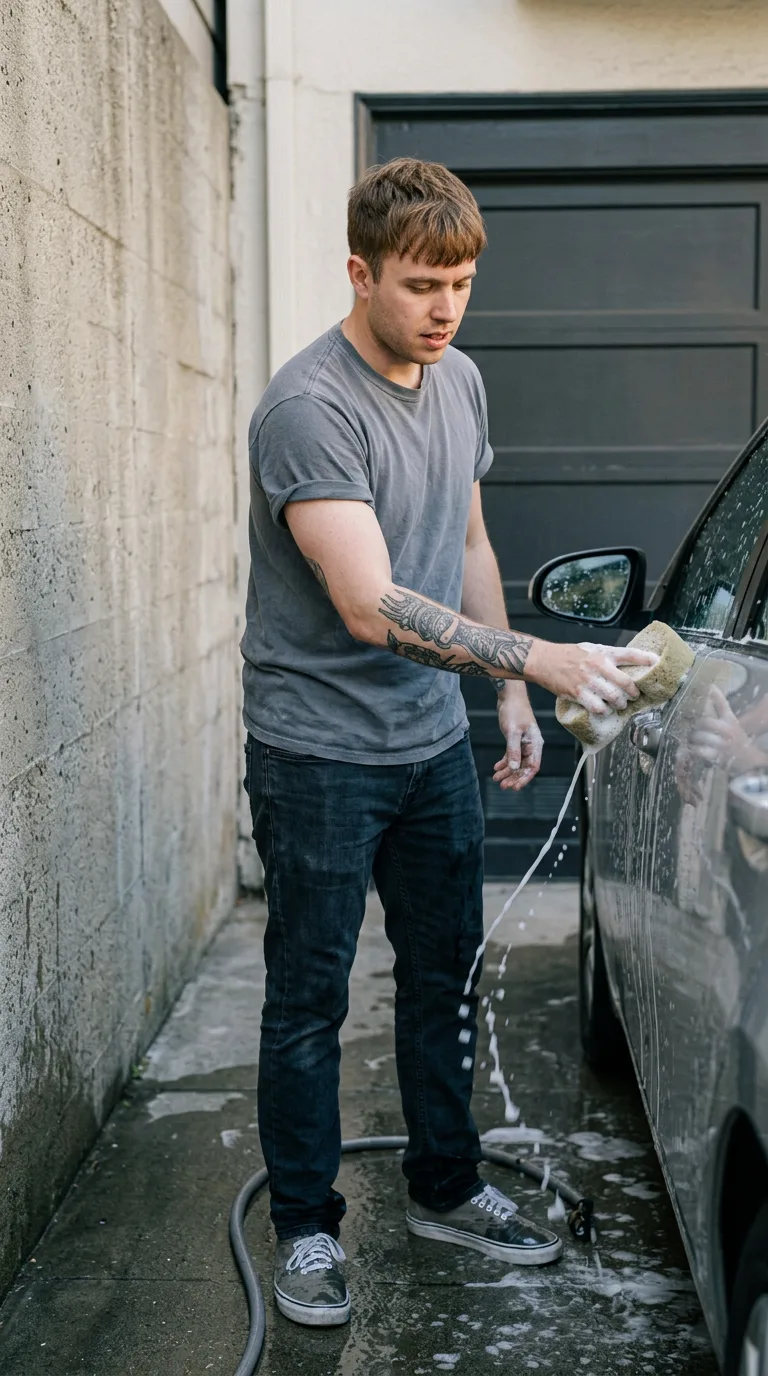
Rarest thing about him: Washing the car — rare, 1 in 134
Season 0seed 555872912 · engine v10
Character card
lineage 2NZHHJ
His body-swap story
@colin.hasbrook, wearing Marlon Kahale, rolled the wheel on and woke up as Peter Skoglund, spent 31 minutes in him, then spun the wheel and woke up as Dale Pruitt
The tattoo gun sits dead on the counter, its little coiled cord unplugged for the first time since seven this morning, and Marlon's forearm is throbbing where the last client flinched into the line. It's a Monday in Houston, early afternoon, heat pressing flat against the shop windows, and you have been this man for less than a minute — fifty-one years in his bones and none of them yours yet, just the smell of green soap and antiseptic and a stencil half-transferred onto a stranger's shoulder blade. You wanted this body. You spun for it and got a craftsman's hands and it should have been enough. But the client in the chair asked you, casually, if you'd ever done anything besides ink — asked if you'd ever *fixed* something, made something *whole* — and something in you, some old itch that has nothing to do with Marlon Kahale at all, turned over like a key. You've had four hundred trades in your pocket for years. You have never once been someone who saves anybody. So you tell the kid you need five minutes, you go to the back room, you open the site on your phone with Marlon's thumb still smelling of stencil gel, and you spin.
The wheel doesn't ask why. It never does.
The soap slides down the door in a wide gray arc and then simply stops sliding, because the hand holding the sponge is no longer being told to move by the man who owns it. You feel the water first — cold, running off a hose somewhere near your feet, hissing against concrete — and then the weight of a body that is not thick through the shoulders like Marlon's was, lighter, younger, a frame that has run and lifted but never had to carry the particular tiredness of fifty-one years. The grip on the sponge changes without your intention: thumb tucks under, wrist turns in small tight circles, an economy of motion that belongs to someone else entirely, muscle memory arriving a half-second before you do. Somewhere above you there's a bay window, and below it a garage cut into a hill, the driveway steep enough that the water finds a groove and runs downhill in a thin gray river past your — his — sneakers.
You are standing in cold white light, a Monday afternoon that is somehow already sliding toward evening here, and the first thing that comes to you is not a memory but a smell: latex, and under it, the chemical sweetness of hand sanitizer that never quite leaves the skin no matter how much you scrub. The t-shirt is soft against your back, worn thin at the shoulder blades, and touching it gives you a flash — a locker room, fluorescent light, the specific stiffness of scrub pants being pulled on two sizes too large because the hospital laundry never sorts them right. Then more: your hands — his hands — snapping on gloves before a case, the powder-snap sound of it, the particular calm that drops over you the moment the mask goes up over your face and the only part of you left visible is your eyes and the gap in your teeth nobody in the OR has ever once commented on because nobody in the OR can see it anyway.
The hose keeps running against your ankle, forgotten, and through your bare feet on wet concrete comes something else — his mother's kitchen, years back, the smell of dolma and cigarette smoke on his father's collar, an Orthodox cross kissed once quickly before a hard exam, a habit that outlived belief the way habits do. Through the sponge in your hand, a whole stretch of residency comes back at once: thirty-six hours awake, a coffee gone cold on a nurses' station counter, the specific shame of nearly falling asleep standing up scrubbed into a gallbladder. He never told anyone that. There was no one to tell. No wife waiting up, no ex worth the word, just an apartment he half-lived in and a car he loved with an attention he gave nothing and no one else — Sunday afternoons, hose and sponge and radio low, soap sliding down steel in wide patient arcs, the one thing in his week that asked nothing of him and gave back exactly what he put in.
The jeans are stiff at the knee where they always dry that way, and touching them gives you this morning — actually this morning, an hour or two behind you now in whatever hour this body keeps — pulling them on half-asleep after a night shift that ran past dawn, a cigarette on the back step because the pack was already open, the gap-toothed grimace in the bathroom mirror at his own reflection, tired in a way that had nothing dramatic in it, just accumulation. His hands know this sponge, this arc, this door panel, better than they know almost anything outside an OR. They ache faintly in the knuckles — his tell, the crack he doesn't notice he's doing until someone points it out — and underneath that ache is real strength, wrists trained to hold steady for six hours over an open body, a steadiness that has nothing to do with the tattoo gun's tremor Marlon used to fight at the end of a long session.
The water is still running. The soap is still drying unevenly on the door because your hand — his hand — has stopped moving entirely.
You look down at it. Turn it over once, gloveless, bare, ordinary, a thin white scar-line of nothing at all across one knuckle from some kitchen accident that was never worth telling anyone about. You lift your eyes to the lens of nothing, to whoever might be watching, and you say, quiet, almost surprised at the sound of his own voice coming out of you:
"Whoever's in here now — don't waste the hands."