Rodrigo Ontiveros
Fictional. Generated by AI — not a real person, and no likeness of one is intended.
48, butcher in Mexico City · rolled by @colin.hasbrook · card — no film
History
who has worn him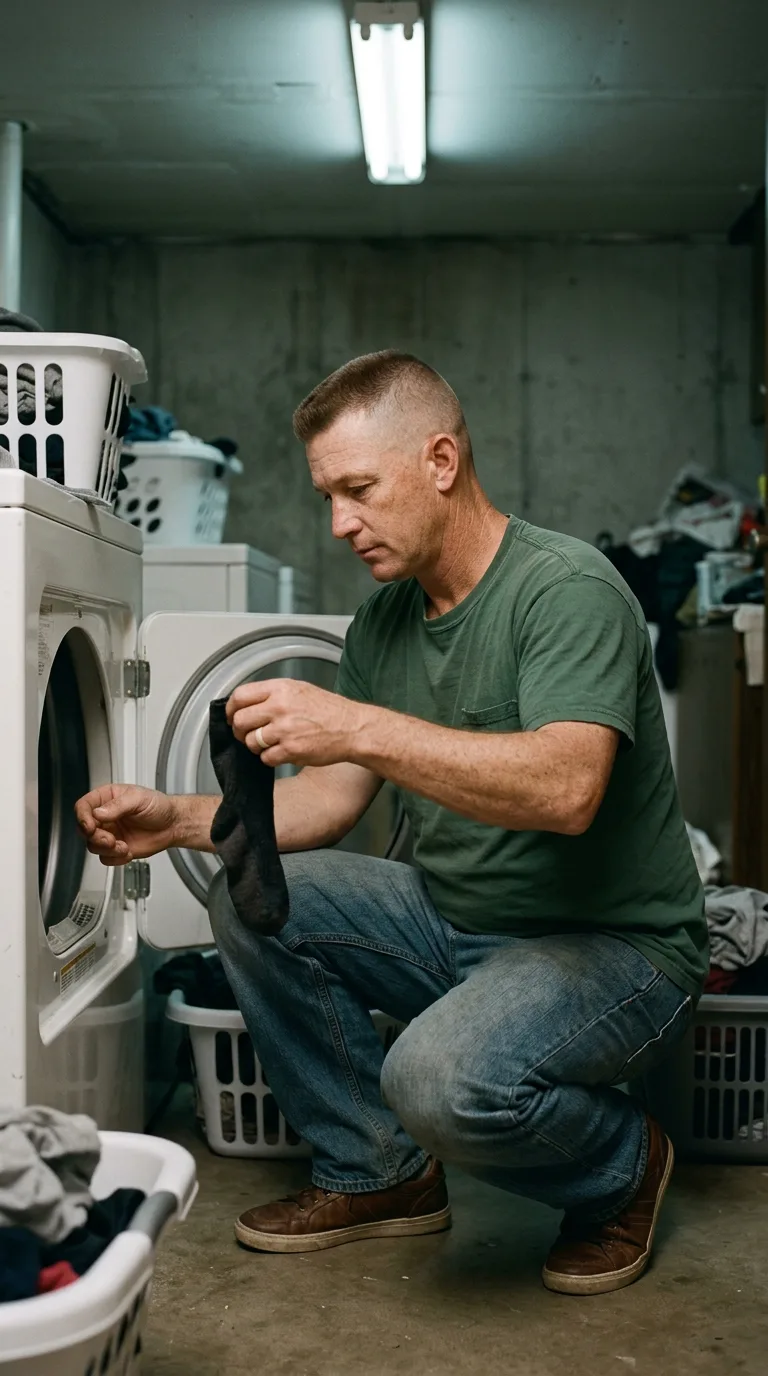
Rarest thing about him: Mexico City — epic, 1 in 421
Season 0seed 1032667577 · engine v10
Character card
lineage 2NZHHJ
His body-swap story
@colin.hasbrook, wearing Dale Pruitt, rolled the wheel on and woke up as Rodrigo Ontiveros, spent under a minute in him, then spun the wheel and woke up as Héctor Marroquín
---
Dale Pruitt's kitchen light is the kind that makes everything look a little sick, and you have been standing in it for less than a minute, and already you know this one is wrong for you. It's the beauty mark, maybe — you keep catching it in the microwave's reflection, off to the left of his mouth, like something borrowed and never returned. Or it's the quiet. Small-town Ohio at the end of a Monday is so quiet you can hear the furnace click. Dale's hands are broad and go slack at his sides when they're not doing something, and there's nothing for them to do. You spun for him nine minutes ago and already the newness has drained out of him like water through a sink. Some men you could live in for a season. Dale is a man you could live in for the length of a phone call. You go to the counter, open the laptop that is already open because Dale Pruitt never closes anything, and you find the wheel still glowing on the screen where you left it, patient, the color of a coin. You do not think about it as leaving him. You think about it as continuing.
You spin.
The dryer door is still swinging when you arrive, warm air breathing out of it against a face that is not looking at you, because it is your face now and there's no mirror down here to check it in. Fluorescent light stutters once overhead. Your knees — his knees — are bent, crouched at the open drum, and there is a black sock damp-warm in your hand, and the rest of the load tumbles loose and steaming into a plastic basket already half full. You feel the weight of him settle the way water finds a glass: 5'8", steadier on the legs than Dale was, a low center of gravity built by decades of standing at a table doing the same six motions. Freckles itch faintly across your nose in the humid basement air. Somewhere above, muffled through a floor, a courtyard is doing its slow gold afternoon thing, jacaranda light leaking down through a stairwell door left open a crack.
The sock is the first key. It turns over in your fingers and something comes with it — not a memory exactly, just a rhythm, the fact that pairs go left-over-right, cuff first, the way his mother did it in a kitchen forty years gone in Iztapalapa, a woman whose hands he inherited without knowing it. Then the whole basket is a key. You lift it, hip cocked to take the weight without thinking, and the folding starts before you've decided to fold: corners squared, seams matched, a T-shirt collapsed into a rectangle in four moves like a magic trick nobody taught you. This is Rodrigo. This is what his body knows that you don't — twenty-six years of laying meat flat and cutting it true, translated without his permission into laundry, into anything held between two hands.
The green t-shirt on your back opens next, wide as a door. You feel him pulling it on that same morning, in a room with shutters and a ceiling fan turning too slow to do anything but stir the heat, and you feel — not sad, not yet, just the specific flatness of a man dressing alone in an apartment built for two. The apartment used to have Marisol's perfume in the hallway closet and doesn't anymore. The apartment has a calendar with his son's soccer schedule circled in red he doesn't need circled because he never misses it, and a corkboard with a drawing his daughter made of a dog that does not exist, and it is Tuesday's drawing, done in September, four years old at least, kept anyway. He showers, dresses in nine minutes because if he lets it stretch past nine the ADHD undertow gets him and it becomes forty, and he has learned this about himself only in the last five years, learned it in a doctor's office at forty-three with his hands laced together saying I thought this was just how everyone's brain worked. The ring finger goes into the sleeve of the shirt bare, pale where the gold used to sit, and there's a whole marriage in that paleness if you want it — twenty years of it, ending not badly, just worn through, the kind of divorce where you still text her about the kids and mean the good morning at the end of it.
The jeans give you the walk to the laundry room, the six flights of a life spent on his feet: up at five, the shop before the heat, the cold room's particular smell of iron and sawdust, the saw's whine going quiet at the end of a shift the way it is quiet now, elsewhere, waiting for Monday's Rodrigo to come back to it tomorrow. He likes the customers who ask for cuts by name instead of pointing. He does not drink, hasn't in eleven years, doesn't miss it the way people expect him to. He touches his own face without noticing — jaw, then temple, then jaw again — a tell his daughter used to imitate to make him laugh. You feel your hand start to do it now, unbidden, muscle before thought.
The concrete floor under his boots is the last key, and it gives you nothing but the plain fact of standing: a man built average in every measurement, unremarkable and durable, the kind of body that does the same lift ten thousand times and is still there for the ten-thousand-and-first. Nothing hurts that shouldn't. The freckles are the only wild thing about him, scattered like something decided at random, and even those he stopped noticing in the mirror around age thirty.
The basket is full and folded and square in your arms — his arms — before you look down at your hands.
They are not Dale's hands. They are shorter-fingered, sure in a way that has nothing to do with you, a thin pale ring of skin around one finger like a mark left by something that used to matter and doesn't sit there anymore. You turn the right one over, palm up, the way you always do, checking the joints as if this time they'll feel like yours and they never do.
You lift your eyes to the small dark window above the dryer, catch nothing in it but your own shape, and say, to no one keeping score,
"Okay. Let's see how long you last."