Gordon Kaplinsky
Fictional. Generated by AI — not a real person, and no likeness of one is intended.
60, bouncer in New York · rolled by @colin.hasbrook · card — no film
History
who has worn him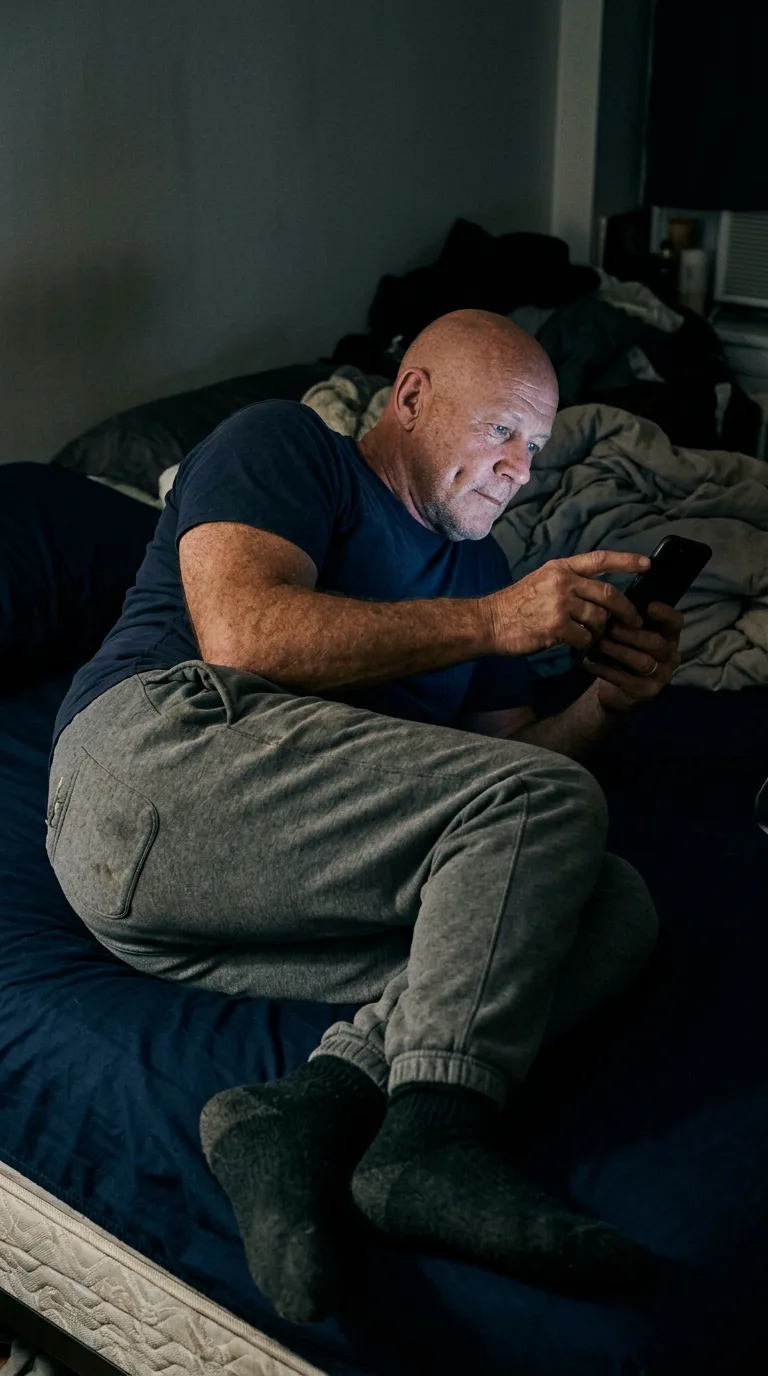
Rarest thing about him: Bouncer — uncommon, 1 in 83
Season 0seed 1771996526 · engine v10
Character card
lineage 2NZHHJ
His body-swap story
@colin.hasbrook, wearing Paul Kaczmarek, rolled the wheel on and woke up as Gordon Kaplinsky, spent under a minute in him, then spun the wheel and woke up as Elias Bramante
Paul Kaczmarek's kitchen smells like somebody else's coffee, because it is somebody else's kitchen, somebody else's Monday, somebody else's cheap sun coming sideways through blinds that need dusting. Your — his — hand is flat on the counter. Firefighter's hand. Rope-scarred knuckle. You have had this hand for twelve minutes and it has already started to bore you, the specific way any hand bores you eventually: not the hand's fault, just the arithmetic of having had a hundred and fifty-seven of them before it.
Twelve minutes ago you were a bald accountant in Toronto with a cleft chin and gray eyes, standing in a front hall that smelled like a stranger's fabric softener, and you know exactly whose father is on the other end of that man's phone contacts, because you were inside the son's numbness toward his father for the length of one held breath before you spun out of him and into this. That's the itch. Not boredom with Paul — you barely know Paul yet — but the older thing, the thing that has been sitting in you since the twelfth spin back: you have stood inside Warren Kaplinsky's flat, guarded unlove for the man who raised him, and now you want to know it from the other direction. You want to be the father instead of the disappointment. It isn't grief. It isn't even curiosity dressed as kindness. It is closer to wanting to read the last page of a book you already skimmed.
Paul's phone is on the counter. You don't even look at the wheel's page before you're already reaching, already paying, already spinning, the way a man reaches for a second drink without deciding to.
—
The mattress takes your weight wrong for half a heartbeat and then exactly right, the way a bed does when it has learned a body over years. Thumb still moving on the glass — faster now, smoother, flicking through a stalled scroll of someone's photo of a dog, a news headline, a woman from three profiles back — and the light off the screen sits blue and steady on a cheek that has, for one blink-length span, forgotten how to blink on schedule. Then it remembers. The eyes behind it are not the eyes that opened this app.
Socked feet. Sweatpants gone soft at the knee. A phone that is heavier in your palm than Paul's was, an older model, a cracked corner you didn't put there.
—
The T-shirt is what opens first — navy, worn thin under the arms, and it comes with the specific ache of a shoulder that throws a body between two drunk men four nights a week for money, an ache you feel as his and yours at once, the dull permanent bruise-memory of the job. Bouncer. The word arrives with the rope in his hand, the specific grain of it, cold vinyl-coated cable looped through his fist outside a door on a wet street, sodium light turning every face orange, one in the morning, every one-in-the-morning, stacked on top of each other into a single long night that is somehow also every night of the last nine years. His feet know the stoop outside the club before you do — three steps up, the second one loose, a decade of weight teaching it exactly how to give.
The sweatpants next: gray, a coffee stain worked into the left thigh, and dressing them this morning — no, last night, before the shift that just ended, before he came home to lie down at an hour that would be lunchtime to anyone with a normal clock — comes back sleeve by sleeve except there are no sleeves, just the tired hitch of pulling them on one leg and then having to sit down before the other, because sixty is sixty no matter how wide the shoulders stayed. His body: still big, still useful, the kind of average build that used to be more, going soft now in ways he'd fight anyone for mentioning. A pull in the lower back that never fully left after a night three years ago when a kid swung and missed and Gordon didn't. The dimples — his dimples, they show even now, even doing nothing, a joke his ex-wife used to make, that he looked like he was about to laugh even when he was furious, even when he was signing the papers.
The ring finger has no ring, but the tan line is still there, a pale ghost band, and touching the phone with that hand brings her — Diane, seventeen years of her, the smell of her hand cream, the two of them fighting in a kitchen not unlike this one about money that wasn't there yet and would be there later and by the time it was there she was gone anyway. One kid. Warren. Warren who does math for strangers in another country and calls on birthdays and not much else, whose voice on the phone has the particular careful flatness of someone being polite to a man he has decided not to need. Gordon knows that flatness. Gordon has practiced not hearing it as what it is.
The remission lives in him too, touched off by nothing in particular — just there, the way scar tissue is there, eighteen months of scans that keep coming back clean and a body that still checks itself every morning out of habit, running an inventory nobody asked it to run. He quit drinking around the same time he quit believing any god was running things on purpose, though he never quite stopped believing something was. He clenches his jaw without knowing he does it — is doing it right now, has been since before you arrived, some low hum of grievance with no object, aimed at the ceiling, at the dark, at nobody.
—
You look at the hand holding the phone. Blunt fingers, that pale strip of untanned skin where the gold used to sit, a scar across two knuckles from a door that closed on it in 2009. It is not the hand you had twelve minutes ago and it is not the hand of the son you were twelve spins before that, but it is close enough, the same wide honest palm passed down and worn differently, and something in that turns over in you that you don't examine too closely.
You lift your eyes to the phone's camera, dark and small at the top of the screen, and you say it to no one, to the app, to the boy in Toronto who will never know his father's phone did this at this hour on a Monday:
"Guess I look like him after all."