Paul Kaczmarek
Fictional. Generated by AI — not a real person, and no likeness of one is intended.
56, firefighter in Boston · rolled by @colin.hasbrook · card — no film
History
who has worn him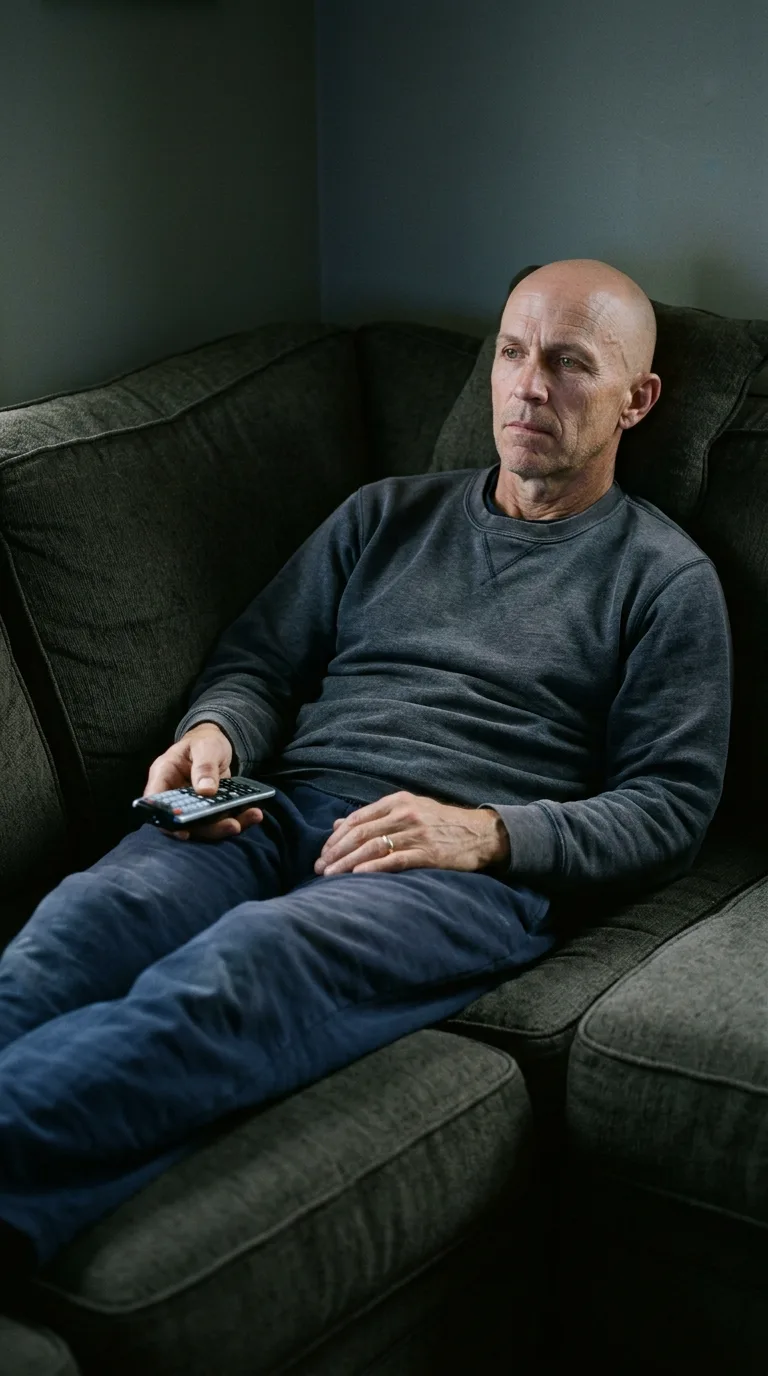
Rarest thing about him: Gay — epic, 1 in 40
Season 0seed 1798844480 · engine v10
Character card
lineage 2NZHHJ
His body-swap story
@colin.hasbrook, wearing Kyle Ahlgren, rolled the wheel on and woke up as Paul Kaczmarek, spent under a minute in him, then spun the wheel and woke up as Gordon Kaplinsky
The pallet jack handle is slick under Kyle's palms, and that's the first thing you notice about being him ten minutes in: how the calluses don't feel earned yet, how the shoulders ache in a way that isn't yours, how the sun through the container-yard chain-link is already too bright, too hot, too much of a Monday that started before dawn and will not end for eight more hours. He was fine. He was, if you're honest, better than fine — twenty-eight, strong as a mule, nothing wrong with him that a body should mind. But you didn't spin the wheel for him. You spun it because ten minutes is long enough to know a shift like this stretches out ahead of you like the pier does, and because somewhere behind the ache there's a small ugly hunger that never once, in a hundred and fifty-six turns, asked you to justify it. You set the jack down. You walk toward the break trailer like you're going to get water. Nobody there uses the site name for what it is. You just open it, feel the small heat in your chest that isn't quite guilt, and spin.
The television throws a hard white frame into a dark room and you are sitting up straight before you know you're a you at all, spine unfolding out of a slouch that wasn't yours to begin with, a remote settling out of your grip onto a cushion that gives under it with a small worn sigh. Green eyes blink at a screen that means nothing yet. The room smells like somebody else's Monday — old coffee, fabric softener, the particular grey light of a Boston afternoon leaning on a window shade. Your chest goes up and down slower than it should, a held breath, a catch at the back of the throat that will resolve, in a few seconds, into a snore that never comes because you're awake now, wearing him, and he does not laugh at the line that used to make him laugh, because there is no him left to laugh, only the shape of the couch accepting your new weight and the shape of your face not knowing yet what it's supposed to do.
The sweatshirt is what opens him first — not a photograph, not a name, just grey cotton gone soft at the elbows, and through it: a Tuesday in March, cold coming through a firehouse bay door, someone tossing him this exact sweatshirt off a hook and saying take it, Paulie, you look like you're freezing to death, and the someone is Danny, is his husband, seventeen years married last June at a courthouse that didn't used to let them, and the sweatshirt still faintly smells of the wool dryer sheets Danny insists on. Paul Kaczmarek. The name arrives with the smell, entire, the way a name does when you've heard it said with love four thousand times. Fifty-six years old. A shift ended nine hours ago — nights, a string of them, the reason his body sat down in an empty house at two in the afternoon with the blinds pulled and told itself this was evening. The apnea machine waits folded in its case upstairs, unused today because it's daytime, because he told himself he'd just close his eyes a minute in front of a rerun.
The remote's plastic ridges bring back a hundred nights just like this — Danny at the far end of the couch with his feet in Paul's lap, some cop show neither of them is watching, the particular comfort of thirty years in this city knowing every siren's meaning before dispatch says it. The couch cushions know his shape; he built this dent himself, decades of shift-work naps, and under the give of it you feel how thin he's gotten in the last years, ropy rather than strong, a leanness that isn't quite health, the kind of skinny that comes from a man who runs into buildings for a living and never had much appetite after. The wedding band on the left hand is warm from his own skin already, an old weight he stopped noticing sometime around year three. His knees ache faintly, a fireman's knees, forty years of ladders in them. There's the ghost-smell of smoke that lives permanently in his sinuses even freshly showered, and under it, the actual smell of this room — coffee gone cold on the side table, the storm door somewhere behind you letting a thread of Boston's grey autumn air leak in around its weatherstripping.
The morning comes back through the collar of the sweatshirt, sleeve by sleeve, the way the fabric remembers being pulled on: Danny still asleep, Paul dressing quiet in the dark after the overnight tour, the two of them like conveyor belts passing each other, a kiss on the temple that didn't wake him, the sweats and the sweatshirt because he was cold to the bone the way you get after twenty-four hours in and out of gear, and he meant to just sit for a minute. The apron of the firehouse comes with it unbidden — the smell of diesel off the rig, the particular ordinary pride of standing in front of the engine for the department photo nobody will ever really look at, thirty years of showing up. No children, and that ache sits where it always sits, familiar, worn smooth, not sharp anymore. Mass on Sundays with Danny, holding hands in the pew the way they weren't supposed to for the first decade of it and do now without thinking. A drink most evenings, one, sometimes two, never more, because he watched what more did to men on the job. Nothing remarkable about him. That's what people always said, kindly, at his retirement dinners in whatever year those turn out to be, and it never once bothered him, because being unremarkable and being loved were, in his life, the same thing.
You look down at your own hand where the ring sits, catching the last grey light off the shade, and you turn it slowly, the way he never would, like it's a stone you're checking for a crack. It doesn't feel like a stranger's hand for a second — that's the trick of this one, the wanting undoing itself even as you do it — and then it does again, plainly, and you like it that way. Fifty-six years of somebody's whole ordinary devotion sit folded in a sweatshirt around a chest that isn't going to remember you tomorrow either. You lift your eyes to where the television still throws its light, though your gaze is really nowhere, is really at the lens.
"Danny," you say, quiet, testing the shape of the name in his voice, "you should see this."
There is no Danny in the room. There won't be for hours. You know it, and something in the wanting doesn't care, and somewhere in Honolulu a body that isn't yours anymore is still standing in a container yard holding a pallet jack, forgotten completely, already worth less to you than the smell of cold dryer sheets.