Elias Bramante
Fictional. Generated by AI — not a real person, and no likeness of one is intended.
25, mechanic in Boston · rolled by @colin.hasbrook · card — no film
History
who has worn him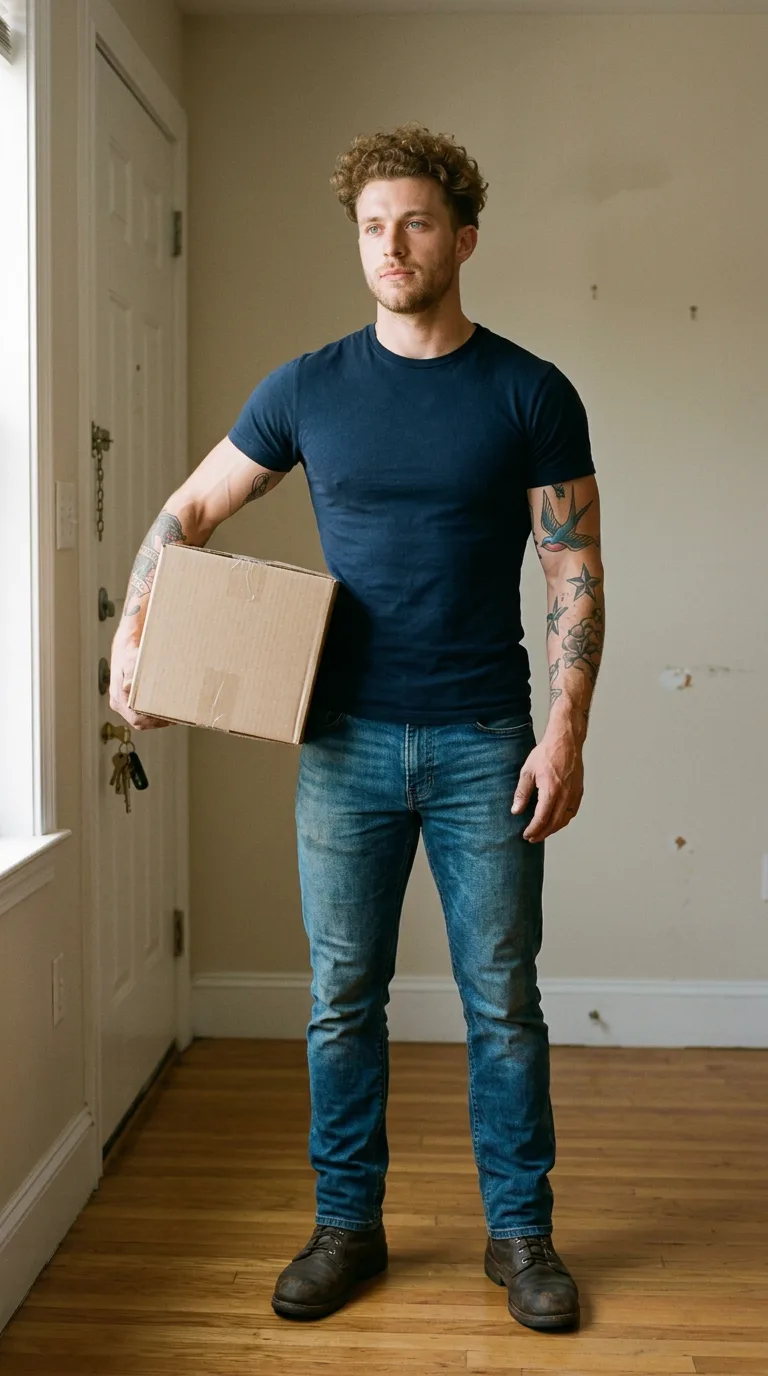
Rarest thing about him: Moving the last box into a new place — rare, 1 in 96
Season 0seed 1188819408 · engine v10
Character card
lineage 2NZHHJ
His body-swap story
@colin.hasbrook, wearing Gordon Kaplinsky, rolled the wheel on and woke up as Elias Bramante, spent 30 minutes in him, then spun the wheel and woke up as Trevor Ahlgren
Gordon's knees ache. That's the first thing, still, even sixty spins deep into being somebody's idea of muscle at the door of a club that hasn't opened yet — the cheap folding chair by the coat check, the bald head under fluorescent light, the dimples that make him look friendlier than the job requires. It's a Monday afternoon in New York and there's nothing happening, no line, no trouble, just the hum of the empty room and Gordon's big dumb hands doing what they always do, drumming on his own knee without him telling them to. Less than a minute in this one and already the boredom is a physical thing, a held breath. Sixty is not a number, it's a feeling: the sense of having already lived every kind of Monday there is. He pulls out his phone — Gordon's phone, technically, though nothing in this life is really anyone's for long — and the wheel is already loaded, already spinning lazy circles in the browser tab like it's been waiting for him the whole time he was pretending to consider not doing this. He didn't come back today for a reason he could say out loud. He came back because Gordon's hands are old and he wanted, badly and simply, to feel something twenty-five years newer. He pays. He spins.
The floor changes under your feet before you understand that your feet have changed. Hardwood, warm with afternoon light, under boots instead of Gordon's flat black shoes. A box's cardboard corner is digging into your hip, and your arm — this arm, thinner, harder, inked to the wrist — is holding it there like it's done this a hundred times this week alone. Keys hang from the front door lock, still swinging slightly from the last motion of a hand that isn't making decisions anymore. The room is empty except for you and light coming sideways through an uncurtained window, dust turning in it. Boston. Autumn. Overcast, the kind of gray that flattens everything into one soft color. You set the box down on the floor — an instinct arriving a half-second before you do, like the body already knew where the box was supposed to go and simply took you along for the ride. You leave the keys where they are. You walk the edge of the room, knuckles trailing the wall, feeling for switches, for outlets, for the shape of a place that isn't yours yet and is already, somehow, home.
It comes in through the wall first — plaster cool and a little gritty under your knuckles — and what surfaces isn't a memory so much as a mood: this is his, all of this, first place with his name alone on the lease, no roommate, no landlord living downstairs listening through the floor. Then the shirt. Navy, worn thin at the collar, and putting it on this morning comes back sleeve by sleeve: reaching for it off the same box you just set down, because the dresser wasn't unpacked yet, because nothing here is unpacked yet, and grinning to himself in the window's reflection because a man doesn't dress for anybody when he's alone in his new front room, and dressing well anyway, out of a private, unexplainable pride. The jeans came from a drawer he packed himself two days ago, folding them the way his mother taught him, though he'd never say that's why he still does it.
The boots are the ones from the shop — steel toes, oil in the seams that will never fully come out — and through them the concrete floor of the garage rises up in you: the raised car, the smell of hot metal and old rubber, the rag that lives in his back pocket like a second hand. Twelve years old, first time an uncle let him hold a wrench like it mattered. The tattoos on his forearms — the swallow, the star, the panther half-hidden under the sleeve — each one a night with friends now scattered, a dare, a birthday, bold lines already fading the way traditional ink does, going soft blue-green at the edges like a bruise healing backward. His body remembers all of it without being told: the particular ache low in the shoulder from underneath a Silverado all last week, the strength in the forearms that doesn't feel like effort anymore, just weight handled.
There's a girlfriend somewhere in this — a laugh he can almost hear, a voice saying something about paint colors for a kitchen that doesn't exist yet — and two kids, small enough that their voices come back as pitch more than words, a weekend smell of syrup and cartoons on too loud. He is Latter-day Saint the way some men are their father's height: not something chosen fresh each morning, just there, load-bearing, quiet. He drinks maybe three times a year and always regrets the second glass. He has never smoked and never wanted to. What he's got isn't much to anyone else — a little put by, nothing anyone would notice — but it's his, earned with his back and his hands, and there's a particular, unspoken pride running under all of it: that he did this himself, that the box on the floor and the keys in the door are the first ones that are only his to lose.
You look down. The knuckles are still against the wall, and for a second you just leave them there, feeling how young this hand is, how sure of itself, no ache in it anywhere. You bring it up in front of your face and turn it, slow, watching the light catch on the fading blue-green ink like it's something you drew yourself and forgot.
"Home," you say, out loud, to no one, in his voice, and you don't know yet if you mean it or if you're only borrowing the word the way you're borrowing everything else — the room, the boots, the whole unfinished afternoon — for however long this turns out to last.