Warren Kaplinsky
Fictional. Generated by AI — not a real person, and no likeness of one is intended.
44, accountant in Toronto · rolled by @colin.hasbrook · card — no film
History
who has worn him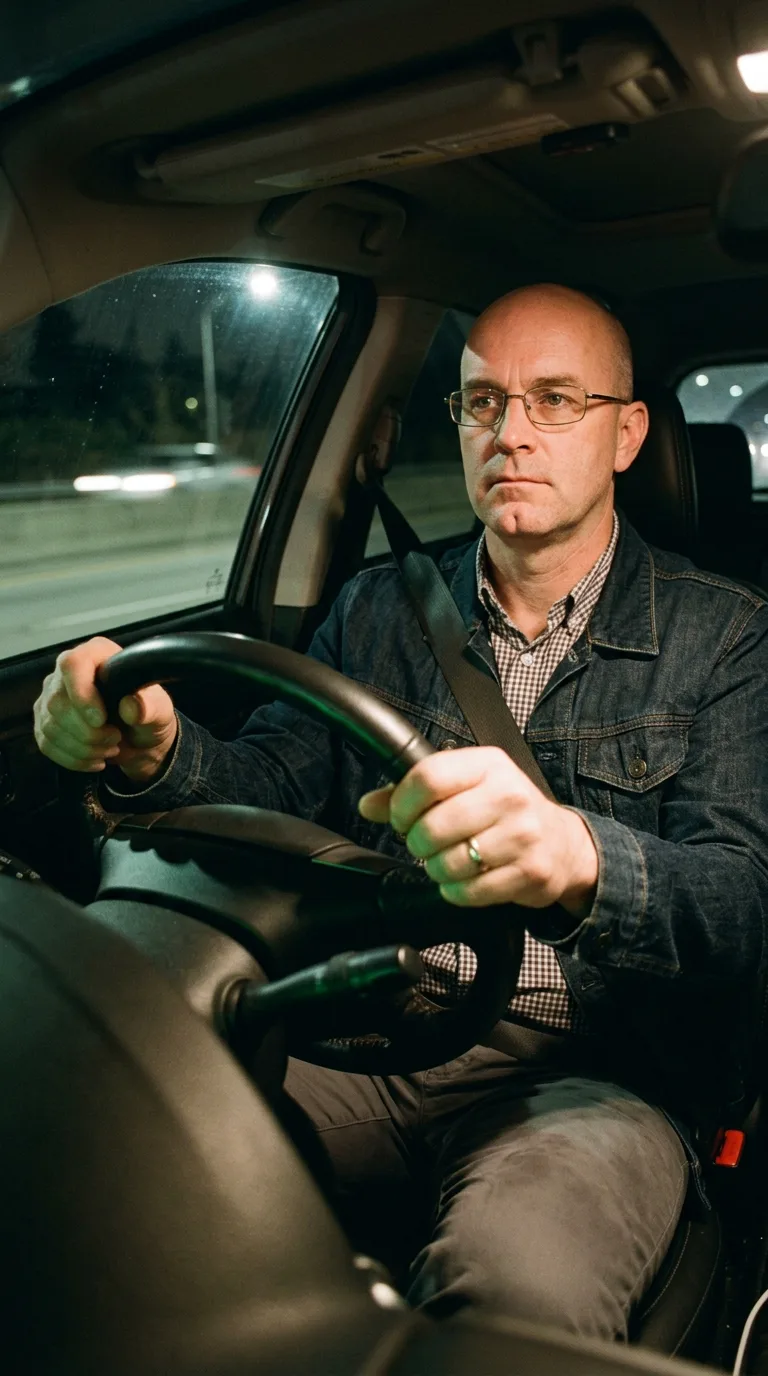
Rarest thing about him: Gray — epic, 1 in 67
Season 0seed 1070700681 · engine v10
Character card
lineage 2NZHHJ
His body-swap story
@colin.hasbrook, wearing Duane Yamashiro, rolled the wheel on and woke up as Warren Kaplinsky, spent under a minute in him, then spun the wheel and woke up as Nathan Sugimori
The mop water has gone gray again and that is the thing that decides it, standing over the third-floor men's room at whatever hour this is in Nashville, wringing a mop out with Duane Yamashiro's soft hands, his lower back already complaining, his knees already complaining, a whole man's worth of complaining collected in fifty-some years of being on his feet in other people's buildings. You have been him less than a minute and you already know the smell of this hallway, the buzz of this particular fluorescent tube, the exact ache under the left shoulder blade — his, arriving unbidden, the way it always does, a little gift nobody asked for. It is enough. It was always going to be enough. Somewhere in the building a floor waxer starts up and you are already reaching for the phone in his pocket, thumb on the screen, the wheel spinning up bright and stupid in your palm before Duane has even finished his shift.
It is not boredom exactly. It is closer to the thing itself: the wheel does not let you rest in anyone, not really, not when there is always another spin, another whole man standing somewhere in his own Monday not knowing.
You pay. You spin. You are three miles from somewhere, hands at ten and two, dash light green on your knuckles, and the car is not yours and the hands are not yours and for one full second there is nothing else in the world but the wheel under your palms and the white line ahead going soft and doubling.
The car drifts a foot toward the line. It comes back in one smooth pull, the correction older than thought, a body's own reflex arriving before you do. Your hands come off the wheel and resettle, lower, wider, feeling the rim like it's new, and the turn signal clicks on, ticking for an exit that is not this man's exit, ticking into a Toronto night that is, you understand distantly, actually an afternoon, glass towers going pale gold somewhere behind the black trees, because his clock and yours do not agree and never will.
The shirt is what starts it. Small checks, a button-down collar, snug at a belly he keeps meaning to do something about — and off it comes a whole morning: him buttoning it in a bathroom mirror with the fan going, his wife's hairdryer whining through the wall, a mug of coffee sweating a ring onto the counter because he doesn't drink and has to have something in his hand in the morning or the day doesn't start right. He remembers, sleeve by sleeve, doing this same thing five thousand mornings, the cotton gone soft with washing, a coffee stain he scrubbed at once and gave up on, low on the placket where you can't see it under the cardigan he wasn't wearing tonight. Gray cardigan on a hook by the door, left behind for the drive because the jean jacket was closer.
The wheel is what gives you the rest. Not the shirt now — the wheel itself, hard and grooved and familiar under his palms in a way that goes back twenty-six years to a driving test in his father's Buick, an instructor with a clipboard, his own hands sweating at ten and two exactly like this, like nothing about him has changed since he was eighteen except the hairline, which is gone now, shaved to nothing every Sunday with a razor he keeps in the shower caddy his wife bought him because she said stubble made him look like he was hiding something. He isn't hiding anything. He has a cleft chin so deep his daughter used to put a raisin in it when she was small enough to think that was funny, and a wife eleven years married who still puts her cold feet on his shin in January, and an ex-girlfriend from before all that whose name still surfaces sometimes at four in the morning for no reason he has ever admitted to anyone, a girl he did not marry and does not regret not marrying and thinks about anyway, the way you think about a road you didn't take, just to make sure it's still there.
The ring is on the third finger, plain, no stone, warmed already by his own skin before you arrived. You feel it the way he always feels it — a little tight in the summer, loose in the winter cold, a thing he turns with his thumb when a client's numbers won't balance. He hates the fluorescent light in the office. He has hated it for nineteen years and would tell you, if you asked, that the worst part of accounting is not the math but the stillness, the two monitors, the sixty seconds between emails where his own pulse is the loudest thing in the room and the doctor's warning about his blood pressure floats up unwelcome. He smokes on the fire stairs at 10 and 2 and 4, a pack a day exactly, and has for twenty years, and has never once believed in anything beyond that — no God, no plan, no wheel, nothing that would have told him a man like you was coming for him on a Monday with the highway wet and three miles left to go.
Under your borrowed hands the wheel is still turning very slightly, correcting itself, a car that wants to go home even now. Six feet of him, average through the middle, forty-four years in a body that carries its blood pressure the way it carries everything else — quietly, until it doesn't. Strong in the forearms from nothing in particular. A little stiff in the right knee from a hockey fall he doesn't think about anymore. Gray eyes that have not, until this exact moment, ever looked at his own hands on a steering wheel and wondered whose they were.
You look down at them now. Pale, ordinary, a plain band catching the dash light, a thumbnail slightly bruised from a car door he doesn't remember and you never will.
"There you are," you say, to no one in the car, and put both hands back on the wheel at ten and two, and let the signal keep ticking for the wrong exit a moment longer before you decide, almost lazily, whether to take it.