Duane Yamashiro
Fictional. Generated by AI — not a real person, and no likeness of one is intended.
61, janitor in Nashville · rolled by @colin.hasbrook · card — no film
History
who has worn him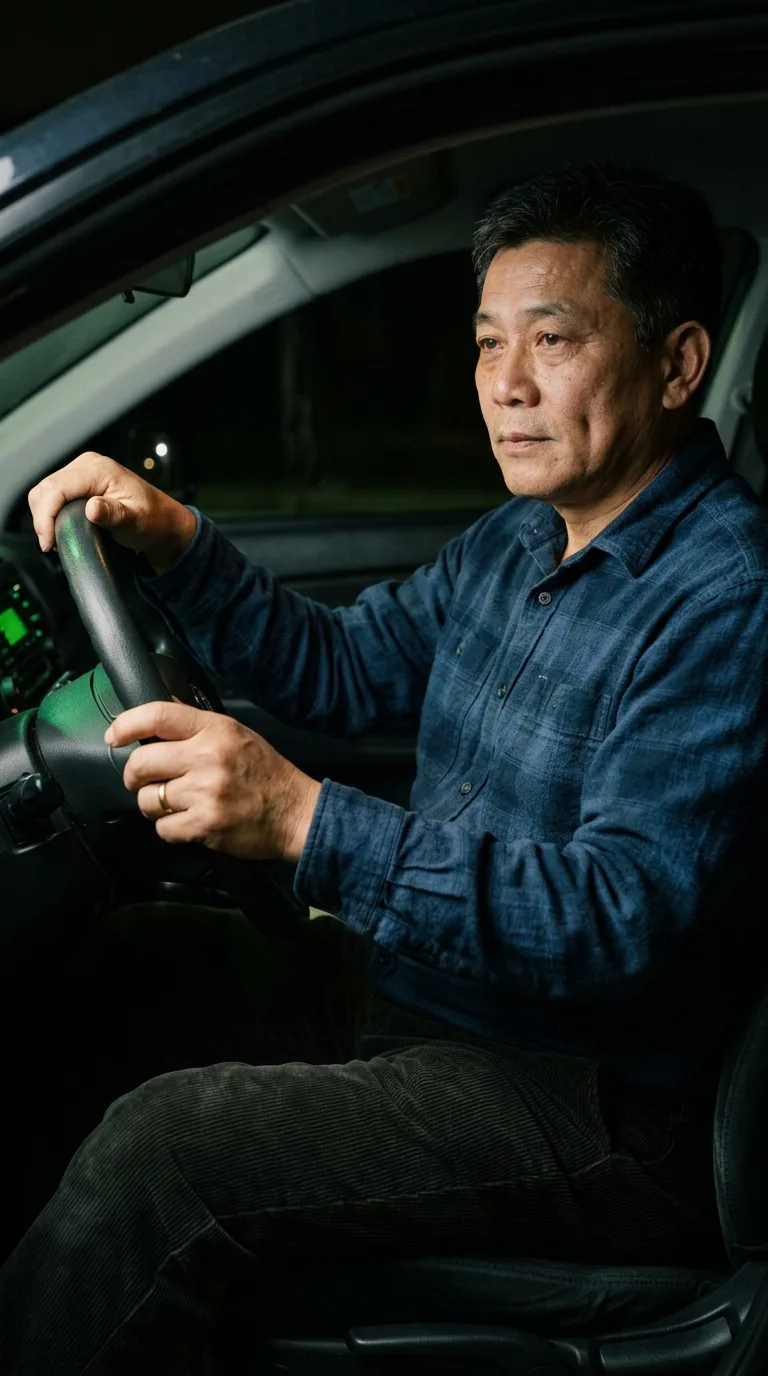
Rarest thing about him: Epilepsy — epic, 1 in 209
Season 0seed 1831526248 · engine v10
Character card
lineage 2NZHHJ
His body-swap story
@colin.hasbrook, wearing Nathan Prybilski, rolled the wheel on and woke up as Duane Yamashiro, spent under a minute in him, then spun the wheel and woke up as Warren Kaplinsky
You have been the groundskeeper for one minute, and already the body is wrong in a way you can't fix by waiting it out. It's the knees. San Francisco noon light comes flat through the shed window and there is a wheelbarrow handle in your grip and the grip aches, a bone-deep old-man ache dressed up in a thirty-year-old's tendons, and that's the joke of this one: athletic, brown-eyed, a beauty mark like a period at the end of a sentence, and somewhere in the wiring a soreness that has no business being there, phantom rent from the last tenant, or maybe just what thirty feels like when you've been sixty-one so many times it leaves a residue. You stand in the toolshed doorway holding mulch you don't care about, in a life you didn't build, and you think: not this again, not the mower, not the property manager's clipboard, not one more afternoon of a body that works fine and asks nothing of you. That's the trouble with a body that works fine. It asks nothing of you. You set down the wheelbarrow handle already reaching for your phone, already at the site, the wheel already spinning behind your eyes before your thumb even finds the button.
The turn signal clicks on for an exit that isn't yours, three miles early, and that's the last thing that belongs to him alone.
You arrive mid-decision, hands sliding off ten-and-two and resettling lower, wider, a driver's hands finding a driver's habit that isn't yours yet but will be in half a second. Dash glow. Dark highway shouldering up against a Monday afternoon that has no business being dark — except it isn't afternoon here, not by the clock in this car, evening already down over Nashville, neon somewhere behind you bleeding pink into wet asphalt, home three miles off and receding now because the exit ahead isn't the one. Weight settles into you all at once: shorter, heavier through the middle, a softness at the belly the seatbelt is already used to. The wheel is smaller in these hands than the last one was. Your jaw is already clenched — someone else's habit still running underneath you, a foot in the door before you've even moved in.
Then the shirt. Blue plaid, a little damp under the arms from a day that's already logged eight hours of buffing floors and hauling a cart with a bad wheel, and touching its collar with his own chin gives you the morning: him buttoning it in a bathroom with a cracked tile by the door, humming nothing, dimples showing in the mirror even though nobody's there to see them, because they show even when he isn't smiling, an accident of his face he stopped noticing decades ago. His wife's voice from the next room, something about the dentist, something about their son's flight next month. He answered her without looking up from the buttons. Married thirty-one years to a woman who still leaves the porch light on when he works late. One son, grown, gone, calls on Sundays.
The keys against your hip — still hooked where the belt carries them at work, a ring heavy with a school's worth of locked rooms — give you the corridor: fluorescent tubes ticking on one by one, a mop bucket's wheel that squeals on the same tile square every single night, the particular hush of a building built for children and empty of them. Thirty years of that hush. You didn't hate it, exactly. You feel that, distinctly, not your own feeling but his, arriving sideways: the almost-love of a job nobody thanks you for, the meditation of it, prayer beads he doesn't carry anymore but the motion is the same, wax the floor, empty the trash, lock up, drive home. Buddhist in the unbothered way of a man who stopped needing the temple to believe the thing the temple taught him. He quit drinking so long ago the taste is a story now, not a want. Quit cigarettes the year his son was born and never once missed them the way people warn you you will.
The seatbelt against your chest gives you the diagnosis, ten years old now, worn smooth with living around it: the word epilepsy said once by a doctor in a bad light and carried since like a second wallet, never spoken of at work, never spoken of much at all, medication in the door pocket he touches every morning without looking. Fear under that, old and managed. The dashboard glow on your knuckles gives you nothing new, just the thousandth rerun of this exact drive, this exact three miles, his eyes doing the math on the exit signs from memory, not thought.
The wedding band is cold and then warm under your thumb, the way rings get from a hand that never takes them off. Thirty-one years. A slow dance somewhere you can't place yet, her hand at the back of his neck, and the specific gravity of that — of being wanted steadily rather than loudly — is his, all his, and it sits strange and good in you like borrowed weather.
Your hands come off the wheel. You look down at them — thick through the knuckle, a little spotted, the ring catching what light there is — and turn them over slow, like they might not hold still if you let them.
"Whose house is this," you say out loud, to no one, to the dark, watching your own reflection do it in the black windshield, dimples there even now, even doing nothing at all.