Gordon Bledsoe
Fictional. Generated by AI — not a real person, and no likeness of one is intended.
58, sales rep in Pittsburgh · rolled by @colby.marsh · card — no film
History
who has worn him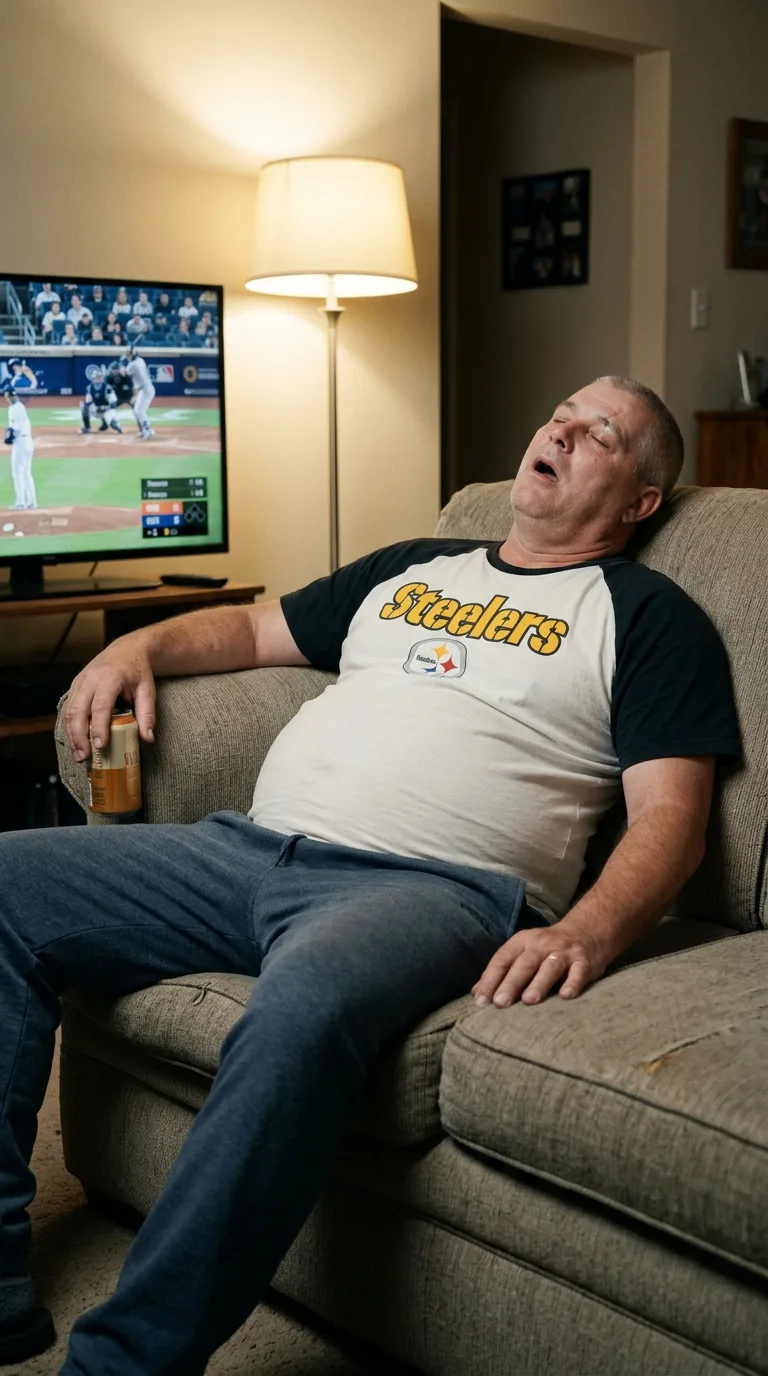
Rarest thing about him: Falling asleep in front of the game — uncommon, 1 in 52
Season 0seed 2142956141 · engine v10
Character card
lineage PYNCV3
His body-swap story
@colby.marsh (admin), wearing Walter Sechler, rolled the wheel on and woke up as Gordon Bledsoe, spent 3 minutes in him, then spun the wheel and woke up as Ramon Estrada
You are standing in Walter Sechler's kitchen at some hour that has no business being called morning, and the ovens have not even been loaded yet, and you already know you are not going to load them. Three minutes was not enough time yesterday to learn anything about this man except that his knees complain on the tile and that his hands, when you looked down at them, already knew how to score a loaf of dough without being told — muscle laid down over decades you did not live. That is the trouble with a body like this one. It is efficient. It is competent. It is, if you are honest with yourself standing in the flour-dust dark, boring in a way that has nothing to do with the man and everything to do with you: you already spent ten minutes as him once, nineteen hours and thirty minutes ago, on a different spin, and you know exactly what this kitchen smells like and exactly how little there is left here that you haven't already had. You are not hungry for Walter. You are hungry for the thing you remember better — the man Walter used to be before you took him for the first time, four spins back, the small silver-haired baker in Pittsburgh with the beauty mark and the kind eyes, the one you wore for ten minutes and then gave up and have not stopped thinking about since. That is not a thing you would say out loud. You tell yourself it's boredom. You open the site instead of the oven.
The wheel spins and the floor changes under you before the light of the screen has even finished fading from Walter's eyes, and there is no in-between, no falling — just weight arriving all at once, more of it than Walter carried, settled low and soft over a frame with more height stacked on top of it. A couch cushion gives under you. Fabric is bunched at your side. Your mouth is open and dry and there is a can in your hand, aluminum going warm, and light is moving across your face in blue flickers you didn't ask for. Sound arrives half a second behind the light — a crowd roaring, an announcer's voice climbing — and your body, already more awake than you are, sits forward on its own, and a thumb you have not yet claimed finds the remote's volume rocker with a certainty that has nothing to do with you.
The couch is the first thing that talks. It's been sat in by this exact weight for years, the middle cushion gone soft in the shape of him, and it gives you an evening — not this one, an old one, before the divorce, a woman's laugh from the kitchen doorway and the smell of something with garlic in it and a game on low because company was coming. The shirt gives you more: Steelers, the black and gold, a gift from his son two Christmases ago, worn soft at the collar, and under it your own gut, heavier than it used to be, heavier than he wants it to be, a body that has had a doctor's hand pressed flat against it more than once and told him things he did not want to hear and then, eventually, told him better ones. Remission. The word arrives with its own particular relief, the kind that never fully leaves a man once he's had to hold it, folded into every ordinary evening since like a seam you can feel if you press on it.
The can in your hand is warmer than it should be for how full it still is — he nursed this one, didn't finish it, fell asleep somewhere in the sixth. Your ring finger notices itself before you do: a paler stripe of skin where twenty-two years used to sit, and that gives you the whole marriage in one wave, not gently — a kitchen table, a signature, a U-Haul, two kids old enough now to have their own lives and their own opinions about whose fault it was, opinions that don't match each other and don't fully match his either. Gordon loves them with an ache that has nowhere left to go most days, which is maybe why he took the sales job that keeps him in hotel lobbies three states from home, lanyard around his neck, clicking a pen through meetings he's given a thousand times, closing deals on instinct while some other part of him is still standing in that kitchen watching her walk out of it.
This morning — his morning, hours from now by his own clock, though you're arriving at the tail of last night's late one — the shirt remembers itself going on: him standing in the bedroom of the house he kept, pulling the raglan over his head one-handed, not looking in the mirror because he already knows what's there, the gray buzzed close, the scar through his eyebrow he got at nineteen and never tells the real story of, the extra weight he's stopped fighting and started just wearing, like the shirt. Comfortable clothes for a night he thought was going to be nothing. Sweatpants. A ballgame. A beer he wouldn't finish. He does this most nights lately, alone in a house too big for one man, the second replay always catching him after the first has already gone by unwitnessed, and some tired, decent part of him has made peace with missing things.
You look down at the hand around the can. It is not the hand you remembered wanting. It is heavier, older by ten years, the fingers thicker, a workingman's hand that has never once touched dough. For a second something in you — some leftover appetite shaped like a smaller Pittsburgh kitchen and a beauty mark and ten stolen minutes — goes quiet and disappointed, and then, slower, curious instead, the way hunger sometimes turns into something else entirely if you let it sit.
You set the can down on the coffee ring already worn into the wood, turn Gordon's wide, tired hand over once in the television light, and lift your eyes to the dark hallway mirror across the room like it's a lens.
"Didn't even see it go in," you say, and you almost laugh, because you don't yet know how long you're staying to find out what else he missed.